Crypto payment processors often operate behind the scenes, making it possible for customers to move money into and out of digital-asset platforms without becoming the public face of the business. That can make their role difficult for ordinary customers to understand, particularly when the processor appears alongside investment programs that later attract regulatory scrutiny or allegations of misconduct.
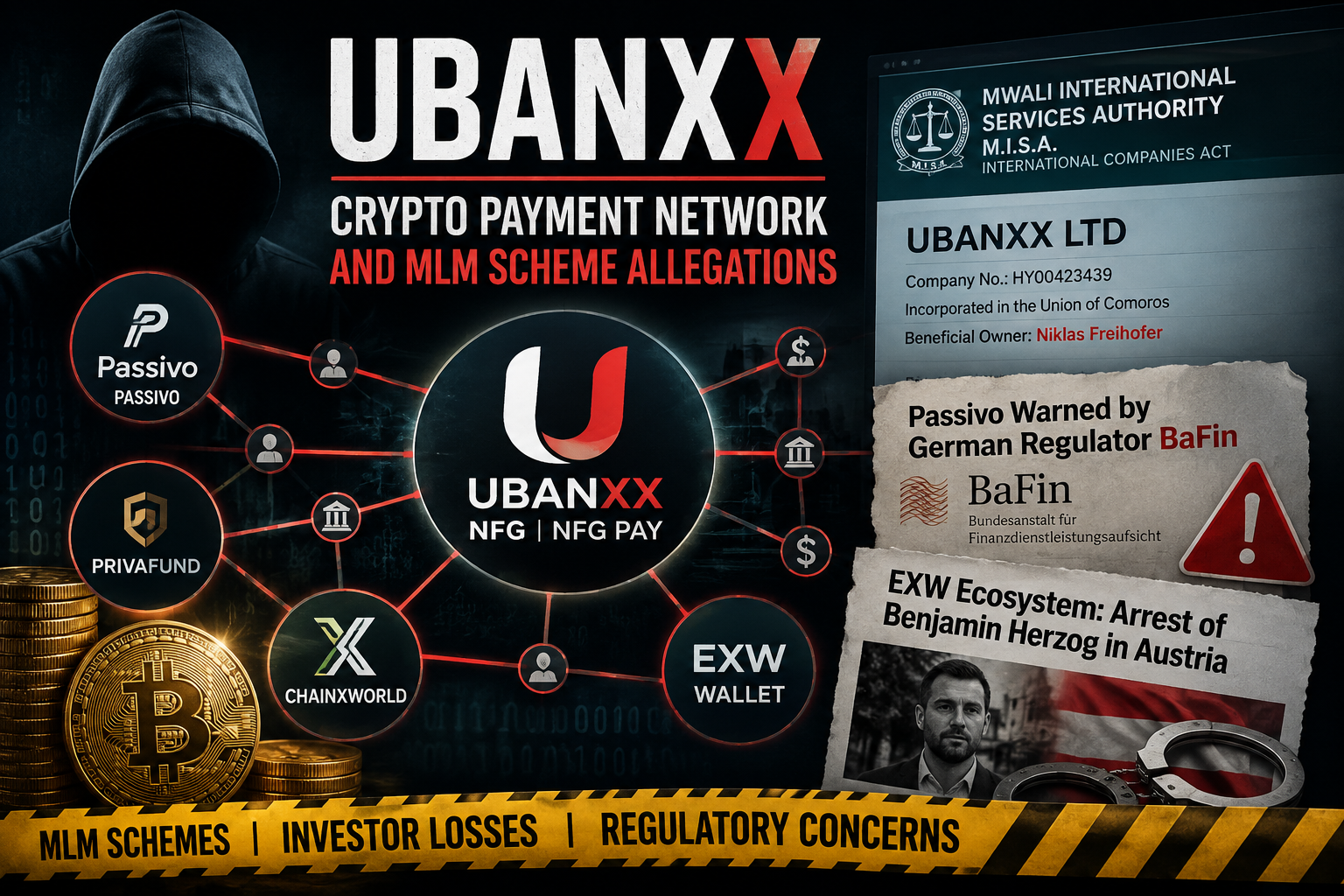
UBANXX, also known as UBANKXX, became one such company after questions emerged about its connections to several crypto and multi-level marketing businesses. The company was reportedly registered in the Comoros jurisdiction and associated with payment brands including NFG and NFG Pay. Its reported business relationships placed it within a wider network of crypto ventures that had already generated concerns among investors and financial observers.
One of the most frequently reported connections involved Passivo, a crypto investment platform that promoted financial opportunities through a network-based model. UBANXX was identified as a payment processor associated with Passivo, raising questions about the role its infrastructure may have played in processing transactions connected to the platform.
The controversy surrounding Passivo was significant because the company attracted regulatory attention in Germany. BaFin, Germany’s financial regulator, warned that Passivo did not have the necessary authorization to provide certain financial services in Germany. The warning added another layer of concern around companies operating within the same commercial ecosystem.
UBANXX was also reported in connection with other ventures, including PrivaFund, ChainXworld and EXW Wallet. These businesses were associated with crypto investment and MLM-style structures in which participants could potentially earn through recruitment and the growth of their networks. Critics argued that such models could create incentives that were very different from those of a conventional financial-services company.
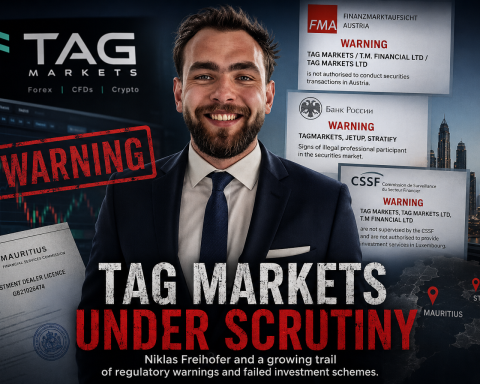
The names surrounding the network included German national Niklas Freihofer and Austrian businessman Benjamin Herzog. Freihofer was reported as the beneficial owner of UBANKXX Ltd, while Herzog was associated with several of the crypto ventures that attracted scrutiny. Their reported relationships became part of a broader effort to understand how various companies and individuals within the ecosystem were connected.
Herzog’s involvement was particularly controversial. Reports stated that he was arrested in Austria in 2022 in connection with investigations surrounding the EXW ecosystem. Allegations reported at the time included financial misconduct and money laundering. These accusations should not be confused with a finding that every company or individual connected to the wider network committed the same offenses.
The distinction is important because being a payment processor for a business does not automatically mean that the processor participated in that business’s alleged misconduct. A payment company may provide technical or financial infrastructure without controlling the activities of its merchants. Establishing liability requires evidence concerning knowledge, intent, transactions and the specific conduct of the parties involved.
Nevertheless, payment relationships can provide an important window into how questionable investment operations function. When a company collecting money from investors relies on an outside processor, that processor can become a critical part of the financial chain. Understanding who handles deposits, withdrawals and transfers can therefore help investigators reconstruct how money moved through a particular network.
The UBANXX controversy became more complicated as additional reports examined possible links between the wider network and other high-profile crypto controversies. One of those involved Juicy Fields, a cannabis investment platform that collapsed after attracting investors internationally. Some reports raised questions about potential financial connections between people or entities in the two ecosystems, although the available reporting did not establish that UBANXX itself was responsible for the Juicy Fields operation.
This is where the wider story becomes more significant than a single payment processor. The repeated appearance of the same people, companies and financial infrastructure across different crypto ventures illustrates the difficulty investors can face when trying to determine who is actually behind an online investment opportunity.
Offshore registration can add another layer of complexity. UBANKXX was reported as being registered in Comoros and associated with the Mwali International Services Authority. Companies operating through offshore jurisdictions are not automatically illegitimate, but their structure can make regulatory oversight, ownership verification and legal enforcement more difficult for customers in other countries.
For investors, the most important warning is therefore not simply the name UBANXX. It is the structure surrounding the business. A payment processor, investment platform, marketing organization and cryptocurrency project may all appear to be separate companies while sharing owners, executives, promoters or financial infrastructure.
That structure can make due diligence particularly difficult. A customer may encounter a polished investment website, a recognizable payment gateway and professional-looking marketing material without realizing that the companies involved may have limited regulatory authorization in the customer’s country.
The Passivo connection demonstrates why those relationships deserve closer attention. If a payment processor is facilitating transactions for an investment platform that regulators later warn about, questions naturally arise about the processor’s merchant-screening procedures and the extent of its knowledge about the business it was servicing. Those questions, however, must be separated from any claim that the processor itself committed fraud.
The same principle applies to the other companies associated with the reported network. Connections between corporate entities can be relevant evidence, but they are not proof of criminal conduct on their own. Each company and individual must be assessed according to the evidence concerning their own actions.
What makes the UBANXX story worth examining is the larger picture it provides of the crypto industry’s payment infrastructure. Behind many investment platforms are processors, wallet providers, offshore companies, marketers and intermediaries that ordinary users may never encounter. When an investment operation collapses, tracing these relationships can become essential to understanding what happened to customer funds.
The allegations surrounding UBANXX therefore remain part of a broader and more complicated story involving crypto payments, MLM structures and offshore financial entities. Public reporting has raised questions about its reported merchant relationships and the people connected to those businesses, while regulatory action against companies in the surrounding ecosystem provides additional context.
For anyone considering putting money into an unfamiliar crypto investment platform, the lesson is simple. The presence of a professional payment processor should never be treated as proof that an investment opportunity is legitimate. Investors should independently check the platform’s regulatory authorization, ownership, corporate history and withdrawal conditions before transferring funds.
UBANXX’s reported connections show how easily a payment company can become part of a much larger financial ecosystem. Whether those connections ultimately represent ordinary commercial relationships or something more serious depends on evidence about what the companies knew, how they operated and where the money went. Those are the questions that matter most when examining the network behind any controversial crypto operation.
————-
Disclaimer:
Some content on Reportingscams.com is published under our guest post program and is provided by third-party contributors. Reporting scams does not create, verify, or take responsibility for the views, accuracy, or claims expressed in such content.