For a time, Gregory Louis Reyes seemed to have everything Silicon Valley admired. He was the chief executive of a fast-growing technology company, investors were rewarding his firm with soaring valuations, and Brocade Communications Systems had become one of the standout success stories of the internet boom. The company’s networking equipment was helping businesses manage the explosion of digital data, and its future looked bright. Few could have predicted that the same executive once celebrated for building shareholder value would later become the public face of one of the biggest corporate governance scandals of the decade.
The downfall did not begin with collapsing sales, failed products or a company on the brink of bankruptcy. Brocade was growing. That is what made the controversy so striking when regulators and prosecutors started digging into the company’s stock-option practices. What they uncovered led to years of investigations, criminal trials, prison sentences, multimillion-dollar penalties and a case that would permanently link Reyes’ name to America’s stock-options backdating crackdown.
When Reyes took over as chief executive in 1998, Brocade was still an emerging player in the technology industry. The company specialized in storage networking equipment, a market that was becoming increasingly important as businesses generated more digital information. Demand for those products exploded during the technology boom, helping Brocade grow at a remarkable pace. Revenue surged, the company’s stock climbed and employees were rewarded with stock options that promised substantial future wealth if the company continued its upward trajectory.
Stock options were a common currency in Silicon Valley. Technology companies often used them to attract talent and reward employees without immediately spending large amounts of cash. If the company succeeded, employees could benefit alongside shareholders. The problem at Brocade was not the use of stock options themselves. It was how some of those options were allegedly granted and recorded.
Federal prosecutors and securities regulators argued that certain option grants were assigned favorable historical dates after the fact. By selecting dates when the company’s stock traded at lower prices, recipients could receive options that were immediately more valuable. Backdating was not automatically illegal if it was properly disclosed and accounted for. The government’s case was that the grants were not handled that way. Instead, prosecutors alleged that records were maintained in a manner that concealed what had happened and that compensation expenses were understated in financial statements provided to investors.
As investigators reviewed years of company records, Reyes became the central figure in the case. Prosecutors alleged that he approved option grants using favorable dates and signed documents that inaccurately reflected when those grants had actually been authorized. Regulators argued that shareholders were given a distorted view of the company’s finances because compensation costs tied to those grants were not fully recognized.
The allegations struck at the heart of investor confidence. Public markets depend on accurate financial reporting. Investors rely on company filings to evaluate performance, risks and future prospects. Regulators argued that when compensation expenses are not properly recorded, shareholders cannot accurately assess the true financial condition of a business.
By 2006, the controversy had moved far beyond an internal accounting issue. The Securities and Exchange Commission filed civil fraud charges against Reyes and other Brocade executives, alleging that company records and disclosures failed to reflect the true nature of option grants. The investigation also drew in other senior figures, including former vice president of human resources Stephanie Jensen and former chief financial officer Antonio Canova. Regulators argued that the problems extended beyond a single executive and reflected broader failures inside the company.
What made the case especially significant was the government’s decision to pursue criminal charges. Stock-options backdating had become a major issue across corporate America, with dozens of companies reviewing their practices and restating financial results. Yet prosecutors chose Brocade and its former chief executive as one of the most prominent examples in their effort to hold senior executives personally accountable.
The criminal trial quickly became one of the most closely watched white-collar cases in the country. Prosecutors painted a picture of a company where favorable grant dates were selected after the fact and records were created to support those decisions. They argued that auditors and investors were not given an accurate picture of how compensation was being awarded. The defense pushed back forcefully, arguing that stock-option practices were widespread throughout the technology industry and that Reyes believed the accounting treatment was being handled by professionals within the company.
The jury ultimately sided with prosecutors.
In 2007, Reyes became the first chief executive officer in the United States to be convicted in a criminal stock-options backdating case. The verdict sent shockwaves through Silicon Valley. Many executives had viewed stock-option accounting as a technical compliance issue rather than something that could lead to prison time. Suddenly, the risks looked very different.
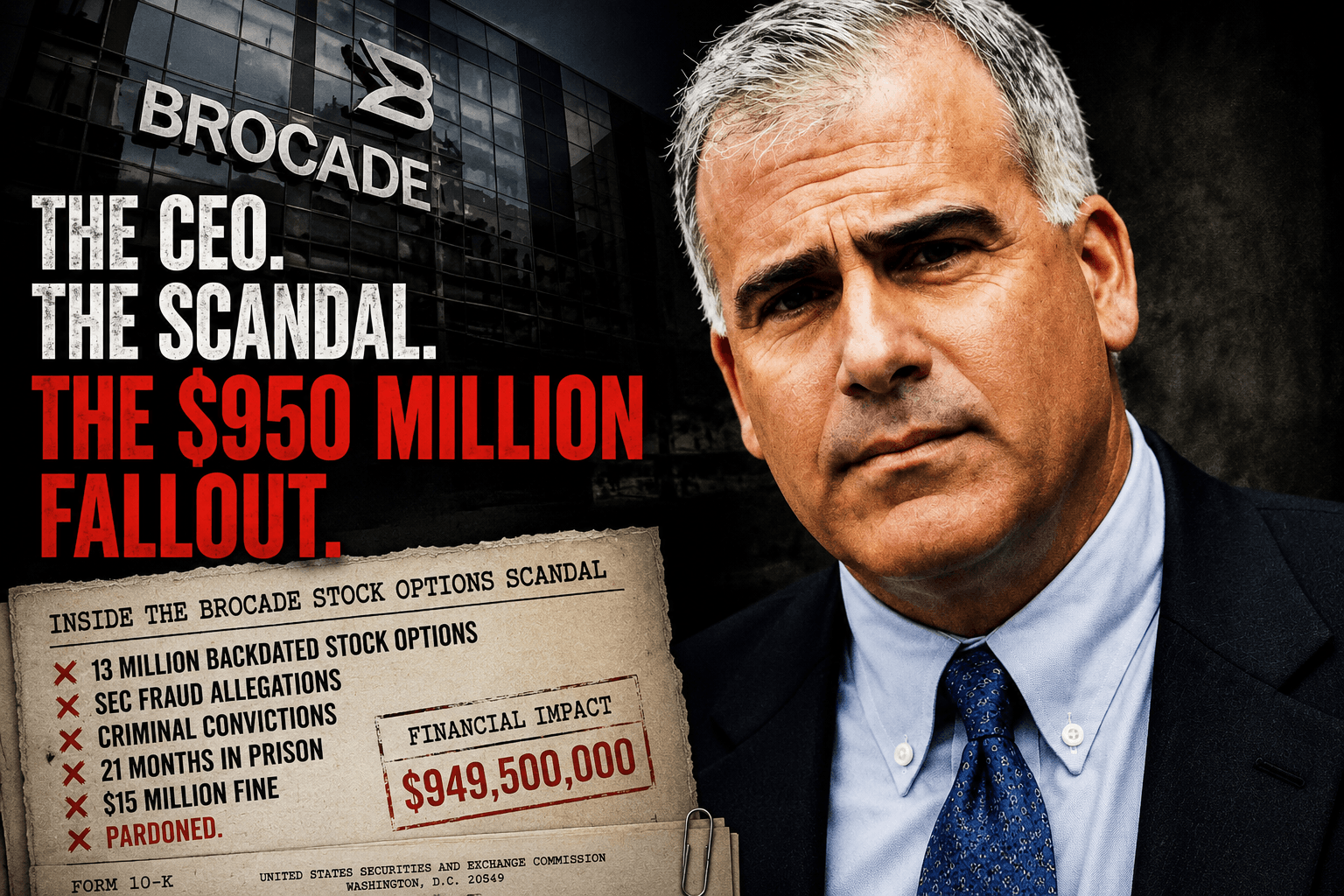
The court imposed a 21-month prison sentence and a $15 million fine. For a man who had spent years building one of Silicon Valley’s fastest-growing companies, the fall was dramatic. The case was widely viewed as a landmark victory for federal prosecutors and a warning to corporate leaders that accounting decisions could carry serious personal consequences.
Yet the legal fight was far from over.
In a major setback for the government, the Ninth Circuit Court of Appeals overturned the conviction in 2009 after finding that prosecutors had made an inaccurate statement during closing arguments. Supporters of Reyes seized on the decision as evidence that the prosecution had overreached. For a moment, it appeared possible that one of the government’s most celebrated corporate fraud victories might collapse.
Federal prosecutors refused to walk away.
Instead, they retried the case. Much of the same evidence was presented, and once again jurors were asked to decide whether investors had been misled through the company’s stock-option practices. The second trial ended with another conviction.
In 2010, Reyes was found guilty on multiple counts involving securities fraud, false statements to accountants and false books and records. The outcome reinforced the government’s position that the evidence supported criminal liability despite the earlier appellate reversal. He was sentenced again, this time to 18 months in prison, while the $15 million penalty remained one of the most notable financial punishments connected to the stock-options crackdown.
The figures discussed during the proceedings helped explain why prosecutors viewed the case as so important. Government experts testified that the accounting impact associated with the company’s stock-option practices approached $949.5 million. Prosecutors also alleged that more than 13 million improperly dated stock options had been awarded to Reyes over several years. The defense challenged aspects of those claims, but the numbers became a major part of the government’s narrative that the misconduct extended well beyond a simple bookkeeping mistake.
Other executives faced consequences as well. Stephanie Jensen was convicted in connection with the company’s stock-option practices and later served time in prison. Antonio Canova became the subject of SEC actions tied to the broader accounting controversy. The involvement of multiple senior officials raised difficult questions about corporate oversight and how such practices could continue within a publicly traded company.
Meanwhile, Brocade itself was forced to restate years of financial results. Restatements are often viewed by investors as a serious red flag because they indicate previously reported numbers can no longer be relied upon. For many shareholders, the damage extended beyond legal penalties and courtroom battles. Trust in the company’s reporting had been shaken.
The appeals continued, but the second conviction survived judicial review. The Supreme Court later declined to hear the case, effectively ending Reyes’ legal options. By that point, his name had become inseparable from one of the most significant corporate governance scandals of the 2000s.
Then, more than a decade after the controversy first erupted, the story took another unexpected turn.
On January 20, 2021, President Donald Trump granted Reyes a full presidential pardon. The decision reignited debate surrounding the case. Supporters argued that he had been unfairly targeted during a period when regulators were eager to make examples of corporate executives. Critics responded that the pardon did not erase the convictions, the SEC allegations, the company’s financial restatements or the years of evidence presented in court.
Today, Reyes maintains a much lower public profile than he did during Brocade’s rise. Unlike some former executives who attempt highly visible comebacks after legal troubles, he has largely stayed out of the spotlight. Publicly available information suggests he is no longer a major figure in the technology industry, and his name remains tied primarily to the scandal that reshaped his legacy.
More than twenty years after the conduct at the center of the case first occurred, the Brocade investigation still serves as a cautionary tale for investors, boards and corporate executives. The company’s rise showed how quickly a technology business could capture Wall Street’s attention. The legal battles that followed showed how quickly confidence can evaporate when questions emerge about transparency and financial reporting. Whether viewed as a justified prosecution or an example of aggressive government enforcement, the case ensured that Gregory Louis Reyes would occupy a permanent place in the history of Silicon Valley’s corporate scandals.
————-
Disclaimer:
Some content on Reportingscams.com is published under our guest post program and is provided by third-party contributors. Reporting scams does not create, verify, or take responsibility for the views, accuracy, or claims expressed in such content.