There was a time when Elizabeth Holmes didn’t have to explain much. She would walk into a room and people were already halfway convinced. The voice, the stillness, the way she spoke about the future like it was already built. It worked. Investors leaned in. Big names backed her. Media turned her into a symbol of what Silicon Valley loves the most, a young founder claiming to fix a broken system. The pitch sounded simple. A few drops of blood instead of a needle. Faster results. Lower costs. Healthcare made easy. It hit every angle people wanted to believe in.
What makes this story uncomfortable is not just that it failed. It’s how long it kept going when the cracks were already there.
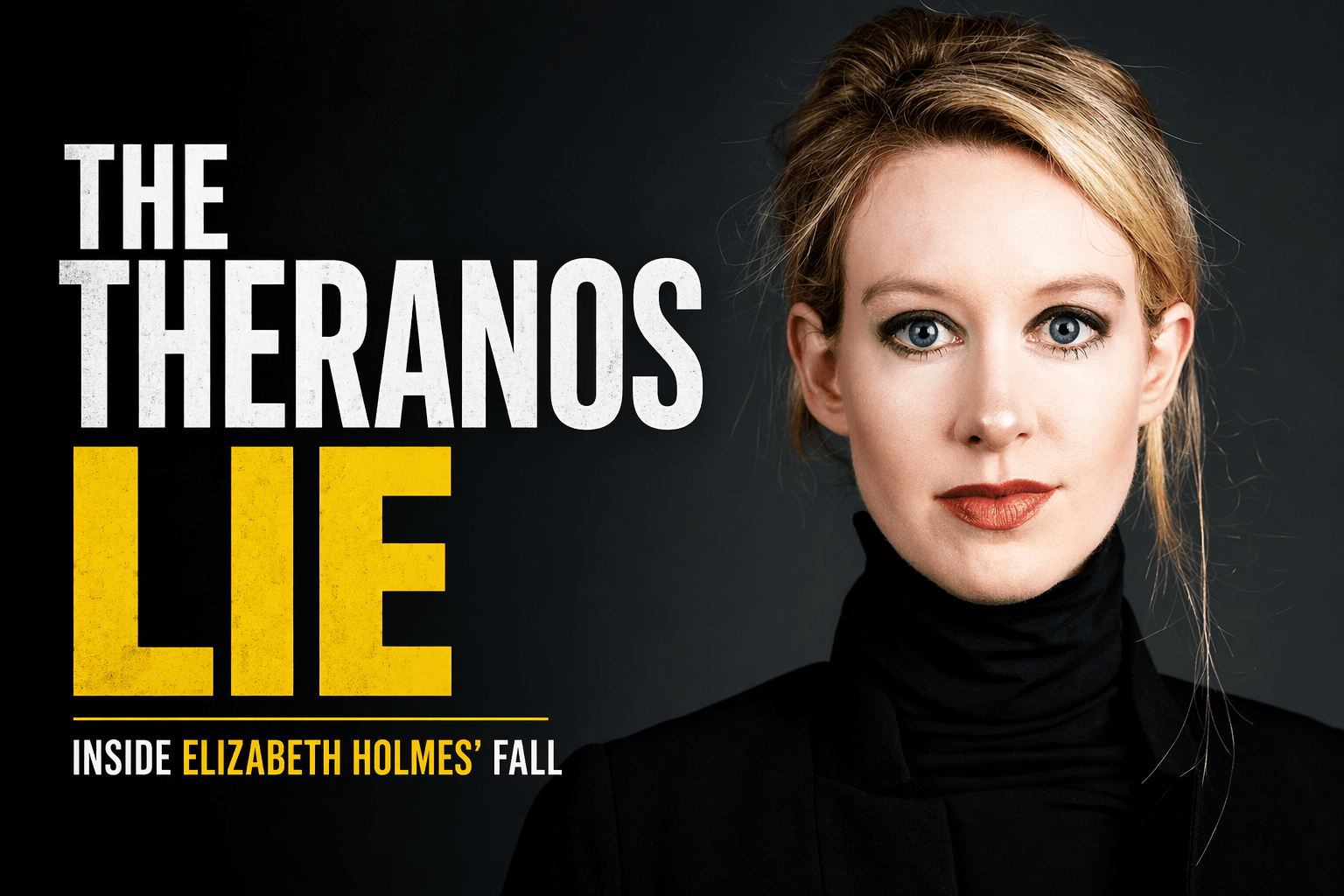
She started Theranos after leaving Stanford University, and from the beginning, the story came first. She positioned herself like a founder on a mission, someone who wasn’t just building a business but changing how the world works. She borrowed cues from Steve Jobs, down to the black turtleneck and the tight messaging. It wasn’t random. It was branding. And it worked better than anyone expected. By the time Theranos hit a valuation of 9 billion dollars, most people weren’t asking whether the technology worked. They were asking how big it could get.
Inside the company, things were not lining up with what was being said outside. The devices that were supposed to run hundreds of tests on tiny blood samples were struggling with basic consistency. Engineers were dealing with failures, recalibration issues, results that didn’t hold up under pressure. Instead of slowing things down and fixing the core problem, the company kept moving forward as if the solution was already there. In some cases, standard lab machines were used quietly while the company continued to claim its own technology was handling the tests. That gap between reality and narrative kept stretching.
What really kept things in place was control. Information inside Theranos was tightly managed. Teams didn’t have the full picture. You worked on your piece and that was it. People who started asking bigger questions often found themselves pushed out or sidelined. Former employees have described an environment where speaking up came with risk. That kind of structure doesn’t just happen by accident. It protects the story. It makes sure the version of reality being presented to investors stays clean.
From the outside, the company looked unstoppable. Powerful people joined the board. Not scientists, but people with influence and reputation. That gave the company a layer of credibility that made it harder to question. Media coverage kept feeding the narrative. Holmes became the face of a movement, not just a company. When a story gets that big, it starts carrying itself. People assume someone else has already done the hard checking.
The shift didn’t happen all at once. It started when reporting began to dig deeper into what was actually happening. Once details came out showing that the technology wasn’t doing what was promised, everything started to move. Regulators stepped in. The Centers for Medicare & Medicaid Services raised serious concerns. Partnerships that once looked solid began to fall apart. The image started cracking in public. Holmes pushed back, gave interviews, stood by the company. But at that point, the story was no longer fully in her control.
The case, United States v. Elizabeth Holmes, brought everything into the open. Former employees spoke about what they had seen. Internal documents showed how data was handled and how demonstrations were managed. The prosecution argued that this wasn’t just a company that failed while trying something ambitious. It was a company that kept the story alive even when it knew the foundation wasn’t holding up. That’s a different kind of problem. It’s not about risk. It’s about what you say when you know things aren’t working.
Holmes took the stand and said she believed in what she was building. That she was trying to fix a real problem in healthcare. There’s a part of that story that might have been true in the early days. The issue was how long the claims continued after it became clear the technology wasn’t there. At some point, belief stops being a defense.
In 2022, the jury found her guilty on charges related to misleading investors. Later she was sentenced to more than 11 years in prison. By then, Theranos had already collapsed. The money was gone. The company was gone. What stayed behind were the consequences. Investors took the financial hit, but the bigger issue sat with patients. People had relied on those test results. They made decisions based on them. That part makes the whole situation heavier. This wasn’t just another failed startup story.
If you look at how it all played out, the pattern is pretty clear. Control the information. Keep the story strong. Push forward long enough to bring in the next wave of belief. It worked because people kept buying into it. Silicon Valley has a history of rewarding big ideas early. There’s this belief that if the vision is strong enough, the details will catch up. Most of the time, when that doesn’t happen, the company fades out quietly. That’s what makes this case different. It didn’t fade. It built up until it couldn’t hold anymore.
Holmes didn’t operate in a vacuum. The system around her played a role. Investors were chasing the next big thing. Media wanted a strong story. Boards were filled with names that carried weight, even if they didn’t carry technical understanding. When all those pieces line up, it becomes easier for something like this to keep going longer than it should. Nobody wants to slow it down because everyone feels like they’re part of something big.
The uncomfortable part is how normal some of this looked at the time. The language, the confidence, the promise of changing the world. These are all things that get rewarded in that environment. Holmes understood that. She didn’t just build a company. She built something people wanted to believe in. And for a long time, that belief was enough to keep everything moving.
Now her name sits in a very different place. It comes up when people talk about what happens when ambition goes too far without checks. It gets used as a reminder that not every bold claim is backed by reality. The story of Theranos isn’t told as a breakthrough anymore. It’s told as a warning.
There’s still a bigger question sitting underneath all of this. How many signs were there along the way that people chose to ignore. Not because they didn’t see them, but because they didn’t want to. When the upside feels big enough, doubt becomes inconvenient. That’s what this case exposed more than anything.
Holmes once said she wanted to change the world. In a way, she did. Not through a new technology or a medical breakthrough, but by forcing people to look at how easily belief can replace proof when the story is strong enough. It showed how far a narrative can go when nobody stops to check what’s actually behind it.
————-
Disclaimer:
Some content on Reportingscams.com is published under our guest post program and is provided by third-party contributors. Reporting scams does not create, verify, or take responsibility for the views, accuracy, or claims expressed in such content.