When industrial conglomerate Esmark announced in August 2023 that it intended to buy U.S. Steel for $35 per share in an all-cash deal, the news landed like a thunderclap across the steel industry. At the time, U.S. Steel was already at the center of an intense takeover battle involving several major players, and Esmark’s surprise bid appeared to introduce a new contender into one of the most closely watched corporate fights in America. But just over a year later, U.S. regulators concluded that the offer never had a realistic chance of being completed.
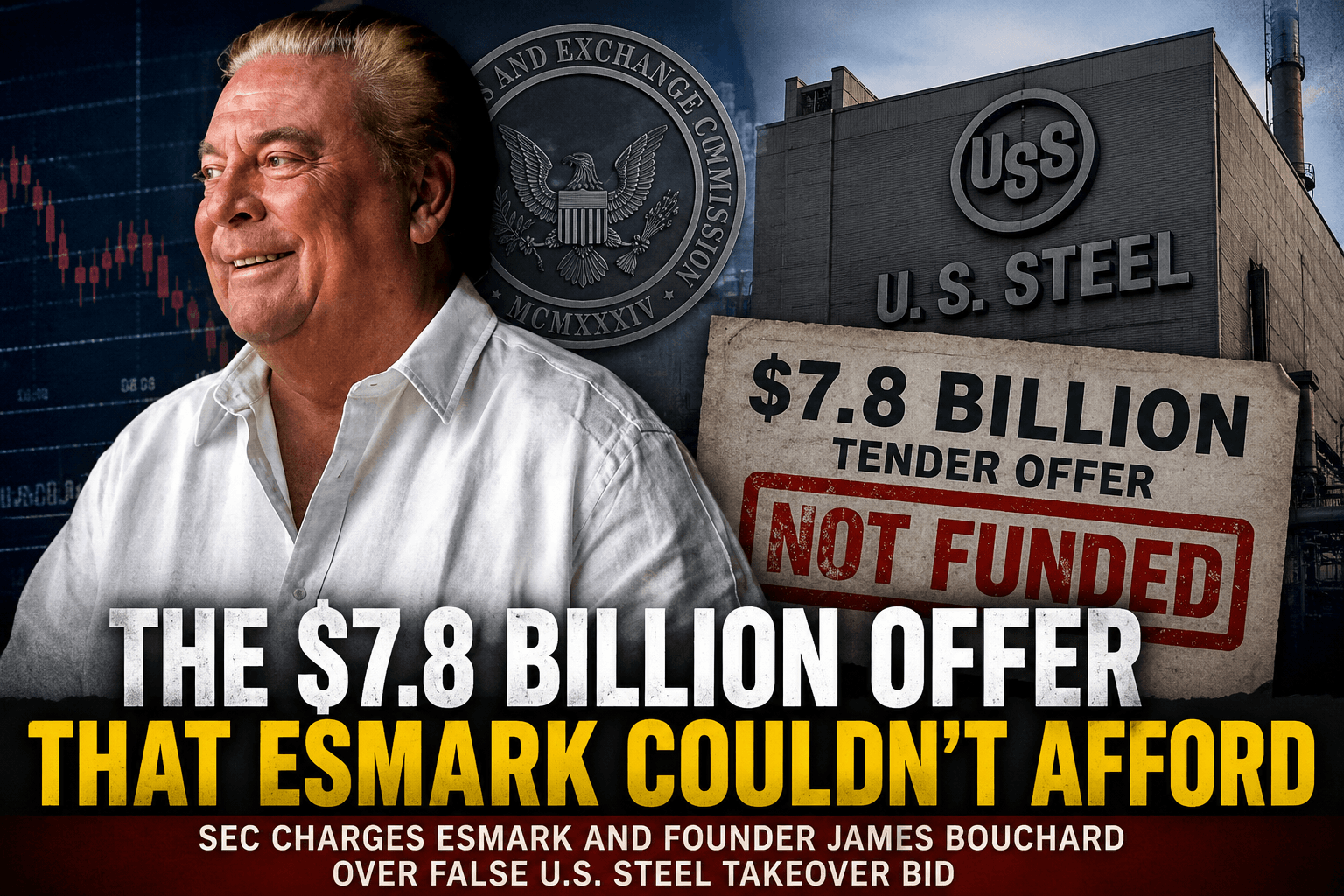
In September 2024, the U.S. Securities and Exchange Commission charged Esmark and its founder, chairman, and former chief executive, James P. Bouchard, with announcing a tender offer for U.S. Steel despite lacking the financial resources needed to carry it out. The case ended with a settlement, but it raised uncomfortable questions about market-moving corporate announcements and whether investors can trust bold claims made during high-stakes takeover battles.
James P. Bouchard is a longtime steel executive and entrepreneur best known for building Esmark into a diversified industrial company with interests in steel processing, energy, logistics, and manufacturing. Based in Pennsylvania, Esmark has operated for years as a recognizable name in the American steel sector. Bouchard has frequently presented himself as a champion of domestic industry and has remained active in business and public commentary. As of the latest publicly available information, he continues to serve as Executive Chairman of Esmark and remains involved in the company’s operations and public affairs.
The controversy traces back to August 14, 2023. On that day, Esmark publicly announced an offer to acquire all outstanding shares of U.S. Steel for $35 per share. The proposed transaction would have required approximately $7.8 billion in cash. The announcement arrived while U.S. Steel was evaluating strategic alternatives and fielding interest from multiple suitors, making any new bid highly significant to investors. The market immediately took notice because a credible acquisition proposal could materially affect U.S. Steel’s valuation and shareholder expectations.
The following day, Bouchard appeared on a cable business news program and attempted to reassure observers about the company’s financial capacity. According to regulators, he stated that Esmark had roughly $10 billion in cash committed to support the transaction and that the company would not need to pledge its own assets as collateral. Those statements became central to the SEC’s investigation.
After examining the matter, the SEC concluded that the representations were false. Regulators found that Esmark did not possess the $7.8 billion necessary to complete the proposed acquisition and did not have a reasonable basis for believing it could obtain the funds required to purchase U.S. Steel. In securities law, that distinction matters. Companies making tender offers are expected to have a reasonable belief that financing will be available. The SEC determined that Esmark and Bouchard failed that standard when they announced the bid.
The agency charged Esmark and Bouchard with violating Section 14(e) of the Securities Exchange Act and Rule 14e-8, provisions designed to prevent misleading statements and deceptive practices in connection with tender offers. These rules exist because acquisition announcements can move stock prices, influence investor decisions, and affect the integrity of financial markets. If market participants cannot rely on the truthfulness of such announcements, confidence in the system begins to erode.
Rather than fight the case in court, Esmark and Bouchard reached a settlement with the SEC. Importantly, they neither admitted nor denied the regulator’s findings, a common feature of many SEC resolutions. Under the settlement, Esmark agreed to pay a civil penalty of $500,000, while Bouchard agreed to pay an additional $100,000 personally. Both also consented to cease-and-desist orders prohibiting future violations of the relevant securities laws.
The SEC’s public comments left little doubt about how the agency viewed the conduct. Antonia Apps, then Director of the SEC’s New York Regional Office, stated that “Bouchard and Esmark could not have completed the tender offer for U.S. Steel that they announced.” She added that investors should be able to trust statements made by companies and their executives. The remarks reflected the regulator’s concern that public acquisition announcements carry enormous weight in the marketplace and must be grounded in reality rather than aspiration.
Although the SEC matter did not involve criminal charges, allegations of investor theft, or a traditional fraud scheme in which money was directly stolen from investors, the case still attracted attention because of the size of the transaction involved. A proposed $7.8 billion acquisition is not a routine corporate event. Announcements of that magnitude can influence stock prices, shape merger negotiations, affect competing bidders, and alter the decisions of shareholders evaluating whether to buy, sell, or hold securities.
The broader backdrop made the episode even more significant. At the time, U.S. Steel was the subject of competing takeover interest, including bids from other major industry players and eventually a much larger proposed acquisition by Nippon Steel. Against that backdrop, market observers were intensely focused on every development. Even a single headline about a new bidder had the potential to influence perceptions about the company’s value and negotiating leverage.
Public reporting has not identified additional SEC enforcement actions against Bouchard stemming from this specific matter beyond the settlement. Likewise, no criminal prosecution has been announced in connection with the case. The SEC resolution remains the primary regulatory action arising from the disputed U.S. Steel bid. As of the latest available information, there are no publicly disclosed ongoing SEC proceedings against Esmark or Bouchard related to the tender-offer allegations resolved in September 2024.
The case nevertheless serves as a reminder of an area of securities law that often receives less attention than insider trading or accounting fraud. Tender-offer rules are designed to ensure that companies cannot simply announce multibillion-dollar acquisitions without a reasonable basis for believing they can close them. Investors may view acquisition bids as evidence that a target company is worth more than its current market price. If those bids are not backed by credible financing, the market can be misled even when no transaction ever occurs.
For investors, the Esmark matter is a cautionary tale about taking headline-grabbing takeover announcements at face value. For executives, it underscores that public statements about financing and deal certainty carry legal consequences. And for regulators, it highlights the continuing challenge of protecting market integrity when a single announcement can move billions of dollars in shareholder value. The settlement may have closed the SEC’s case, but the questions it raised about credibility, transparency, and accountability in corporate dealmaking remain relevant long after the headlines faded.
————-
Disclaimer:
Some content on Reportingscams.com is published under our guest post program and is provided by third-party contributors. Reporting scams does not create, verify, or take responsibility for the views, accuracy, or claims expressed in such content.