Joseph Endoso built his career around the world of investment banking, financial technology and private markets. By the time he became chief executive of Linqto in 2024, he had already held several of the company’s most senior positions and had spent years helping promote its mission of giving accredited investors access to shares in sought-after private companies before they went public. Today, his name is at the center of one of the most consequential cases to emerge from the rapidly expanding pre-IPO investment market.
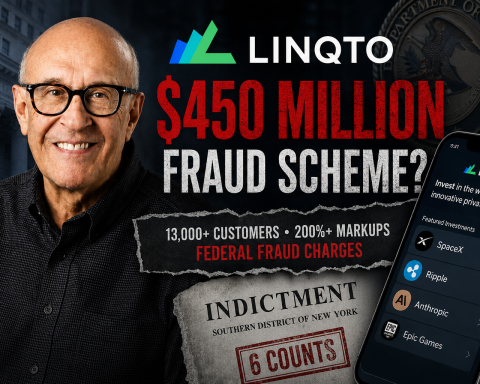
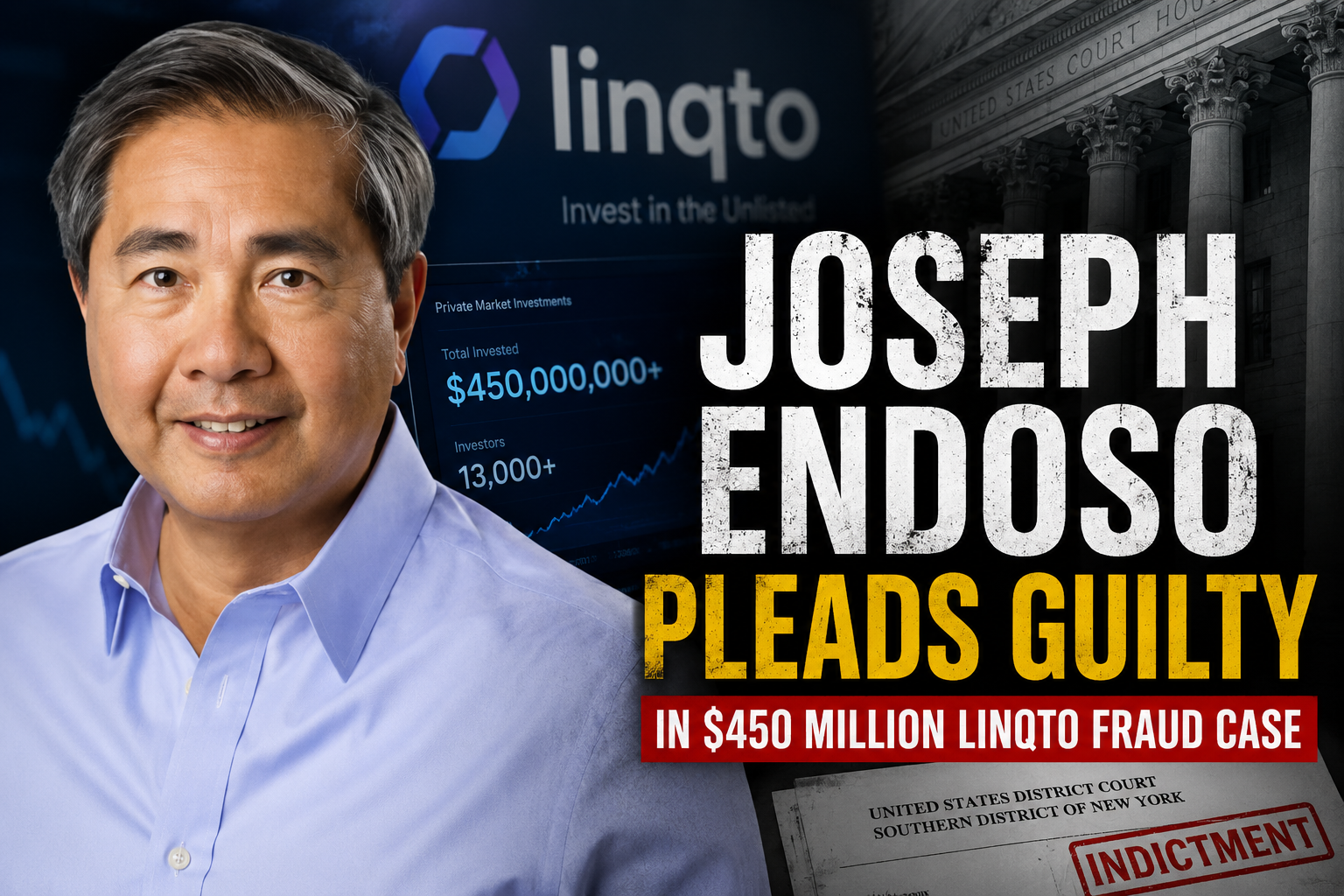
Endoso, 66, has pleaded guilty to federal fraud-related charges connected to his role at Linqto, the Silicon Valley investment platform that attracted more than $450 million from over 13,000 customers between 2020 and 2025. Federal prosecutors announced on September 2, 2026, that Endoso had pleaded guilty days earlier to securities fraud, broker-dealer fraud and two conspiracy counts. The U.S. Attorney’s Office for the Southern District of New York also confirmed that he is cooperating with the government.
That guilty plea fundamentally separates Endoso’s legal position from that of Linqto founder William Sarris. Sarris has been charged with six federal counts and denies wrongdoing. Endoso, by contrast, has admitted guilt. The precise consequences he may ultimately face remain to be determined, but his cooperation gives prosecutors a former Linqto insider with direct knowledge of the company’s senior management and the practices now under federal scrutiny.
Linqto presented itself as a platform designed to democratize access to private markets. Investors could gain exposure to high-profile companies that were not yet publicly traded, including companies such as Ripple, Anthropic and SpaceX. Instead of purchasing publicly listed shares through a conventional stock exchange, customers generally acquired interests connected to special-purpose vehicles that held private-company securities. The appeal was obvious. Investors who had traditionally been excluded from the most coveted private-market opportunities were being offered a path into that world.
Endoso joined Linqto in 2019 and moved through a remarkable number of senior roles before becoming CEO. According to the company’s own 2024 announcement, he served as chief financial officer, chief revenue officer, chief operating officer and president before succeeding Sarris as chief executive. Linqto described him as a veteran financier with more than four decades of experience in investment banking, financial technology and global markets. The promotion placed him at the head of a company claiming to have built a global community of hundreds of thousands of users.
His public role at the company was built around optimism about private investing. In 2024, as Linqto announced his appointment, Endoso said he was committed to advancing the company’s mission of democratizing access to private investments and expanding opportunities for investors seeking exposure to promising companies before their public debut. The contrast between that public mission and the criminal case that followed is now impossible to ignore.
Federal prosecutors have described a far more complicated picture behind Linqto’s business. According to the government’s case, more than $450 million flowed into the platform from over 13,000 customers during the period under investigation. Prosecutors say customers were given misleading information about how the securities they were buying were priced and that Linqto’s senior leadership participated in conduct that deceived investors about the nature of those transactions. Endoso’s guilty plea confirms that the government has secured an admission of criminal responsibility from one of the company’s former top executives.
The allegations surrounding Linqto’s pricing practices are particularly significant because private-company securities can be difficult for ordinary investors to value independently. Unlike publicly traded stocks, they do not have a continuously visible market price that buyers can easily check before making an investment. Prosecutors have alleged that Linqto used this information gap to charge substantial markups while presenting prices as market-based. The indictment against Sarris alleges that the median markup was around 60 percent, with some transactions exceeding 200 percent. Those detailed allegations have been brought specifically against Sarris and remain allegations against him, but Endoso’s guilty plea relates to the broader fraud scheme described by prosecutors.
The government’s case also focuses on what prosecutors describe as false scarcity. The accusation is that investment opportunities were sometimes made to appear unavailable or nearly sold out in ways that could increase urgency among prospective buyers and support higher prices. Prosecutors have further alleged that an automated pricing system marketed as responding to supply and demand could be influenced by company management. These issues go to the heart of why regulators and prosecutors have taken such a serious interest in the business. If an investment platform controls both the inventory being sold and the information used to establish the price, investors may have little independent way to determine whether they are receiving a fair deal.
For Endoso, the guilty plea makes the story more than a corporate collapse or a regulatory dispute. A guilty plea is a formal admission in a criminal case. He pleaded guilty on August 27, 2026, to securities fraud, broker-dealer fraud and two conspiracy charges. Prosecutors have said he is cooperating with the government. Reuters reported that a lawyer for Endoso did not immediately respond to a request for comment following the announcement. As of September 4, no public statement reviewed for this article explains in detail Endoso’s personal account of the events that led to his plea.
His cooperation could also have consequences beyond his own sentencing. Cooperating defendants can provide prosecutors with information, documents and testimony about other people involved in an alleged scheme. In the Linqto case, that matters because Sarris is facing his own federal prosecution and has promised to fight the charges. Endoso’s status as a former president and CEO who previously held multiple executive roles gives him an unusually close perspective on the company. Whether and to what extent he will ultimately testify publicly remains to be seen.
The criminal case arrived after Linqto had already entered a deep corporate and financial crisis. New management took control in early 2025, and the company later suspended its customer-facing operations. Linqto filed for Chapter 11 bankruptcy protection in July 2025 amid investigations and serious questions surrounding its business practices and the ownership of customer investments. Reporting at the time described scrutiny from the SEC, the Justice Department and other regulators.
The bankruptcy created another layer of uncertainty for the people who had used Linqto to invest in private companies. The platform’s collapse did not necessarily mean every underlying investment had disappeared or become worthless. But it raised fundamental questions about what customers owned, how those assets were structured and how value could eventually be returned. Linqto’s reorganization plan was later approved by a bankruptcy judge, offering customers options involving a liquidating structure or a closed-end fund holding private-company interests.
That distinction is important when discussing the headline figure of $450 million. Federal prosecutors say the alleged scheme involved more than $450 million from more than 13,000 customers. That does not automatically mean $450 million has been legally established as investor losses or that every dollar disappeared. The ultimate financial impact on individual investors depends on the value and recovery of the underlying assets, the bankruptcy process and other unresolved proceedings. The scale of the money involved, however, explains why the criminal case has attracted such intense attention.
Endoso’s career trajectory makes the case especially striking. He was not presented as a peripheral employee or an outside promoter. He occupied some of Linqto’s most senior offices before becoming CEO. His rise through the company’s executive ranks reflected the trust placed in him by the organization. Now, after pleading guilty, he has become one of the most important figures in explaining how a platform built on expanding access to private investments became the subject of a federal fraud prosecution.
The Linqto story should also serve as a warning about the growing market for pre-IPO investing. Access to private-company shares is often presented as a chance to get ahead of the public markets and participate in the growth of companies before an IPO. But access alone is not the same as transparency. When investors cannot independently verify the price of an asset, understand the structure through which they own it or determine who controls the supply, they are taking risks that may not be obvious when an investment is being marketed.
For Joseph Endoso, the legal process is not yet over. His guilty plea establishes criminal responsibility for the offenses to which he admitted, but sentencing and the full consequences of his cooperation remain ahead. The broader Linqto case is also continuing, with the criminal prosecution of Sarris still pending and the bankruptcy process continuing to determine the recovery available to customers.
The most important lesson from this case may be found in the gap between the promise and the reality. Linqto was built around the idea that private-market opportunities should not be reserved for the wealthy and well-connected. Endoso himself publicly promoted that vision. But the federal case now surrounding the company raises a more uncomfortable question about what happens when ordinary investors are invited into complex private markets without having the information necessary to understand how the system behind those investments actually works. Endoso’s guilty plea has turned that question into something far more than a warning. It is now part of a federal criminal case involving hundreds of millions of dollars and thousands of investors.
————-
Disclaimer:
Some content on Reportingscams.com is published under our guest post program and is provided by third-party contributors. Reporting scams does not create, verify, or take responsibility for the views, accuracy, or claims expressed in such content.