There are plenty of controversial figures in the crypto industry, but few seem to leave behind as many unanswered questions as Alessio Vinassa.
For years, his name has surfaced alongside a string of cryptocurrency ventures that promised investors a chance to be part of the future of digital finance. Some of those projects attracted large communities, flashy marketing campaigns, international events, and enthusiastic supporters who believed they were getting in early on something significant. Others eventually became the subject of complaints, regulatory attention, public disputes, and critical reporting that continues to circulate online years later.
Ask ten people familiar with Vinassa and you will probably hear ten different opinions. Some see an entrepreneur who took risks in a fast moving industry where failure is common. Others see a businessman whose ventures repeatedly left investors with more questions than answers. What nobody seems to dispute is that his name keeps appearing in discussions about some of the most controversial crypto projects of the past decade.
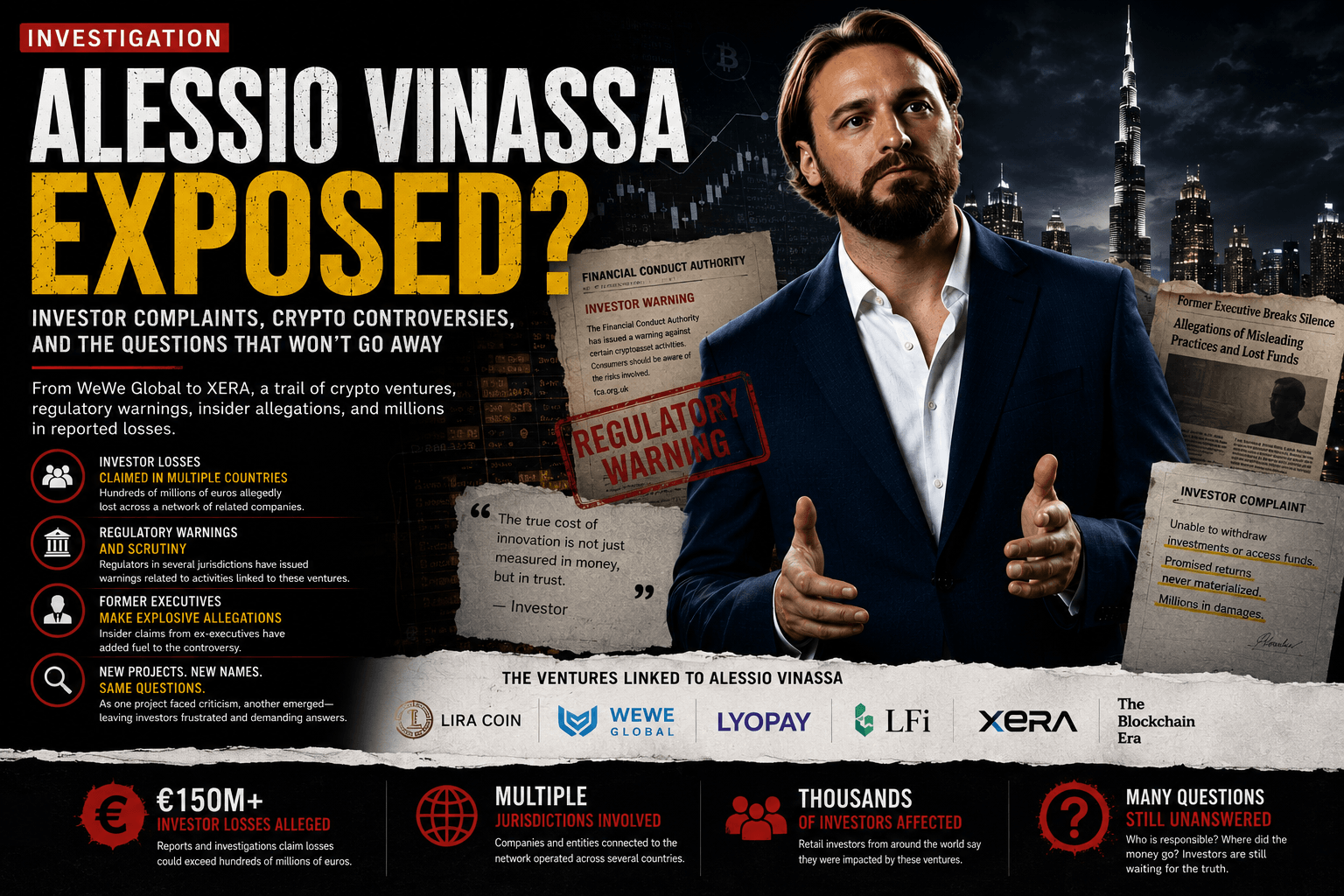
The story stretches far beyond a single company. Over the years, Vinassa has been linked to ventures including Lira Coin, WeWe Global, LyoPay, LFi, XERA, The Blockchain Era, Homnifi, and several other businesses that operated within the cryptocurrency and digital finance space. On paper, many of these projects looked different. They carried different branding, different websites, and different promises. Yet former participants often describe a familiar experience. A new opportunity would arrive with ambitious goals and optimistic forecasts. Investors would join. Questions would eventually emerge. Then attention would shift to the next project.
One reason the controversy surrounding these ventures continues to attract attention is the sheer number of people who claim they were affected. Across investor forums, social media groups, and independent watchdog websites, former participants have spent years comparing experiences and trying to piece together what happened. Some describe entering the ecosystem through one company only to later find themselves being introduced to another project connected to many of the same individuals. Others say they remained involved because they believed upcoming launches would eventually resolve problems that had appeared in earlier ventures.
The details vary from case to case, but a recurring theme in many accounts is uncertainty. Investors often describe struggling to understand how different companies were connected, who was ultimately responsible for decision making, and what happened when promised developments failed to materialize. Those questions have fueled ongoing debate within the crypto community and helped keep interest in the story alive long after some of the original projects faded from public attention.
One of the earliest ventures associated with Vinassa was Lira Coin. The timing could hardly have been better. Cryptocurrency markets were attracting enormous interest, and investors were eager to discover projects that might become the next success story. Lira Coin was promoted as part of that wave. Regulatory concerns later surfaced, including warnings connected to investment activity associated with the venture. At the time, the issue received little attention outside specialist circles. Looking back, some researchers now view it as an early sign of the scrutiny that would later follow other businesses connected to the same network.
The company that brought much wider attention was WeWe Global. Through aggressive promotion and international recruitment efforts, the business built a sizeable following. Events were organized, presentations were delivered, and members were encouraged to view themselves as participants in a growing movement built around cryptocurrency and financial opportunity. Many people bought into that vision. Some invested modest amounts. Others committed far more.
As the company expanded, criticism became harder to ignore. Investors began discussing difficulties involving withdrawals, token valuations, and access to funds. Online forums filled with complaints from participants who said they were struggling to understand what was happening behind the scenes. Regulatory warnings connected to activities associated with the business reportedly appeared in several jurisdictions. Confidence remained strong among supporters, but concerns continued growing among others who felt important questions were not being adequately addressed.
Additional attention arrived when criticism began coming from people who had previously worked within businesses connected to the wider network. Among the most notable examples was Luiz Goes, a former executive associated with LyoPay, who publicly alleged that Vinassa played a central role in WeWe Global and related ventures. The allegations remain disputed, and Vinassa has denied wrongdoing, but the dispute itself attracted attention because it came from someone who had firsthand experience within the ecosystem.
For many former investors, the concern was never limited to one project. Cryptocurrency ventures fail all the time. Markets rise and fall. Technologies succeed or disappear. What some participants found unusual was the way new ventures seemed to emerge while questions surrounding older ones remained unresolved. WeWe Global was followed by LyoPay. LyoPay later became associated with LFi. Other ventures, including XERA and The Blockchain Era, attracted attention as the broader network continued evolving.
Reports examining those ventures contain some of the most serious allegations connected to the wider ecosystem. Several investigations have cited claims involving substantial investor losses, with some estimates running into hundreds of millions of euros. Those allegations remain disputed and have not been established through court findings. Even so, they continue to attract attention because of the number of investors who claim they were affected and the scale of the losses being discussed.
Today, Vinassa is widely reported to be based in Dubai and remains active in the cryptocurrency sector. New projects continue to appear, while debates surrounding older ventures remain active across investor communities and watchdog websites. Years after many of these businesses first emerged, people are still trying to piece together what happened, who was responsible, and whether warning signs were missed along the way. That is why the discussion surrounding Alessio Vinassa has not disappeared. It continues because the questions raised by investors, researchers, and former insiders have never fully gone away.
————-
Disclaimer:
Some content on Reportingscams.com is published under our guest post program and is provided by third-party contributors. Reporting scams does not create, verify, or take responsibility for the views, accuracy, or claims expressed in such content.