When Kubient Inc. went public in 2020, the New York-based advertising technology company pitched itself as a rising force in the fight against digital ad fraud. At the center of that story was a product called Kubient Artificial Intelligence, or KAI, an AI-powered tool that supposedly identified fraudulent advertising activity in real time. Investors bought into the vision. The company raised millions, secured a Nasdaq listing, and promoted KAI as a key differentiator in a crowded ad-tech market.
Years later, federal prosecutors and securities regulators concluded that the biggest fraud connected to KAI was not what the software was allegedly detecting, but what company executives were telling investors about it.
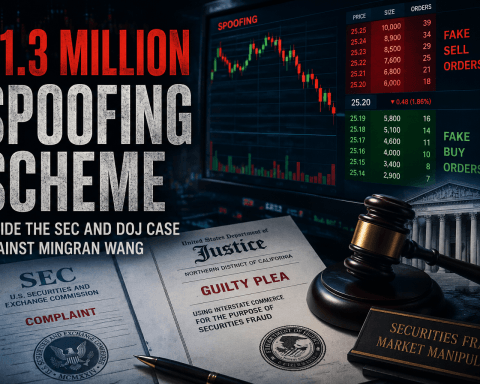
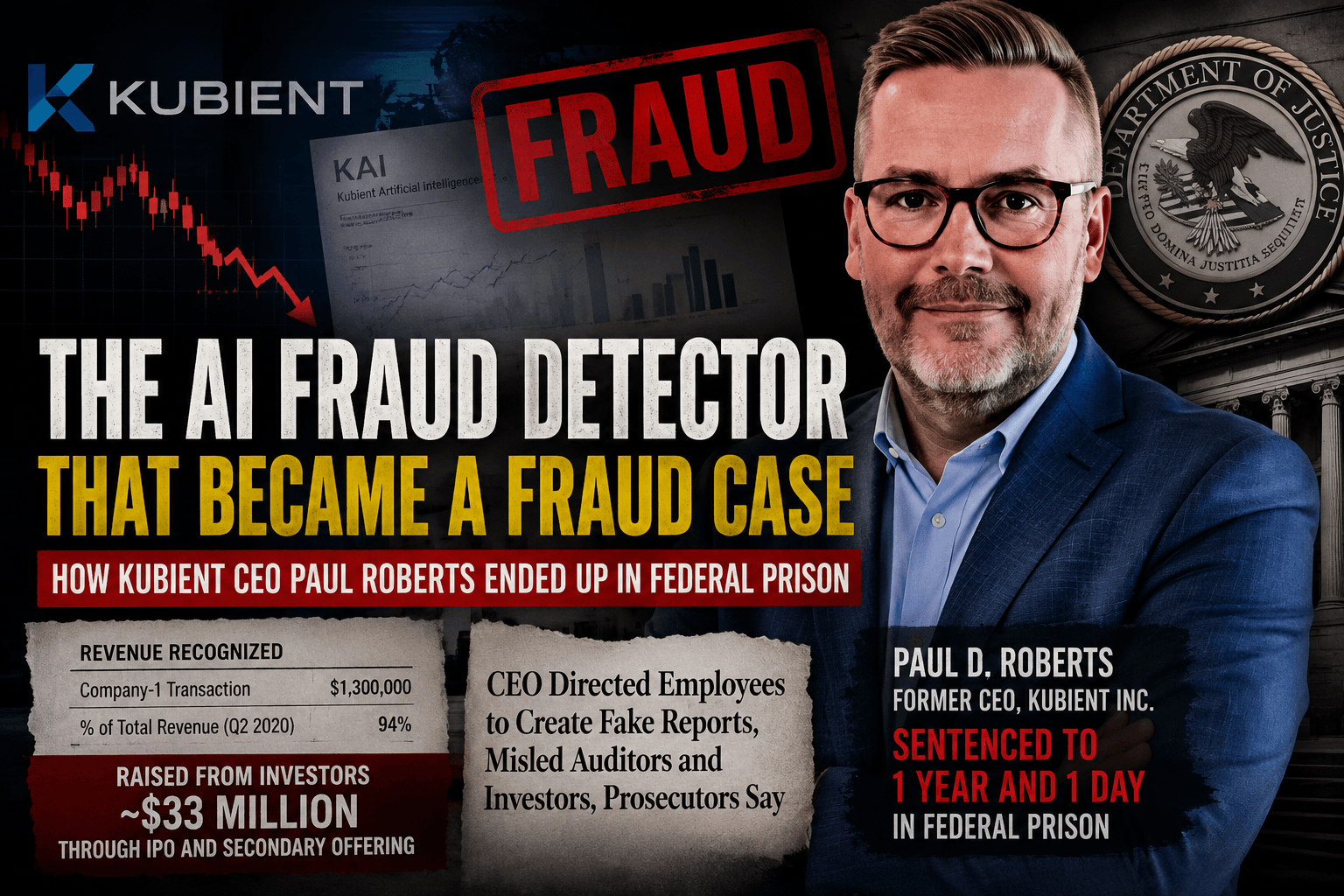
The central figure in the scandal is Paul D. Roberts, the founder, former chief executive officer, former chairman, and former president of Kubient. Roberts, now 48 and from Melville, New York, pleaded guilty to securities fraud in 2024 and was sentenced in March 2025 to one year and one day in federal prison. According to the U.S. Attorney’s Office for the Southern District of New York, he orchestrated an accounting fraud scheme that caused Kubient to improperly recognize more than $1.3 million in revenue and misled both investors and auditors about the performance of the company’s flagship AI product.
The case traces back to 2019 and 2020, a period when Kubient was preparing for its initial public offering. Prosecutors said Roberts arranged what appeared to be a legitimate $1.3 million transaction between Kubient and another advertising technology company, identified in court documents only as Company-1, along with one of its affiliates. On paper, the deal involved Kubient using KAI to analyze data and detect advertising fraud. In reality, regulators say the promised testing never happened. The data was never properly provided, the services were never actually performed, yet both sides still exchanged nearly identical payments and Kubient booked the transaction as revenue.
That single transaction became enormously important to Kubient’s financial statements. Federal prosecutors said the $1.3 million represented more than 94% of the company’s reported revenue at the time of its August 2020 IPO. It also accounted for more than 74% of the revenue reported around the company’s December 2020 secondary offering and roughly 45% of Kubient’s total reported revenue for the year. Without it, the company’s financial picture would have looked dramatically different.
According to both the Department of Justice and the Securities and Exchange Commission, Roberts knew the testing had not occurred. Investigators say he directed employees to create fabricated KAI reports using invented metrics and data that had no connection to actual customer testing. Those reports were then provided to Kubient’s outside auditors as evidence that the work had been completed and the revenue was legitimate. Prosecutors described the documents as fake and designed specifically to deceive auditors reviewing the company’s books.
The alleged deception did not stop with the accounting entries. Regulators said Roberts repeatedly made misleading statements in SEC filings and investor materials about KAI’s effectiveness. Kubient promoted the software as a sophisticated fraud-detection platform capable of identifying fraudulent advertising activity in real time. The SEC alleged that the company’s public statements created the impression that KAI had been successfully tested and validated when the underlying testing supporting the claimed revenue had never actually taken place.
The timing mattered because investors were evaluating Kubient largely on the promise of future growth tied to its AI technology. Fueled by those representations, the company raised approximately $12.5 million in its IPO and more than $20 million in a secondary stock offering a few months later. The SEC says the two offerings together generated roughly $33 million from investors who relied on offering materials that included the disputed revenue and claims about KAI.
As investigators dug deeper, the spotlight expanded beyond Roberts. In September 2024, the SEC also charged former chief financial officer Joshua A. Weiss and former audit committee chair Grainne M. Coen. The regulator alleged that both learned during the company’s secondary offering process that the KAI testing had not actually occurred. Rather than conducting a sufficient investigation or correcting prior disclosures, the SEC claimed they made false statements and helped perpetuate the misleading narrative surrounding the revenue. The agency further alleged that Roberts, Weiss, and Coen each misled the company’s independent auditor regarding concerns surrounding the transaction.
The SEC’s decision to charge not only the CEO but also the CFO and audit committee chair drew significant attention in governance and compliance circles. Legal analysts noted that the case underscored the agency’s increasing willingness to pursue gatekeepers who fail to act when warning signs emerge. The message from regulators was clear: executives, directors, and audit committee members cannot simply ignore potential accounting irregularities once they become aware of them.
The rise and fall of Kubient was particularly striking because of the company’s branding around artificial intelligence. During the AI investment boom, KAI was marketed as a technology capable of identifying fraud within digital advertising ecosystems. Online investor discussions from 2020 show retail traders enthusiastically promoting the company as a potential breakthrough player in ad-tech, with KAI frequently cited as its most valuable asset. Those discussions reflected the optimism surrounding the company before regulators began questioning whether the product’s success had been overstated.
By the time criminal charges were filed, Kubient’s fortunes had collapsed. The company’s Nasdaq journey ended, and federal prosecutors noted that Kubient eventually entered Chapter 7 bankruptcy proceedings. What began as a technology startup promising to clean up fraud in online advertising ended with insolvency, shareholder losses, regulatory enforcement actions, and criminal convictions.
One of the most significant aspects of the case is that Roberts did not merely settle civil allegations. He pleaded guilty to securities fraud, a criminal offense. That plea eliminated any ambiguity over whether he admitted wrongdoing. In announcing the sentence, federal prosecutors accused him of “cooking the books” and lying to investors and auditors. Roberts ultimately received a prison sentence of one year and one day, followed by one year of supervised release.
The SEC’s civil litigation against Roberts, Weiss, and Coen was filed separately and sought remedies under federal securities laws. Those proceedings focused on alleged securities fraud, false statements to auditors, and violations related to public company reporting obligations. At the time the SEC announced the charges, the agency emphasized that public-company officers and directors have a responsibility to investigate and disclose potential financial reporting issues rather than overlook them.
The Kubient story is ultimately bigger than a single fake transaction. It highlights how easily investor enthusiasm around emerging technologies—especially artificial intelligence—can become detached from reality when proper oversight breaks down. Investors were not simply buying shares in an advertising technology company; many were buying into a story about AI innovation and future growth. When the numbers supporting that story turned out to be unreliable, the consequences spread far beyond one executive. Shareholders lost money, a public company collapsed into bankruptcy, regulators launched enforcement actions, and a founder who once rang the bell of a newly public company ended up heading to federal prison. In an era when AI claims increasingly influence investment decisions, the Kubient case serves as a reminder that even the most sophisticated technology pitch still depends on something far more basic: honest financial reporting.
————-
Disclaimer:
Some content on Reportingscams.com is published under our guest post program and is provided by third-party contributors. Reporting scams does not create, verify, or take responsibility for the views, accuracy, or claims expressed in such content.