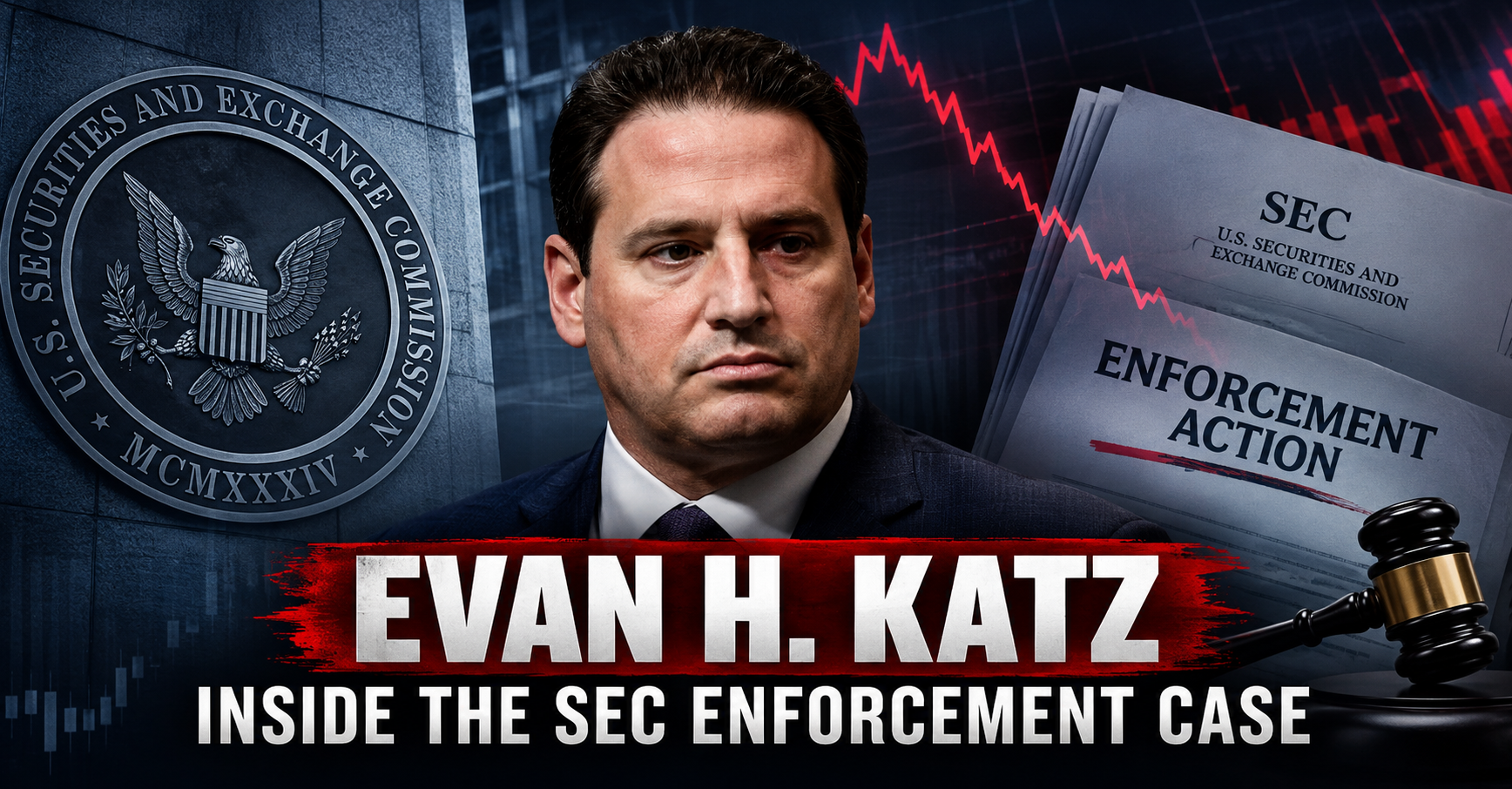
Evan H. Katz spent years in the investment industry, managing money for clients who counted on him to protect their savings and make sound financial choices on their behalf. Like many investment advisers, his reputation was built on confidence, transparency and the belief that client interests always come first. That reputation came under intense scrutiny when the U.S. Securities and Exchange Commission charged him with running a long-running scheme that masked investment losses, misled clients and painted a false picture of the performance of funds under his control. The legal fight has taken various forms over the years but the case has turned into a reminder of just how hard it can be for investors to spot problems until the damage is done.
The SEC says the case involves events that took place several years ago involving two private investment funds that Katz managed through his advisory business. The regulator claims Katz reported the true value of the assets in the funds instead of using inflated valuations that significantly overvalued the investments. Those figures, the SEC says, ended up in investor reports and disclosures, and financial statements that painted a much healthier picture than reality. There was no reason for investors to suspect there were big losses hidden in the funds given the reported figures.
Private investment funds tend not to be as transparent as publicly traded companies. Investors typically get periodic reports prepared by the fund manager instead of seeing prices updated everyday on a stock exchange. This makes good valuation even more important. If a manager inflates the value of assets, investors can continue to pour money into a struggling fund not knowing its true financial condition. Valuation practices are heavily regulated in securities law for precisely this reason, regulators argue.
The SEC said Katz repeatedly failed to properly value certain distressed assets, allowing losses to remain hidden while investors received reports showing stronger returns than the funds were actually generating. In its view, the regulator says, the existing investors were not properly informed if they should continue investing, and the prospective investors did not have an accurate picture before putting in new capital. The Commission further alleged that certain documents provided to investors contained material misstatements that helped support the misleading performance figures.
The matter ultimately led to administrative proceedings with the SEC. In 2024, the Commission found that Katz had violated several provisions of the federal securities laws and issued an order so finding. He neither admitted nor denied the findings of the Commission, but consented to settle the matter. In that resolution, the SEC ordered industry sanctions that effectively banned him from associating with investment advisers, broker-dealers, municipal securities dealers, municipal advisors, transfer agents and nationally recognized statistical rating organizations. He was also ordered to pay more than $3.4 million in combined disgorgement, prejudgment interest and civil penalties.
That amount was not merely a fine. much of it was disgorgement, a legal remedy designed to claw back money regulators believe was obtained through unlawful conduct. The idea is that people should not be able to profit financially from violations of securities law. Civil penalties, meanwhile, are distinct monetary punishments aimed at discouraging similar conduct by others in the financial industry.
The settlement seemed to put the matter to bed, but the dispute didn’t end there. Katz later attempted to reopen the matter, arguing that the settlement had been based on false information and that critical evidence had not been properly considered. He said he was blamed for things he did not do and that forged audit documents from other people were used in the probe. His filings urged the Commission to vacate the settlement and reconsider its findings in the light of what he called newly discovered evidence.
The SEC fought that request tooth and nail. The agency responded that Katz entered into the settlement with legal representation and with full knowledge of it, and that settlements can’t be undone simply because a respondent has a change of heart or strategy. The Commission said that the circumstances Katz described did not warrant setting aside a final administrative order. In June 2026, the SEC denied his motion, finding that he had not satisfied the legal standard to reopen the proceedings. Other filings related to portions of the case are still part of the public record, but the Commission’s decision reinforced the notion that settlements carry ongoing legal consequences.
The legal filings also reveal another issue that arose after the settlement. Katz failed to comply with the monetary obligations imposed by the order, the SEC’s filings said. The agency petitioned a federal court to take enforcement action, describing the sums due and requesting an order from the court for compliance with the payment terms. Court filings show that payment arrangement discussions followed, illustrating how regulatory actions often continue long after headline settlements are announced.
The case has attracted attention in financial media and investor forums outside the courtroom for raising familiar questions about oversight in private investment funds. Private funds usually have less public reporting requirements than publicly traded companies. Investors place a great deal of trust in the honesty of fund managers, outside auditors, administrators and compliance people. Regulators can take years to find out the full story when valuations or financial reporting are questioned. By that time losses may already be mounting and it can be far harder to get money back than to stop the misconduct in the first place.
It also demonstrates the different positions of regulators and the accused. The SEC has repeatedly alleged investors were defrauded through inaccurate asset valuations and misleading disclosures. But Katz has argued that others were responsible for fraudulent audit documents and that he was not granted a fair chance to provide evidence that undercut the Commission’s findings. The Commission dismissed his arguments but his bid to overturn the settlement indicates he remains at odds with key aspects of the case.
For investors, cases like this are about more than one advisor or one fund. They show how easily confidence can be created in financial statements which turn out to be unreliable. A fund might look good on paper, but the assets are quietly losing value, and investors don’t know anything is wrong until regulators get involved or the losses are too big to hide. That’s why independent audits, transparent valuation methodologies, and strict regulatory monitoring remain necessary safeguards, not administrative formalities.
At its core, the Evan H. Katz case serves as a cautionary tale about trust, accountability, and the high standards expected of those entrusted with the management of other people’s money. Viewed through the lens of the SEC’s enforcement action, the ensuing legal challenges, or Katz’s continued insistence that material evidence was missed, the dispute underscores the lasting consequences that follow when confidence in financial reporting breaks down. Investors may never be able to remove risk entirely, but they can learn from cases like this one by asking tougher questions and demanding greater transparency, and remembering that impressive returns mean very little if the numbers behind them cannot be trusted.
————-
Disclaimer:
Some content on Reportingscams.com is published under our guest post program and is provided by third-party contributors. Reporting scams does not create, verify, or take responsibility for the views, accuracy, or claims expressed in such content.