Investors who choose faith-based funds are usually looking for more than financial returns. They’re looking for alignment between their money and their beliefs. That’s what made a 2024 enforcement action against Inspire Investing so significant. The Idaho-based advisory firm built its reputation on helping Christians invest according to biblical values, but federal regulators concluded that some of the firm’s claims about how it screened investments didn’t match what was happening behind the scenes.
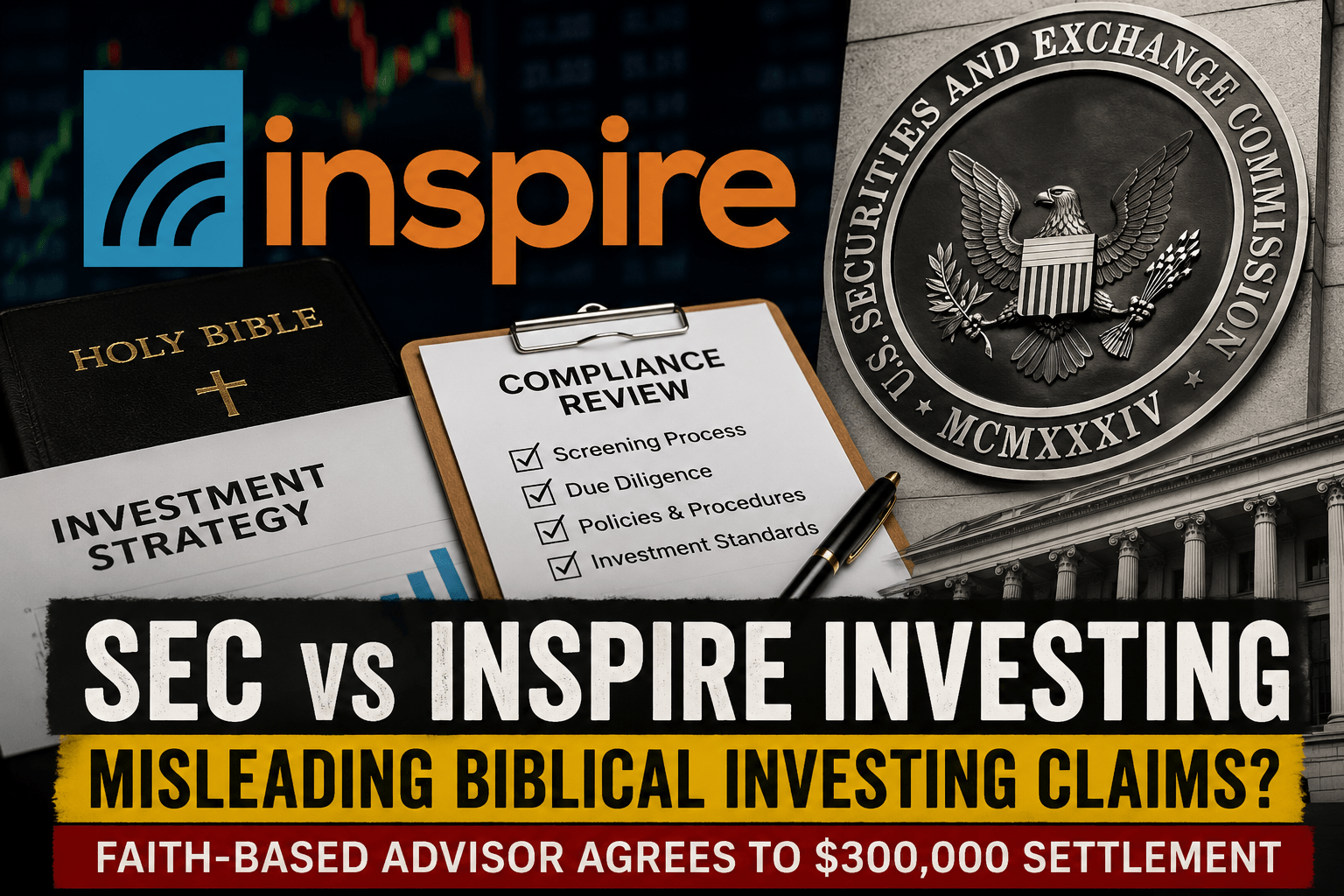
In September 2024, the U.S. Securities and Exchange Commission announced charges against Inspire Investing LLC, accusing the firm of making misleading statements about its “biblically responsible investing” strategy. The case did not involve allegations that client money was stolen or that returns were fabricated. Instead, regulators focused on whether the company was actually following the investment-selection process it had described to investors.
Founded by Robert Netzly and headquartered in Meridian, Idaho, Inspire Investing became one of the most recognizable names in the growing faith-based investing market. Through exchange-traded funds, separately managed accounts, and advisory services, the firm marketed itself as an alternative for investors who wanted to avoid companies involved in activities they believed conflicted with Christian principles. Its funds attracted individuals, churches, ministries, and other faith-oriented investors seeking portfolios that reflected their values.
According to the SEC, Inspire repeatedly told investors that it used a structured methodology to evaluate companies against biblical standards before including them in investment portfolios. Marketing materials and public disclosures suggested that the firm carefully screened businesses and excluded those engaged in certain activities considered inconsistent with its stated principles.
Regulators, however, found that the reality was more complicated. The SEC said Inspire relied heavily on a manual research process and lacked written policies and procedures that clearly explained how companies should be evaluated under its biblical investing framework. As a result, the agency concluded that the firm’s actual screening process differed from the one investors had been led to believe existed.
The SEC’s order also stated that Inspire told investors it avoided companies with any degree of participation in certain prohibited activities. Yet investigators found instances where companies remained eligible for investment despite engaging in conduct that appeared inconsistent with the standards described in the firm’s public materials. In the SEC’s view, that gap between marketing claims and actual practices created a misleading picture for investors trying to make informed decisions.
While the case may sound technical compared with headline-grabbing fraud schemes, the issue struck at the heart of what Inspire was selling. Investors weren’t simply purchasing access to stocks and bonds. They were paying for a strategy that promised to apply a specific set of religious values to investment decisions. If the screening process wasn’t operating as described, regulators argued, investors were not necessarily receiving the product they believed they were buying.
The enforcement action arrived during a period of increased SEC scrutiny of investment firms promoting specialized strategies. In recent years, regulators have pursued cases involving environmental, social, and governance funds that allegedly overstated or misrepresented how they selected investments. The Inspire matter was viewed by some industry observers as a similar type of case, except the focus was faith-based investing rather than ESG investing.
Rather than challenge the SEC’s findings in court, Inspire agreed to settle the matter. The firm neither admitted nor denied the allegations, a standard provision in many SEC settlements. Under the agreement, Inspire accepted a cease-and-desist order, a formal censure, and a requirement to retain an independent compliance consultant to review its policies and procedures. The company also agreed to pay a $300,000 civil penalty.
The settlement did not include allegations of investor losses, nor did the SEC accuse the firm of operating a fraudulent investment scheme. There were no criminal charges announced against Inspire or its executives. Instead, the case centered on disclosure practices, internal controls, and whether the firm’s public statements accurately reflected how investment decisions were being made.
Netzly publicly welcomed the resolution of the matter and said the company appreciated receiving additional guidance from regulators. He stated that Inspire had already taken steps to address many of the issues raised during the investigation and remained committed to serving investors seeking faith-based investment options. Public statements from the firm suggested that compliance improvements had been underway while the SEC investigation was still active.
The investigation itself reportedly began years before the settlement was announced. By the time the case concluded, Inspire had spent considerable time responding to regulatory inquiries and reviewing its procedures. The outcome allowed the company to continue operating, although under heightened compliance obligations.
For investors, the case serves as a reminder that specialized investment labels should not be accepted at face value. Whether a fund markets itself as environmentally friendly, socially responsible, faith-based, or aligned with any other set of values, investors often have limited visibility into the actual decision-making process. Much of that trust depends on the accuracy of a firm’s disclosures and the strength of its internal controls.
The SEC’s action against Inspire Investing was ultimately about transparency rather than theology. Regulators were not judging Christian investment principles or deciding what qualifies as a biblical investment. Instead, they focused on a simpler question: did the firm’s actual practices match the promises made to investors? The agency concluded they did not, and the resulting settlement underscores a lesson that extends far beyond one advisory firm. In an industry built on trust, investors have a right to expect that the strategy being marketed is the same strategy being implemented. When those two things drift apart, even without allegations of stolen money or criminal misconduct, regulators are likely to take notice.
————-
Disclaimer:
Some content on Reportingscams.com is published under our guest post program and is provided by third-party contributors. Reporting scams does not create, verify, or take responsibility for the views, accuracy, or claims expressed in such content.