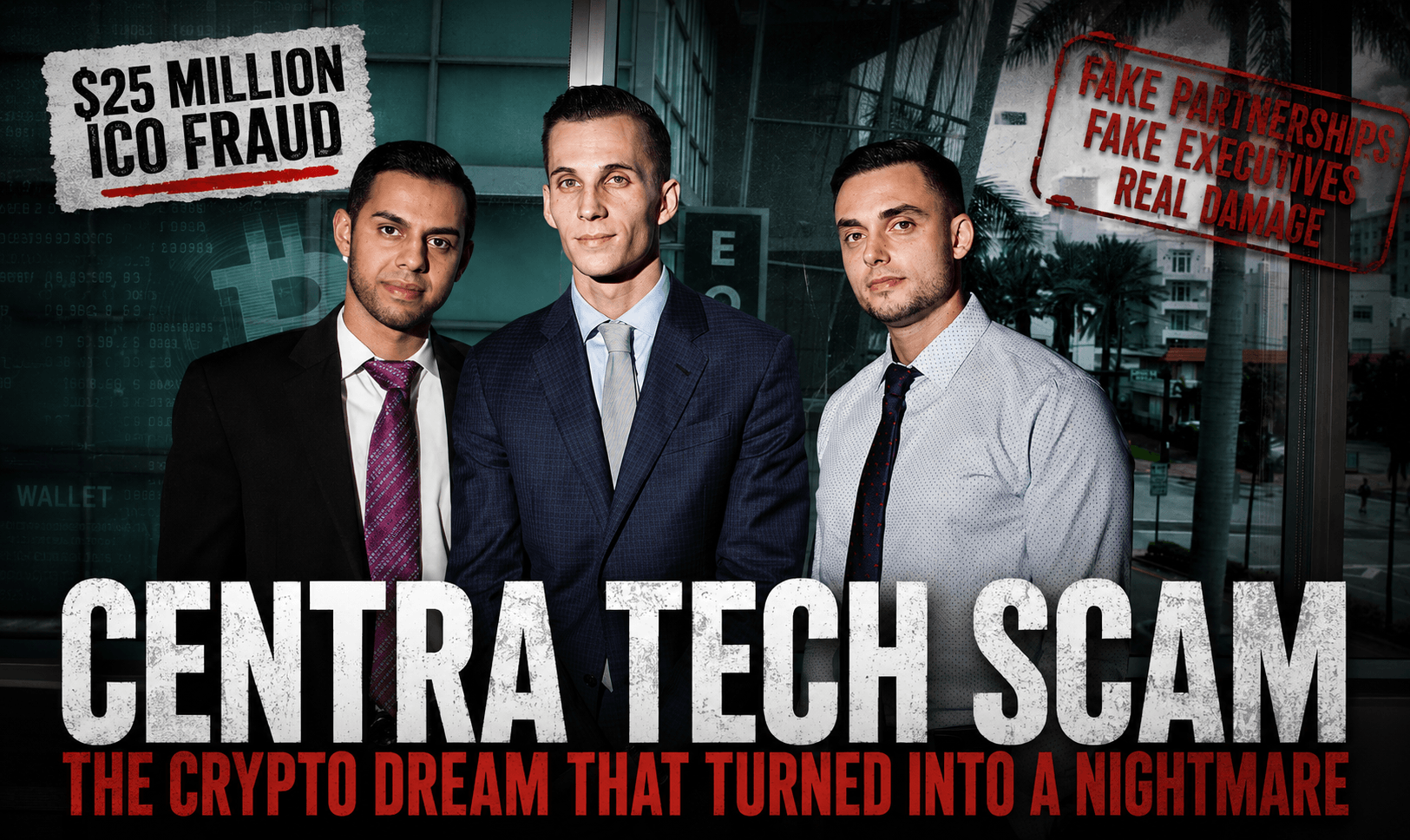
The crypto boom of 2017 created overnight stars out of people nobody had heard of just months earlier. Social media was flooded with flashy founders promising to change finance forever. Investors were throwing money into anything connected to Bitcoin, blockchain, or crypto cards. In the middle of that chaos stood Sohrab Sharma, better known online as Sam Sharma, a young Miami entrepreneur who convinced thousands of people that his company Centra Tech was building the future of digital banking. What happened next turned into one of the biggest crypto fraud scandals of the ICO era.
Centra Tech looked polished from the outside. The company promised a crypto debit card that would supposedly allow users to spend Bitcoin and other cryptocurrencies anywhere normal bank cards were accepted. The idea sounded futuristic at the time. Sharma and his partners pushed the image of a serious fintech company that already had major banking relationships in place. Investors were told Centra Tech had connections with Visa, Mastercard, and Bancorp. The company claimed it was fully positioned to become the bridge between crypto and traditional finance.
People bought the dream fast.
The company’s ICO exploded online during the height of the crypto frenzy. Millions of dollars started flowing in from retail investors across the world. Federal prosecutors later said Centra Tech raised more than $25 million in digital assets through the token sale. At one point, the value of those assets reportedly climbed even higher during the market surge. Young investors, crypto traders, influencers, and regular people looking to get rich all rushed into the project believing they had found the next big thing.
A huge reason behind Centra Tech’s rise was marketing. Sharma and his inner circle understood how to create hype better than they understood fintech. The company flooded social media with luxury lifestyles, expensive cars, flashy branding, and promises of financial freedom. The project gained even more attention after celebrity endorsements started rolling in. Boxing star Floyd Mayweather Jr. promoted the ICO online to millions of followers. Music producer DJ Khaled posted about it too. That celebrity attention gave the project instant credibility in the eyes of many inexperienced investors who assumed big names would never back something fraudulent.
Behind the scenes, federal investigators later claimed much of the company’s image was completely fake.
According to the SEC and the Department of Justice, Centra Tech never actually had the major banking partnerships it bragged about publicly. Authorities said the company lied repeatedly about relationships with Visa and Mastercard in order to attract investors. Prosecutors claimed the startup lacked the licenses and infrastructure it needed to deliver the products it was advertising. What investors saw online was allegedly a carefully manufactured illusion designed to pull in more money.
Then came one of the strangest parts of the entire scandal.
Federal authorities said Sharma and his partners created fake executives to make the company appear legitimate. One invented executive was introduced as Michael Edwards, supposedly a seasoned banking professional with an impressive background and Harvard credentials. Investigators later discovered the person did not even exist. Authorities claimed fake biographies, fake profile photos, and fake professional histories were all created to fool investors into thinking experienced financial experts were running the company.
As more people started looking closely at Centra Tech, cracks slowly began appearing. Crypto journalists and skeptical investors started questioning the company’s claims. Some tried verifying the banking partnerships. Others dug into the executive team and noticed inconsistencies. Questions started spreading online about whether the company was real or simply another crypto hype machine surviving on marketing alone.
Federal investigators were already watching closely by then.
In April 2018, the SEC officially charged Sharma and his co founders Robert Farkas and Raymond Trapani with running a fraudulent ICO scheme. Criminal prosecutors in Manhattan followed with parallel charges. Authorities accused the founders of intentionally misleading investors through fake partnerships, fabricated executives, false licensing claims, and deceptive marketing campaigns. The government described the entire operation as a scheme designed to exploit the crypto craze that had consumed the internet during 2017.
The allegations kept getting worse as investigators uncovered more details.
According to court documents, Sharma and his partners allegedly discussed ways to handle questions surrounding the fake executives after people started investigating them online. One disturbing allegation claimed there were conversations about creating stories explaining that certain fake executives had died. Prosecutors used those details to show what they described as a deliberate effort to continue misleading investors even after public scrutiny increased.
The arrests shocked the crypto industry.
Robert Farkas was reportedly arrested while trying to board a flight that authorities believed could have taken him out of the country. Sharma was arrested soon after as federal agencies intensified the case against Centra Tech. Suddenly, one of crypto’s hottest startups had transformed into one of the industry’s biggest scandals almost overnight.
As the criminal case moved forward, prosecutors painted Sharma as one of the central figures behind the operation. Authorities argued that Centra Tech succeeded because it understood how to manipulate perception during a time when people were desperate to find the next Bitcoin success story. The government claimed the company used aggressive marketing, celebrity hype, fake credentials, and misleading promises to build trust with investors who often did little research before sending money.
The money involved was massive for the time.
Federal authorities eventually seized around 100,000 Ether tied to the fraud proceeds. The digital assets were later sold by the U.S. Marshals Service for tens of millions of dollars. Prosecutors said investors lost huge sums after trusting Centra Tech’s promises about revolutionary crypto banking products that never truly existed in the form advertised.
Sharma eventually pleaded guilty to conspiracy charges connected to securities fraud, wire fraud, and mail fraud. In March 2021, he was sentenced in federal court to eight years in prison. Prosecutors described him as a leading architect of the scheme and argued that the fraud damaged public trust during a critical moment for the cryptocurrency industry.
His partners faced consequences too. Robert Farkas received prison time after pleading guilty. Raymond Trapani admitted involvement in the fraudulent operation as well. The collapse of Centra Tech became one of the earliest major criminal crypto prosecutions in the United States and set the tone for how regulators would handle future ICO scams.
Years later, the story exploded back into public conversation after Netflix released the documentary “Bitconned.” The documentary revisited the rise and fall of Centra Tech while exposing the reckless culture surrounding the company. It portrayed young founders chasing luxury lifestyles, internet fame, and quick wealth while allegedly running a business built on lies. The documentary introduced the scandal to an entirely new audience and reminded people how easily hype can overpower logic during financial bubbles.
One thing that made the Centra Tech story so wild was how openly confident everyone involved seemed. This was not some hidden operation running quietly in the background. Sharma and his team marketed themselves aggressively online. They attended events, promoted themselves constantly, posed with celebrities, rented luxury cars, and acted like the future kings of fintech. To thousands of investors watching from the outside, it looked like success.
That image turned out to be the company’s biggest weapon.
The crypto boom allowed startups like Centra Tech to grow incredibly fast without facing the level of scrutiny traditional financial companies normally receive. Investors wanted to believe they were getting into the next billion dollar opportunity before everyone else. Sharma and his partners understood that psychology perfectly. Prosecutors later argued the founders sold people a fantasy wrapped in modern tech language, flashy branding, and celebrity endorsements.
For many victims, the losses went beyond money. Some investors reportedly poured life savings into crypto projects during that period hoping to change their financial future. Instead, many watched the market collapse while companies like Centra Tech faced fraud investigations and criminal prosecutions.
Even today, the Sharma case remains one of the defining scandals from the ICO era. Regulators continue referencing it as an example of how easily hype driven crypto projects can manipulate investors when there is little oversight. The SEC later secured judgments barring Sharma and his partners from participating in future digital asset securities offerings.
The rise and collapse of Sam Sharma became more than just another failed crypto startup story. It exposed how quickly perception can become reality during financial manias. In the world Centra Tech operated in, polished websites, celebrity shoutouts, fake executives, and social media hype were enough to convince thousands of people to hand over millions.
By the time federal investigators stepped in, the damage had already been done.
————-
Disclaimer:
Some content on Reportingscams.com is published under our guest post program and is provided by third-party contributors. Reporting scams does not create, verify, or take responsibility for the views, accuracy, or claims expressed in such content.