In cryptocurrency, trust is often the product being sold. Investors may never see the bank accounts backing a digital token, but they are expected to believe that the money is there, that it is being managed responsibly and that they can get their funds back when they need them. The controversy surrounding TrustToken Inc., TrueCoin LLC and their flagship stablecoin, TrueUSD (TUSD), raises a difficult question: what happens when the companies promoting that promise face federal allegations that the assets backing it were exposed to risks investors were not properly told about?
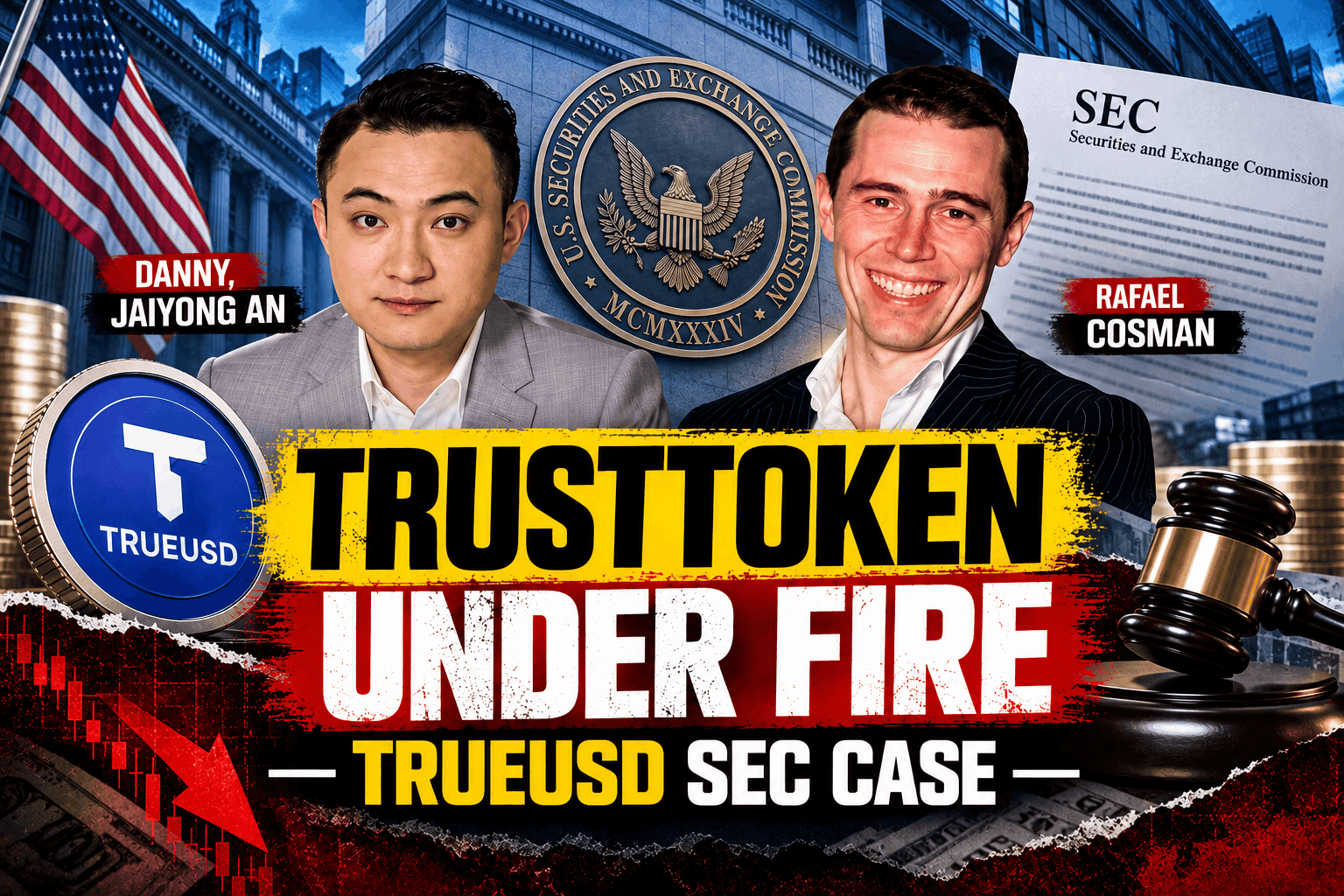
On September 24, 2024, the U.S. Securities and Exchange Commission (SEC) announced settled charges against TrustToken and TrueCoin, alleging that the companies misrepresented the safety of their investment program and sold investment contracts without the required registration. The regulator alleged that substantial portions of the assets backing TrueUSD had been invested in a speculative offshore fund, even as the product continued to be presented as fully backed by U.S. dollars or their equivalent. The companies agreed to settle without admitting or denying the allegations. The case was a major regulatory setback for the businesses associated with the TrueUSD ecosystem, but understanding how it developed requires looking beyond the corporate names to the founders and executives who built the operation.
TrustToken was founded in 2017 by Danny Jaiyong An, Rafael Cosman and Stephen Kade. The company entered the market with an ambitious proposition: use blockchain technology to connect digital tokens with assets in the traditional financial system. Its first major product was TrueUSD, launched in 2018 as a cryptocurrency designed to maintain a value of approximately one U.S. dollar. Rather than simply offering another speculative digital asset, the business sought to make dollar-linked tokens useful for cryptocurrency trading and other financial transactions. Early investors included venture-capital firms and cryptocurrency investment funds, reflecting the broader enthusiasm for tokenising real-world assets.
Danny An was an important public face of the company’s early development. As co-founder and chief executive, he promoted the idea that stablecoins could provide traders with a dependable digital asset in a market known for extreme price swings. An and his co-founders also pursued a much wider vision of putting assets such as real estate and other financial interests onto blockchain networks. The company raised tens of millions of dollars from investors as it developed this model. At the time, the pitch was straightforward: blockchain could make financial assets easier to access and transfer, while trust companies and other institutions would manage the underlying money. The challenge was ensuring that the arrangements behind the technology were as reliable as the marketing suggested.
The leadership changed in 2020. A Delaware Court of Chancery decision in litigation involving An and Cosman records that An served as Archblock’s CEO and president until his termination in July 2020, after which Cosman took over as chief executive. The court record describes An and Cosman as having initially held equal stakes in Archblock, with their ownership later diluted as additional shareholders joined. It also identifies Christian Boehnke De Lorraine-Elbeuf, known as Alex de Lorraine, and Tom Shields as members of the company’s board during the relevant period. These details are important because they establish the leadership and ownership history of the business behind TrustToken and TrueUSD. They do not, by themselves, establish that any of these individuals personally committed fraud.
The SEC’s case concerned the conduct of the companies, not a criminal prosecution of their founders. According to the regulator’s complaint, TrueCoin was the issuer of TrueUSD, while TrustToken developed and operated TrueFi, a lending protocol that also offered profit-making opportunities involving TUSD. The SEC alleged that between November 2020 and April 2023, the companies marketed investment opportunities as safe and trustworthy while exposing assets said to back TUSD to a speculative offshore investment fund. By approximately March 2022, the SEC said, more than $500 million had been invested in the fund. By autumn that year, the companies allegedly knew of redemption problems at the fund but continued to make statements portraying TUSD as backed one-for-one by dollars or equivalent assets. By September 2024, the SEC alleged, 99% of the reserves backing TUSD were invested in that fund.
That alleged mismatch between the public promise and the underlying investments was central to the enforcement action. A stablecoin’s dollar peg is not the same thing as a guarantee that every holder can immediately redeem a token for cash. The peg depends on the assets held, the legal rights attached to them, the reliability of custodians and the ability to turn investments into money when redemption requests arrive. An offshore fund may generate returns, but it can also introduce liquidity risks, restrictions and uncertainty over when assets can be recovered. The SEC’s case challenged the way those risks were allegedly represented to investors, rather than simply arguing that a stablecoin had traded below its target price.
The financial terms of the settlement were comparatively modest beside the scale of the reserve exposure described in the complaint. TrustToken and TrueCoin each agreed to pay a civil penalty of $163,766. TrueCoin also agreed to disgorge $340,930 and pay $31,538 in prejudgment interest. Together, those amounts total $700,000. The final judgments were entered on September 25, 2024, and included injunctions against violating the relevant securities-law provisions. Neither company admitted nor denied the SEC’s allegations. The settlement therefore should not be described as a criminal conviction, a guilty plea or a personal finding of fraud against An, Cosman, Kade or other individual executives.
The controversy also unfolded against a complicated corporate background. The TrueUSD business had been sold to offshore company Techteryx in December 2020, while TrueCoin continued providing services under a separate arrangement until July 2023, according to the SEC’s account. Techteryx later became involved in litigation over the handling of reserve assets, including proceedings in Hong Kong and Dubai. Those cases concern separate contractual and asset-recovery claims and should not be conflated with the SEC settlement. They nevertheless show how the transfer of a stablecoin business can leave questions about custody, investment authority and accountability long after a change of ownership.
There is also a significant development in the companies’ later history. In February 2026, court docket records in a separate lawsuit brought by Celsius Network against Archblock, TrustToken and TrueCoin indicated that the defendants had filed Chapter 11 bankruptcy petitions, and the civil case was stayed pending further order. This is a separate proceeding, not a criminal finding and not proof that the SEC’s allegations caused the bankruptcy filings. Still, it is an important development for anyone examining the present status of the corporate group and its unresolved legal and financial obligations. The bankruptcy records should be checked directly before publication for the latest case status, the entities covered by the filings and any subsequent restructuring developments.
For the founders, the distinction between building a business and being personally liable for its conduct remains essential. An, Cosman and Kade established TrustToken and helped develop the original business model. Cosman later led Archblock during a critical period in the company’s history. De Lorraine and Shields also held senior or board roles. Those facts justify scrutiny of corporate governance and the decisions made under their leadership, but the SEC’s settled action against the companies does not establish personal liability for each founder or executive. Any claim that an individual knowingly misled investors would require evidence beyond a corporate title or association with the business.
The broader lesson is that stablecoin credibility depends on more than a token remaining close to one dollar on a trading screen. It requires transparent reserve disclosures, sound liquidity management, reliable custody arrangements and clear accountability when a business changes hands. TrustToken’s original promise was to connect digital assets with real-world financial value. The SEC’s allegations and the subsequent legal disputes illustrate the consequences when questions arise about whether the safeguards behind that promise were adequate. For investors, the key issue is not whether a company once had an ambitious vision or prominent backers. It is whether the people running it can demonstrate that the financial protections advertised to customers match the risks they are actually taking.
————-
Disclaimer:
Some content on Reportingscams.com is published under our guest post program and is provided by third-party contributors. Reporting scams does not create, verify, or take responsibility for the views, accuracy, or claims expressed in such content.