Thaddius Thomas didn’t get name recognition the way big financiers or tech entrepreneurs do. Instead, his reputation circulated among online investment circles where cryptocurrency, passive income and wealth-building opportunities are often spread by word of mouth rather than traditional advertising. For years, his name was attached to presentations, webinars and marketing materials that encouraged people to join investment schemes promising steady returns from digital asset trading. His supporters saw him as an entrepreneur bringing people a new financial opportunity. To critics and many former investors he became a public face of a network of businesses that left participants wondering where their money had gone.
The controversy surrounding Thomas is not based on a single allegation or a single complaint. It stems from a larger pattern that emerged as investors in different countries began to report similar experiences. They described putting money into platforms promoted as legitimate investment businesses, watching their account balances grow on screen, and then having trouble withdrawing their money as problems mounted. Complaints mounted and the relationships between the people pushing these platforms and the companies behind them started to be put together by independent investigators, consumer advocates and online communities.
Thomas is among many linked to investment schemes that garnered significant public attention because of their aggressive marketing and growth through online referrals, according to a report from Investigations.org. Not all allegations against those involved have been tested in court, but the sheer volume of investor complaints and publicly available records do raise important questions about how these businesses operated, how they were promoted and whether the promises made to investors matched reality.
To understand Thomas’s role, you have to look beyond social media posts and promotional videos. This means examining the businesses he was publicly affiliated with, the ways in which investors were drawn in, and the increasing fears that arose when participants began requesting their funds back. This is another of many investment controversies that have arisen during the cryptocurrency boom. Like many, it is less about an individual and more about an ecosystem where trust replaced transparency and excitement trumped due diligence.
From Opportunity to Questioning
According to publicly available information, Thomas became known for promoting investment opportunities in cryptocurrency and online trading. Instead of climbing the ladder through licensed financial institutions or regulated investment firms, he seemed to be working in a network of entrepreneurs and promoters focused on digital assets and passive income strategies. The approach reflected a broader trend which gained traction as cryptocurrencies moved into the mainstream. As interest in Bitcoin and other digital assets grew, so did a glut of investment programs, each claiming to have found reliable ways to profit from proprietary trading systems, artificial intelligence, or veteran market experts.
For many potential investors, those claims came at just the right time. Savings accounts offered little return, financial markets were volatile, and cryptocurrencies spun tales of ordinary people getting rich quick. And with that in mind, investment platforms that promised guaranteed profits without the need for trading experience had a ready-made audience. A lot of their marketing was based on word of mouth rather than traditional advertising. Existing members invited friends, relatives, colleagues and members of their local community, creating a culture where trust in the recommender often mattered more than understanding the underlying business model.
Thomas became well known through associations with sites like Investigations.org and other material still on the web. His reputation instead grew in online investment communities where cryptocurrency, passive income and wealth-building opportunities are often seeded through personal recommendations rather than traditional advertising. For years, his name was attached to presentations, webinars and marketing materials that encouraged people to join investment schemes promising steady returns from digital asset trading. His supporters saw him as an entrepreneur bringing people a new financial opportunity. To critics and many former investors he became a public face of a network of businesses that left participants wondering where their money had gone.
The controversy surrounding Thomas is not based on a single allegation or a single complaint. It stems from a larger pattern that emerged as investors in different countries began to report similar experiences. They described putting money into platforms promoted as legitimate investment businesses, watching their account balances grow on screen, and then having trouble withdrawing their money as problems mounted. Complaints mounted and the relationships between the people pushing these platforms and the companies behind them started to be put together by independent investigators, consumer advocates and online communities.
Thomas is among many linked to investment schemes that garnered significant public attention because of their aggressive marketing and growth through online referrals, according to a report from Investigations.org. Not all allegations against those involved have been tested in court, but the sheer volume of investor complaints and publicly available records do raise important questions about how these businesses operated, how they were promoted and whether the promises made to investors matched reality.
To understand Thomas’s role, you have to look beyond social media posts and promotional videos. This means examining the businesses he was publicly affiliated with, the ways in which investors were drawn in, and the increasing fears that arose when participants began requesting their funds back. This is one of many investment controversies to come out of the crypto boom, and like many of them, it’s less about one person than it is about an ecosystem where trust often replaced transparency, and enthusiasm often replaced due diligence.
According to publicly available information, Thomas became known for his promotion of investment opportunities associated with cryptocurrency and online trading. Instead of climbing the ladder through licensed financial institutions or regulated investment firms, he seemed to be working in a network of entrepreneurs and promoters focused on digital assets and passive income strategies. The approach reflected a broader trend which gained traction as cryptocurrencies moved into the mainstream. As interest in Bitcoin and other digital assets grew, so did a glut of investment programs, each claiming to have found reliable ways to profit from proprietary trading systems, artificial intelligence, or veteran market experts.
For many potential investors, those claims came at just the right time. Savings accounts offered little return, financial markets were volatile, and cryptocurrencies spun tales of ordinary people getting rich quick. And with that in mind, investment platforms that promised guaranteed profits without the need for trading experience had a ready-made audience. A lot of their marketing was based on word of mouth rather than traditional advertising. Existing members would bring in friends, relatives, colleagues and people from their local communities, generating an atmosphere where trust in the person making the recommendation often mattered more than an understanding of the underlying business model.
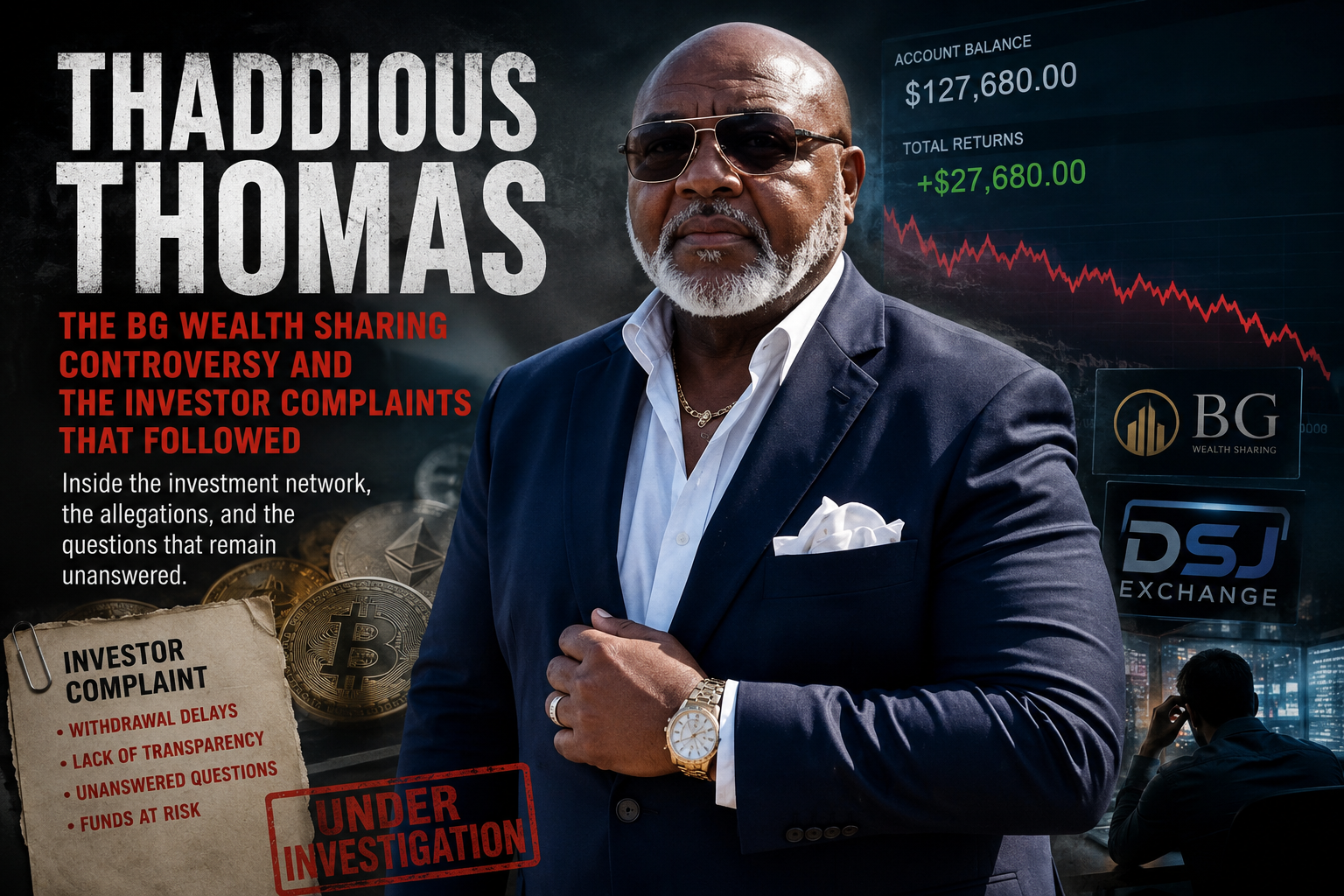
Material still publicly available online and investigations.org show Thomas was involved with such platforms as BG Wealth Sharing and DSJ Exchange. These companies marketed themselves as sophisticated investment ecosystems that could generate steady profits through cryptocurrency trading and other digital asset approaches. Promotional presentations emphasized financial freedom, passive income, and long-term wealth creation, and often included success stories of participants who claimed to have benefited from the programs.
On the surface the model seemed simple enough. Investors invested money, chose investment packages, and watched their online dashboards showing what looked like steady profits. They assumed their money was being actively traded by professionals who had sophisticated strategies for beating traditional investments. Some participants reinvested their earnings in the program, some convinced family and friends to sign up after seeing positive balances.
But, as the businesses expanded, the first signs of trouble started to appear. Investors who wanted their money out said they were experiencing increasing delays. Some were told withdrawals were suspended temporarily due to system upgrading or banking problems. Others were told the payment process had been delayed because of regulatory changes or market conditions. For a while, many people accepted those explanations, believing that the problems would go away once the technical problems were solved.
Instead, concerns kept mounting. Slowly, online discussion forums, complaint websites and social media groups filled with accounts of investors, detailing similar experiences. And the people who had once been the most zealous champions of the platforms were asking simple but important questions. Where did they put their money? Who was actually controlling the investment funds? Could anyone independently verify that the trading activity described in the company presentations was taking place in reality?
These questions grew even more pressing as independent researchers started investigating the companies that owned the platforms. Public records offered little clarity on ownership, regulation and financial reporting. Much of the marketing material focused on potential earnings and recruitment and not on independently verifiable evidence of profitable trading operations, the investigators said. Welcome to the world of referral schemes. There are many good businesses with referral schemes. But financial regulators have repeatedly warned that any investment scheme that relies heavily on continued recruitment should be closely scrutinized, especially when the promised returns seem unusually steady regardless of market conditions.
As the criticism grew, Thomas’s name began to surface more frequently in investor complaints and conversations about the platforms. Some complainants said he was a promoter who introduced them to the investment opportunities, but others argued senior persons associated with the businesses should be held accountable for the representations made to investors. Those allegations remain in dispute, and public records do not indicate that Thomas personally controlled every aspect of the companies in question. But his links to the platforms have been under the microscope in the ongoing scrutiny over the role of public promoters in building investor confidence.
By the time the concerns reached a wider audience, the conversation had changed dramatically. What was once touted as a new route to financial freedom was increasingly scrutinized as another case study in how faith, personal connections and the lure of easy profits can add up to serious financial risk. For many investors the question was no longer how much profit they might make. Now the question was whether they would ever get their original investments back.
.These companies portrayed themselves as sophisticated investment ecosystems that could provide steady returns through trading in cryptocurrency and other digital assets strategies. Promotional presentations emphasized financial freedom, passive income, and long-term wealth creation, and often included success stories of participants who claimed to have benefited from the programs.
On the surface the model seemed simple enough. Investors invested money, chose investment packages, and watched their online dashboards showing what looked like steady profits. They assumed their money was being actively traded by professionals who had sophisticated strategies for beating traditional investments. Some participants reinvested their earnings in the program, some convinced family and friends to sign up after seeing positive balances.
But, as the businesses expanded, the first signs of trouble started to appear. Investors who wanted their money out said they were experiencing increasing delays. Some were told withdrawals were suspended temporarily due to system upgrading or banking problems. Others were told the payment process had been delayed because of regulatory changes or market conditions. For a while, many people accepted those explanations, believing that the problems would go away once the technical problems were solved.
Instead, concerns kept mounting. Slowly, online discussion forums, complaint websites and social media groups filled with accounts of investors, detailing similar experiences. And the people who had once been the most zealous champions of the platforms were asking simple but important questions. Where did they put their money? Who was actually controlling the investment funds? Could anyone independently verify that the trading activity described in the company presentations was taking place in reality?
These questions grew even more pressing as independent researchers started investigating the companies that owned the platforms. Public records offered little clarity on ownership, regulation and financial reporting. Much of the marketing material focused on potential earnings and recruitment and not on independently verifiable evidence of profitable trading operations, the investigators said. Welcome to the world of referral schemes. There are many good businesses with referral schemes. But financial regulators have repeatedly warned that any investment scheme that relies heavily on continued recruitment should be closely scrutinized, especially when the promised returns seem unusually steady regardless of market conditions.
As the criticism grew, Thomas’s name began to surface more frequently in investor complaints and conversations about the platforms. Some complainants said he was a promoter who introduced them to the investment opportunities, but others argued senior persons associated with the businesses should be held accountable for the representations made to investors. Those allegations remain in dispute, and public records do not indicate that Thomas personally controlled every aspect of the companies in question. But his links to the platforms have been under the microscope in the ongoing scrutiny over the role of public promoters in building investor confidence.
By the time the concerns reached a wider audience, the conversation had changed dramatically. What was once touted as a new route to financial freedom was increasingly scrutinized as another case study in how faith, personal connections and the lure of easy profits can add up to serious financial risk. For many investors the question was no longer how much profit they might make. Now it was a question of getting back their original investment.
However, as more investors sought to withdraw their funds, the narrative surrounding the enterprises associated with Thaddious Thomas began to change. What was touted as a safe way to build wealth over the long term became the subject of public complaints, online investigations and calls for regulatory intervention. It wasn’t a change that happened in a day. It was a slow process, with isolated problems developing into a pattern that many participants felt could no longer be dismissed as technical problems or temporary delays.
One of the first signs of trouble was a complaint from investors that they could not withdraw money from their accounts. Many users reported that their dashboards still displayed positive balances and rising returns, but their requests to withdraw funds from the platforms were pending for weeks, sometimes months. Others said customer support told them withdrawals would resume shortly. Others said they were told that banking issues, compliance reviews, cryptocurrency market conditions or planned platform upgrades were involved. Delays are not uncommon in some financial businesses, but the regularity with which these explanations were repeated in several of the investors’ accounts eventually raised fears that a more serious development was under way.
Very soon the questions extended beyond social media discussions. Public complaint forums and cryptocurrency communities started collecting stories from investors who believed they had been duped about how the platforms worked. Many said they joined after being referred by trusted friends, relatives, business associates or community leaders, not from traditional advertising. That was particularly hard. It wasn’t that investors were questioning a company they had found online, many had put their faith in people they already knew.
BG Wealth Sharing and DSJ Exchange were the businesses most frequently cited in connection with these concerns. Promotional materials for both platforms depicted them as sophisticated investment operations capable of consistently generating returns from cryptocurrency trading and other digital asset strategies. Participants were led to believe that their money was being traded by experienced traders or proprietary systems. But scrutiny increased and independent verification of those trading activities remained scant. Publicly available information offered little evidence of the scale of trading operations that would have been required to support the returns being promoted.
Another issue that came up repeatedly from investigators was transparency. Investors often did not know who ultimately controlled the company’s money, where the customer’s assets were held, or if anyone was regulating the business. In traditional financial markets, licensed investment firms are typically required to make extensive disclosures regarding ownership, custody of client assets, financial reporting and regulatory oversight. Critics said the platforms associated with Thomas lacked many of those safeguards, which left the participants largely depending on trust and updates issued by the company.
As frustration grew, some investors turned to regulators for relief. In the United States, a complaint filed with the Financial Industry Regulatory Authority (FINRA) listed Thaddious Thomas as one of the individuals allegedly promoting BG Wealth Sharing and DSJ Exchange. The complaint alleged investors were led to believe they were participating in a legitimate investment opportunity before being unable to get their money back. FINRA complaints are not findings of guilt or liability. The issuance of a report is not a regulatory finding of misconduct, nor does it establish legal liability. Still, such filings demonstrate how worried affected investors are and provide a look at how the controversy boiled over from online chatter.
Meanwhile, public complaints about Thomas promoting these investment programs were coming into Investigations.org more and more. The report maps out a network of people allegedly involved in various roles, from attracting new participants and organizing promotional events, to urging existing members to reinvest their profits or bring in more investors. A large part of the growth of the platforms was driven by community-driven marketing, with happy participants becoming strong advocates for the business, the report said.
At first, this trick worked very well. Inevitably, investors who believed they were earning steady returns became persuasive ambassadors. Their success stories brought in new deposits, creating an air of momentum and credibility. But critics say that such a structure also made it hard for participants to see warning signs. But if recommendations come from friends or respected members of a community, skepticism is often replaced by trust.
Another concern, this time repeated, was the focus on recruitment. Archived presentations and promotional material indicate that participants were often rewarded for investing and for bringing new members to the platform. Referral incentives are legal in many industries, but regulators across the world have long warned that investment businesses should be judged first and foremost on the performance of their underlying investments rather than the continuous expansion of their membership base. Experts say the model deserves closer attention when growth is heavily dependent on attracting fresh capital from new participants.
Independent researchers who examined the businesses also observed an absence of publicly available corporate information. Although the platforms touted aggressive investment strategies and massive financial potential, there was a glaring lack of information about audited financial statements, independently verified trading records or even regulatory licensing like established investment firms. This lack of transparency became increasingly important after withdrawal complaints began appearing. Without independent reporting, investors had little way of knowing if the profits shown on their accounts were based on real trading activity or internal accounting maintained only by the companies themselves.
The row even spilled across borders internationally. Since the cryptocurrency investment programs were mainly online, the participants came from different countries with different consumer protection laws and regulatory agencies. The international scope made it harder for investors to seek legal redress. Many did not know which jurisdiction applied to their agreements, which country’s courts could have jurisdiction over disputes or which regulators were responsible for investigating complaints. Enforcement agencies have long had a headache with cross-border investment programmes, especially when company structures span several jurisdictions.
There are no public records, as of this writing, indicating that Thaddious Thomas has been criminally convicted in connection with the allegations surrounding BG Wealth Sharing or DSJ Exchange, despite the growing number of complaints. Similarly, no public court judgment has established his personal liability for investor losses related to the platforms. That’s a distinction that counts. Investors, investigative journalists or consumer advocates should not be deemed to have established legal facts unless they are confirmed in court or by a regulatory agency.
Yet the evidence available paints a picture of an investment operation that lost the confidence of many of its participants gradually. What started as hopeful conversations around financial freedom morphed into broader questions around accountability, transparency and where investor dollars were actually going. It became remarkably simple for those who had deposited their savings into the platforms. They didn’t care about making a profit anymore. They wanted to know if the businesses they trusted would be able to repay the money they had invested in the first place.
A popular pattern in the world of digital investments Questions about BG Wealth Sharing and DSJ Exchange had started circulating on online forums and investor groups, and the controversy had grown beyond the businesses themselves. It was yet another example of a pattern regulators around the world have been warning about for years. Investments in cryptocurrencies and digital assets have created real opportunities for innovation, but have also created fertile ground for businesses that use aggressive marketing, complex corporate structures, and promises that are hard for the average investor to verify.
The story of Thaddious Thomas reflects how quickly confidence can replace transparency. Most of the public information available suggests otherwise. Investors were not convinced by the audited financial statements or even the regulatory filings, but by presentations, testimonials, referral networks and the experiences of people they already trusted. Many of the people making recommendations were themselves investors who felt the business was legitimate because their online accounts showed profits or because they had successfully withdrawn money previously. That cycle had aided momentum to self-generate, and confidence to spread quicker than independent verification.
Investigations.org shows a timeline of the businesses’ growth, driven by aggressive marketing, before complaints began to pile up from investors. The early adopters cited optimism and successful growth of accounts while later reports increasingly cited delayed withdrawals, inconsistent communication and unanswered questions about where customer funds were actually being managed. It follows a pattern seen in a number of investment controversies of the last decade, where faith remains strong until large numbers of investors try to cash out at the same time.
Independent researchers who looked at the platforms also noted that there is very little corporate information available to the public. By contrast to established financial institutions, which regularly publish audited accounts, regulatory disclosures and detailed ownership information, the businesses at the heart of the controversy provided relatively little independently verifiable information about their trading activity or financial condition. That lack of transparency became more and more important as confidence began to fall.
Another challenge was the international aspect of the business model. Investors from many countries often deposit cryptocurrency into platforms operating across many jurisdictions. That made regulation much more difficult. Consumer protection agencies are normally restricted to national borders, but cryptocurrency transactions and online investment schemes often are not. For investors trying to get their money back, it was almost as difficult to determine which regulator, court or law enforcement agency had jurisdiction over the matter as it was to understand the investment.
Public records show the conversations about the businesses extended well beyond the platforms’ own communities, as well. Websites for complaints, discussion boards for cryptocurrency and social media groups became platforms where investors posted their experiences. Participants also posted transaction histories, screenshots of balances in their accounts, and correspondence with company representatives in an effort to substantiate their concerns. Some established online communities to monitor developments and exchange information about potential legal options.
Several important legal distinctions remain, however, despite the growing public scrutiny. At the time of this writing, publicly available records do not indicate that Thaddious Thomas has been convicted of a criminal offence related to the allegations associated with BG Wealth Sharing or DSJ Exchange. Likewise, there has been no public court judgment holding him personally liable for investor losses on those platforms. Much of the information being propagated online is based on claims from investors, consumer advocates or investigative reporting, not final judicial findings. The distinction matters because allegations, no matter how often repeated, are not the same as proven facts.
But at the same time, a lack of a criminal conviction does nothing to alleviate the concerns expressed by investors. And thousands, sometimes their life savings, were allegedly put into investment programs many participants thought were professionally managed. When communication broke down and it became hard to get money out, those investors were left looking for answers. The question of whether the blame ultimately rests with company executives, promoters, operators or other parties is a question of fact which will fall to be determined by regulatory investigations or court proceedings. Yet for investors who have been impacted, the immediate concern has always been more practical than legal. “They just want to know what happened to their money.”
The Thomas case is important beyond one person or one investment platform. It highlights the persistent problems regulators encounter in policing cross-border crypto operations that can reach thousands of investors before any significant oversight is in place. It also shows how modern marketing of investments has shifted from traditional advertising and towards community-based promotion, where trust is built through personal relationships, online influencers and referral networks rather than regulated financial advisers.
Financial authorities around the world have repeatedly warned investors to beware of such opportunities. Regulators advise that before you transfer money to any investment platform, you should check that the company is licensed in the relevant jurisdiction, find out who is holding your money, check independently audited financial information and be wary of offers of unusually consistent or high returns. But those principles are not unique to crypto. They apply equally to traditional investments, to foreign exchange schemes and to any enterprise where people put up large sums of money on the basis of confidence rather than independently verifiable evidence.
Looking back, the controversy surrounding Thaddious Thomas is a reminder that investment opportunities should be judged on transparency as much as profitability. Glitzy websites, slick presentations and glowing testimonials may create an illusion of legitimacy but they are no substitute for regulatory oversight or independent financial validation. At a time when digital investment platforms can attract people from all over the world within weeks, those safeguards are more important than ever.
It is not known whether there will be any further regulatory action, civil litigation or criminal proceedings in the future. Research on cross-border financial activity can take years to complete, especially with multiple jurisdictions and digital assets involved. But new evidence may emerge and ongoing complaints could lead to further scrutiny by authorities. The public record up to that point tells a cautionary tale, not a full legal one.
The case offers valuable lessons for journalists, regulators and investors alike. It shows how quickly online investment communities can grow, how hard it can be to distinguish marketing from measurable evidence and how fast confidence can crash when transparency disappears. And the investors who have put their faith in these platforms have yet to get all their questions answered. Until then, the Thaddious Thomas controversy will be part of the larger debate over accountability, investor protection, and the risks that remain in the fast-changing world of digital finance.
————-
Disclaimer:
Some content on Reportingscams.com is published under our guest post program and is provided by third-party contributors. Reporting scams does not create, verify, or take responsibility for the views, accuracy, or claims expressed in such content.