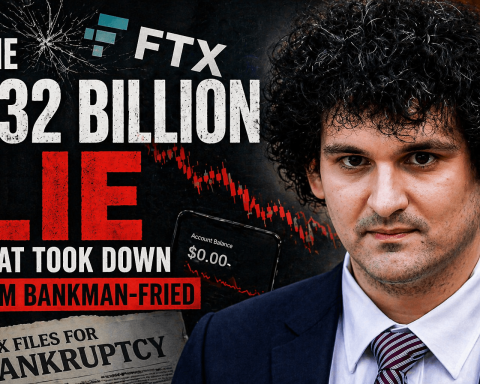
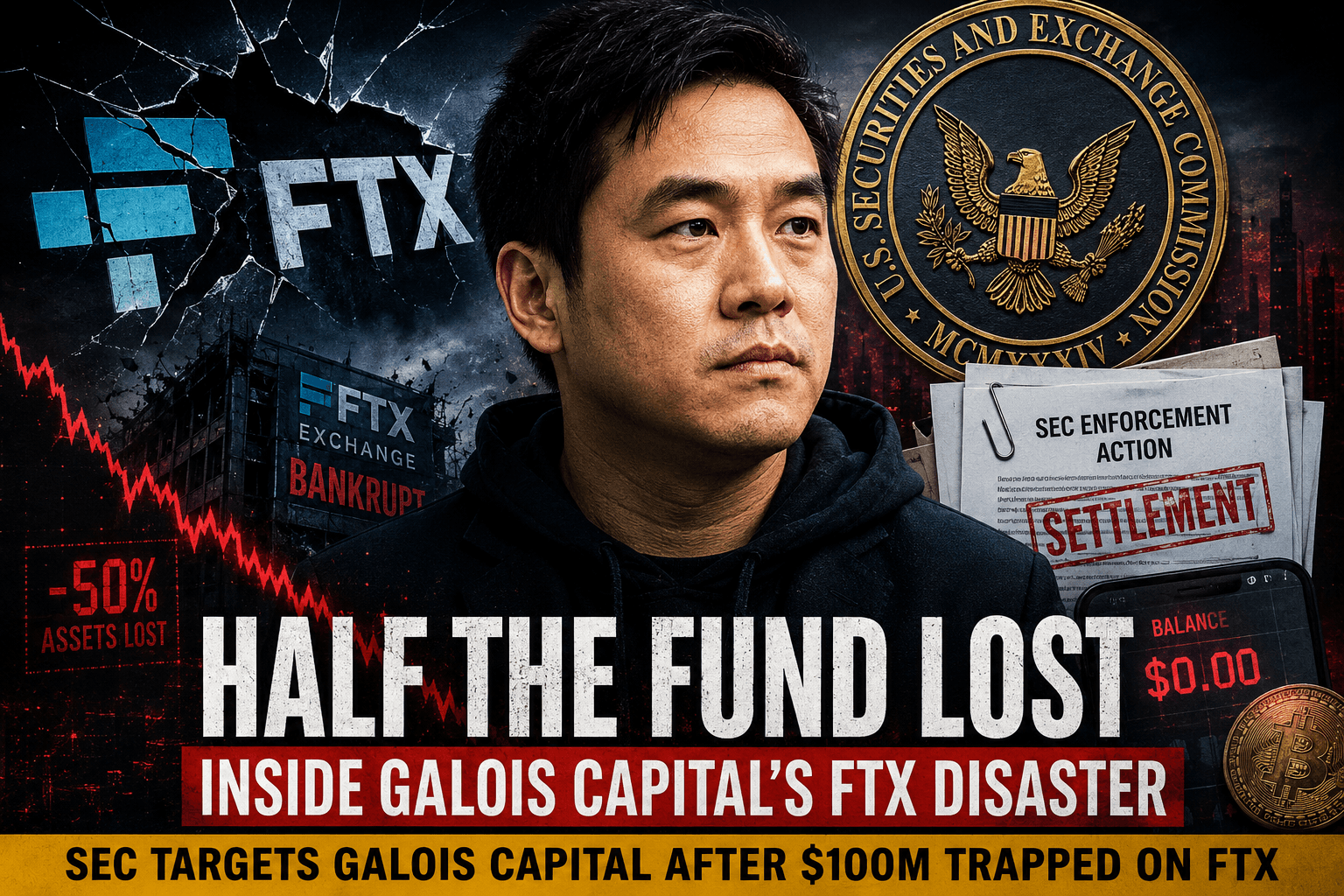
When FTX collapsed in November 2022, the damage spread far beyond Sam Bankman-Fried’s empire. Venture firms, lenders, market makers, celebrities, and everyday investors all found themselves caught in the fallout. One of the firms hit hardest was Galois Capital, a crypto-focused hedge fund that had earned a reputation for understanding risk in an industry where risk was often ignored.
The irony was difficult to miss.
Galois founder Kevin Zhou had become known in crypto circles for identifying weaknesses in major projects before they unraveled. Yet when FTX went down, Galois discovered that a significant portion of its own assets was trapped on the exchange.
Nearly two years later, federal regulators would take action against the firm. In September 2024, the U.S. Securities and Exchange Commission announced a settlement with Galois Capital Management, accusing the investment adviser of violating custody requirements and misleading certain investors about redemption practices. The case did not accuse the firm of fraud or theft, but it did raise uncomfortable questions about how investor money was handled and whether basic safeguards were overlooked during one of crypto’s most turbulent periods.
To understand why regulators stepped in, it helps to go back to the months before FTX imploded.
Galois Capital launched during the boom years of digital assets. The firm specialized in quantitative trading and crypto-focused investment strategies, attracting institutional investors and wealthy clients seeking exposure to the rapidly growing market. By 2022, it had become one of the better-known names in the crypto hedge fund space.
Like many firms operating in the sector, Galois relied on cryptocurrency exchanges to trade and store assets. According to the SEC, however, that practice created a problem.
Federal rules generally require investment advisers with custody of client assets to keep those assets with qualified custodians. These rules exist because investors have historically lost money when assets were placed with entities lacking adequate oversight or protections. Regulators concluded that Galois failed to comply with those requirements by maintaining certain fund assets on cryptocurrency trading platforms, including FTX.
At the time, few people imagined just how important that distinction would become.
In early November 2022, reports began emerging about the financial health of FTX and its affiliated trading firm Alameda Research. Within days, customers rushed to withdraw funds, liquidity evaporated, and one of the largest crypto exchanges in the world collapsed into bankruptcy.
For firms with assets sitting on the platform, the consequences were immediate.
Galois informed investors that a substantial portion of the fund’s capital was stuck on FTX. Public reporting indicated that roughly half of the fund’s assets under management had become trapped as the exchange entered bankruptcy proceedings. Estimates placed the exposure at around $100 million.
Investors suddenly found themselves in the same position as thousands of other FTX customers: waiting to see whether any meaningful recovery would eventually emerge from the bankruptcy process.
The losses were severe enough that Galois ultimately decided to shut down its flagship fund.
At the time, Zhou acknowledged the reality facing investors. Recovering assets through bankruptcy proceedings could take years, and there was no guarantee of a full recovery. Rather than continue operating under those conditions, the firm began winding down the fund and returning whatever capital remained available.
For many investors, the closure marked the end of what had once appeared to be a promising crypto investment operation.
The SEC’s later investigation focused on more than just the FTX exposure itself.
According to the agency, Galois also made disclosures regarding investor redemptions that did not fully reflect how the firm was actually operating. Fund documents stated that investors generally needed to provide 30 days’ notice before redeeming their interests. Regulators found that certain investors were permitted to redeem with significantly less notice under an informal practice developed by the adviser.
The issue was not necessarily that redemptions occurred. Rather, the SEC concluded that some investors were given information and opportunities that were not consistently communicated to others. In the agency’s view, that created misleading impressions regarding redemption rights and treatment among investors.
Those findings became a central part of the enforcement action.
The SEC’s order alleged violations of provisions of the Investment Advisers Act relating to custody requirements and disclosure obligations. Regulators argued that investors were exposed to risks that federal securities laws are designed to minimize.
The settlement announced in September 2024 brought the matter to a close, at least from a regulatory standpoint.
Without admitting or denying the SEC’s findings, Galois agreed to a cease-and-desist order, accepted a formal censure, and agreed to pay a $225,000 civil penalty. The SEC said the funds would be distributed to affected investors.
Compared with some of the billion-dollar enforcement actions that have emerged from the crypto sector, the penalty itself was relatively modest. The significance of the case lay elsewhere.
Legal observers viewed the settlement as another example of the SEC applying traditional investor-protection rules to digital asset businesses. For years, many firms in the crypto industry operated under the assumption that existing regulations either did not apply or could be adapted informally to fit a new technology. The SEC has repeatedly rejected that view.
The Galois case underscored the agency’s position that custody protections remain relevant regardless of whether assets consist of stocks, bonds, or cryptocurrency.
It also highlighted a broader problem that became painfully clear after the FTX collapse. Many sophisticated investment firms believed they understood the risks associated with centralized crypto exchanges. In practice, numerous institutions discovered that their exposure was far greater than expected.
Some lost access to assets.
Some faced years of uncertainty.
Others disappeared entirely.
Galois survived the collapse in the sense that it cooperated with regulators and resolved the SEC’s allegations without litigation. But the firm that once managed hundreds of millions of dollars never fully escaped the consequences of FTX’s downfall.
Today, the story stands as a reminder that financial disasters rarely unfold because of a single bad decision. More often, they emerge from a series of choices that seem manageable until stress exposes their weaknesses. FTX’s collapse revealed vulnerabilities across the crypto industry, from exchanges and lenders to hedge funds and investment advisers.
Galois Capital was not accused of engineering the disaster. It was one of many firms caught inside it. Yet regulators concluded that some of the safeguards investors rely upon were missing long before FTX failed.
That finding may ultimately be the most important part of the case.
By the time an exchange collapses, bankruptcy lawyers arrive, and regulators begin investigating, the damage has already been done. Investor-protection rules are supposed to work before a crisis begins. The SEC’s action against Galois suggests that, in this instance, those protections were not fully in place when investors needed them most.
————-
Disclaimer:
Some content on Reportingscams.com is published under our guest post program and is provided by third-party contributors. Reporting scams does not create, verify, or take responsibility for the views, accuracy, or claims expressed in such content.