For a while, it looked like one of those modern success stories investors are quick to believe in. A polished real estate operator offering access to premium commercial deals, presented through a platform that made everything feel structured, legitimate, and safe. It was the kind of opportunity that did not just attract attention, it built trust.
That illusion did not simply crack. It eventually collapsed under the weight of a federal investigation.
At the center of it all was Elchonon Schwartz, a name that once carried credibility in investment circles and is now tied to a serious real estate fraud case linked to the crowdfunding space. What prosecutors uncovered was not just a business that failed or underperformed. From their perspective, it was a structure that had been misleading investors from the beginning.
Schwartz did not operate quietly or behind the scenes. His visibility played a key role in how everything unfolded. He was part of a growing ecosystem where real estate deals are no longer limited to insiders. Platforms like CrowdStreet opened access to investors who wanted exposure to large commercial projects without needing deep institutional connections.
The model felt simple. Investors would participate in deals alongside experienced sponsors who handled execution. In return, they would share in the profits. Within that system, credibility becomes everything.
Schwartz appeared to understand that dynamic well. His projects were presented with structured plans, projected returns, and timelines that gave investors a sense of clarity. On the surface, there were no obvious red flags beyond the usual risks tied to real estate investing. Once that level of trust is built, most investors stop digging deeper.
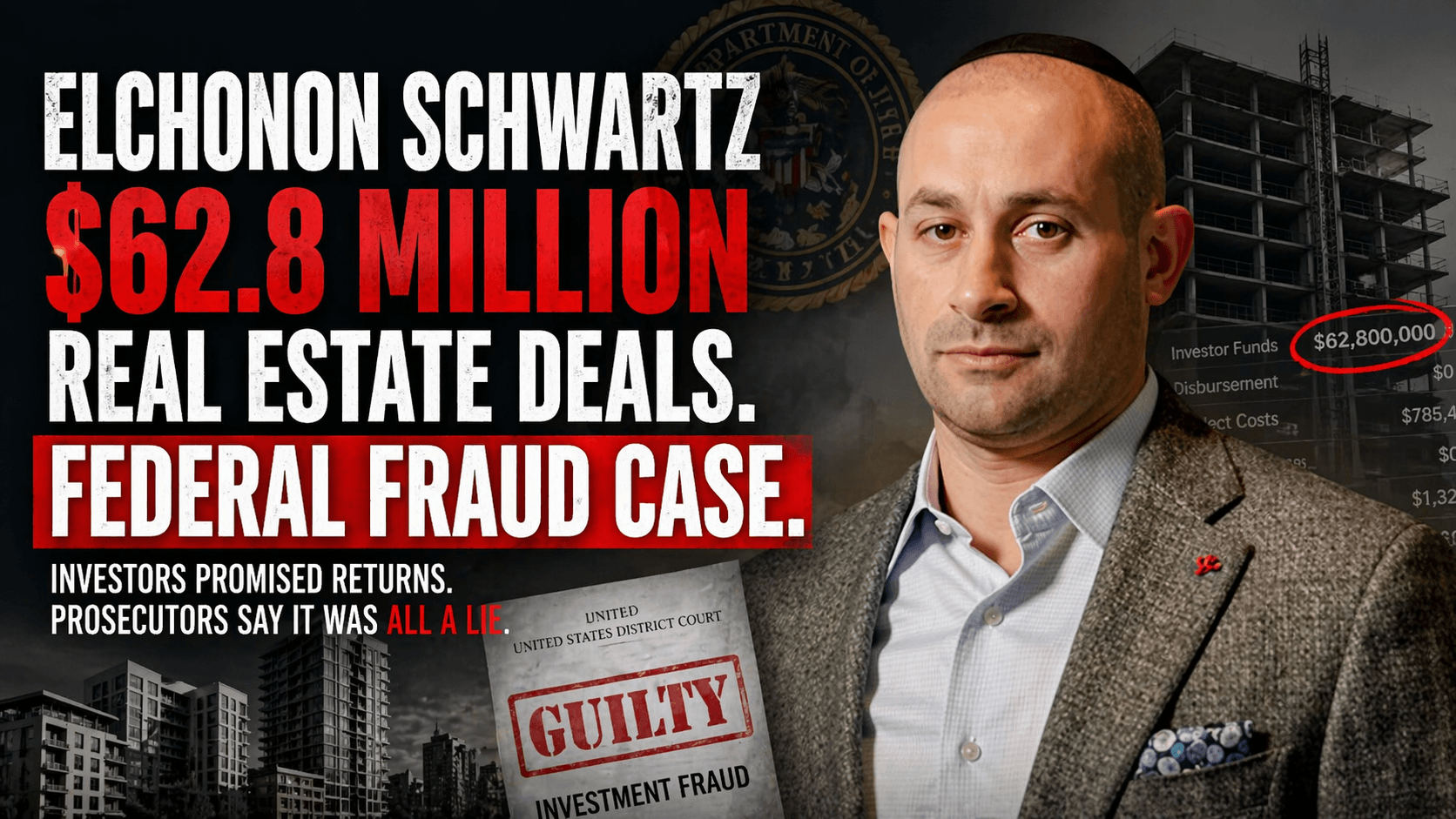
According to the U.S. Department of Justice, the reality behind those deals did not match what was being presented. The case centers around approximately $62.8 million raised from investors for specific commercial real estate developments, including a major project in Atlanta. Investors believed their capital was being used directly for those projects and that it supported acquisition, development, and execution.
Prosecutors say that was not the case.
Instead, funds were allegedly diverted in ways that went beyond simple mismanagement. Money raised for one purpose was used elsewhere. Financial gaps were covered using incoming investor capital. Obligations were shifted between projects in a way that helped maintain the appearance of stability even as the underlying structure became fragile.
This created a moving system where things could appear functional on the surface while the foundation underneath continued to weaken.
What becomes particularly striking in filings from the U.S. Securities and Exchange Commission is the degree of control over information. Investors were not only providing capital, they relied on updates, reports, and communication to understand performance. When those communications reflect a version of reality that differs from what is actually happening, the entire decision process becomes compromised.
That is where prosecutors focused their case.
They described a structure where investor funds were not consistently aligned with the specific deals they were meant for. Capital moved across projects in ways that blurred accountability. When one development faced pressure, funds from another could be redirected. When financial strain increased, new investments helped fill the gaps.
It is a structure that can continue operating longer than expected because it depends on sustained trust and limited visibility.
One of the central developments tied to Schwartz was a high profile real estate project in Atlanta. It was marketed as a legitimate opportunity with strong upside and a clear plan. For a period, everything appeared to move normally.
Over time, concerns began to surface. Investors started noticing delays, inconsistencies, and gaps in communication. Updates no longer aligned clearly with what had been promised. What initially looked like routine delays gradually started to feel more serious.
Coverage from FOX 5 Atlanta highlighted the frustration among investors who found themselves dealing with uncertainty and limited clarity about their funds. For many, the realization came slowly. This was not just a project struggling to meet expectations. Something deeper was wrong.
There is a point where poor business decisions cross into criminal territory. In this case, federal authorities made it clear where they believed that line had been crossed. Schwartz eventually pleaded guilty to charges tied to the fraud scheme.
That admission shifted the narrative completely. It confirmed that the case was not based on speculation or investor dissatisfaction. It was backed by evidence strong enough to support criminal prosecution.
He was sentenced to 87 months in federal prison.
That sentence reflects more than just the financial scale of the case. It signals the level of intent prosecutors believed was involved. Even so, the conclusion of the criminal case does not resolve the broader impact left behind.
The $62.8 million figure draws attention, but it does not fully capture the consequences. Many investors were not large institutions with diversified portfolios. Some were individuals who committed a significant portion of their savings into what they believed were stable opportunities. Others were entering crowdfunding for the first time and relied heavily on the structure presented to them.
When things went wrong, they were left dealing with uncertainty, legal processes, and a complicated path toward recovery. In cases like this, recovery is often slow and rarely complete.
The situation also raises difficult questions about the role of platforms like CrowdStreet. These platforms are built on access. They connect investors with opportunities that were once out of reach. That access comes with a reliance on sponsor integrity.
While the platform itself was not accused in the same way, the case places a spotlight on due diligence and oversight. Once a deal is live, the sponsor controls key aspects of execution and reporting. If that control is misused, the boundaries of responsibility become harder to define.
It remains a grey area that continues to challenge the industry.
At its core, the Schwartz case follows a pattern that has appeared in many financial frauds. A strong narrative builds confidence. Information is carefully managed. Capital continues to flow. Warning signs emerge slowly and are often dismissed until the structure can no longer sustain itself.
In this instance, the use of real estate added another layer of perceived security. Physical assets create the impression of stability, making it easier for investors to believe their capital is protected. When funds are misallocated from the outset, that assumption breaks down quickly.
What makes this case stand out is how closely it aligns with the way modern investing now operates. It sits at the intersection of digital platforms, increased access, and reliance on trust based systems. Investors are no longer navigating traditional gatekeepers. They are interacting directly with opportunities presented online, often relying on curated information.
That shift creates opportunity, but it also creates exposure.
The fall of Elchonon Schwartz reflects a broader vulnerability within an evolving investment landscape. As platforms expand access, systems designed to ensure accountability are still catching up. The result is an environment where trust can be built quickly and, in some cases, exploited just as fast.
There is no clean ending to a story like this. The sentencing provides legal closure, but it does not undo financial losses or restore trust. It does not guarantee that similar structures are not still operating elsewhere.
What it leaves behind are warning signs that are easy to recognize in hindsight, but far more difficult to identify in real time.
————-
Disclaimer:
Some content on Reportingscams.com is published under our guest post program and is provided by third-party contributors. Reporting scams does not create, verify, or take responsibility for the views, accuracy, or claims expressed in such content.