When Scott Jeffrey Mason’s clients handed over control of their money, they thought they were putting it in safe hands.
Some had trusted him for years. Some considered him a friend. They came to him with retirement plans, inheritance money, and savings built over decades of work. He wasn’t a stranger on the other end of a cold call. He was their financial adviser — someone who was supposed to act in their best interests.
Federal prosecutors say he did the opposite.
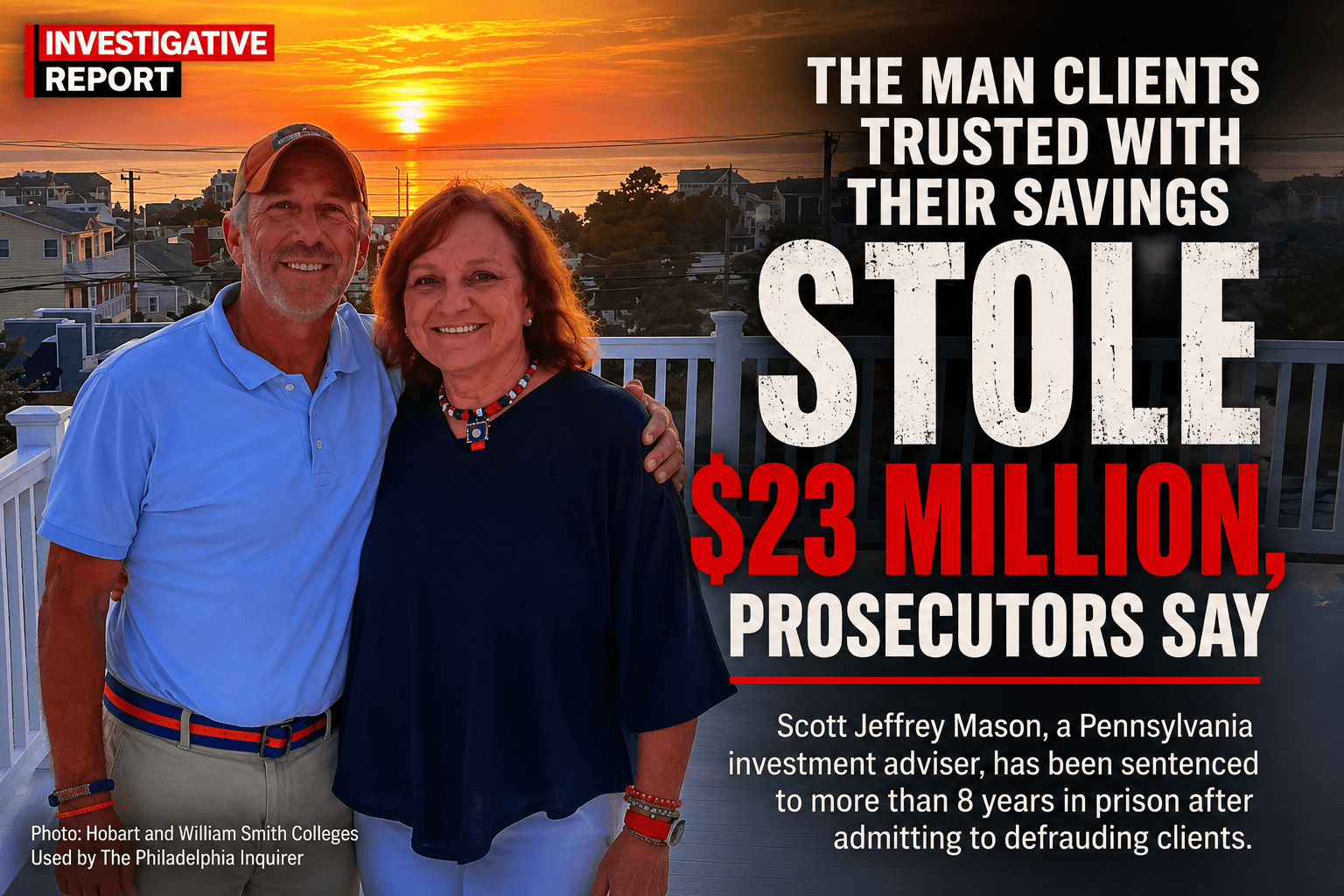
Mason, the founder of Rubicon Wealth Management LLC in Pennsylvania, has been sentenced to more than eight years in prison after admitting to stealing more than $23 million from clients. According to investigators, he used the money to bankroll his own lifestyle while clients remained in the dark, believing their investments were exactly where they were supposed to be.
The 66-year-old pleaded guilty to wire fraud, securities fraud, investment adviser fraud, and five counts of filing false tax returns. In June, a federal judge sentenced him to 97 months behind bars and ordered him to pay nearly $25 million in restitution to his victims, along with more than $2.3 million to the IRS.
The dollar figure is staggering. But what stands out about this case is who prosecutors say got hurt.
These weren’t anonymous investors chasing risky opportunities. They were longtime clients. Friends. People who had known Mason personally and trusted him to look after the money they planned to retire on.
According to court records, Mason began moving money out of client accounts years ago. Prosecutors say he sold securities without permission and transferred the proceeds into accounts he controlled through Rubicon Wealth Management and another company called Orchard Park Real Estate Holdings LLC.
The clients, investigators say, had no idea.
When people asked questions about their investments, Mason allegedly had explanations ready. Some clients were told their money had been placed into diversified short-term bond investments. The problem, authorities say, was that many of those investments either weren’t what clients had been promised or didn’t exist at all.
To keep the scheme going, prosecutors say Mason created false account statements and provided misleading tax documents that made it appear everything was normal. In some cases, he allegedly forged client signatures to authorize transactions they never approved.
Because the paperwork looked legitimate, many victims had no reason to think anything was wrong.
Behind the scenes, millions of dollars had already vanished.
Investigators also say Mason used money from some clients to repay others who had started asking questions, a tactic often seen in fraud cases designed to delay discovery of the losses. One victim had reportedly been losing money to Mason since 2007. Even after receiving some repayments, that person still suffered losses of more than $6 million, according to prosecutors.
As authorities traced where the money went, they found that it wasn’t sitting untouched in investment accounts.
According to federal prosecutors, Mason spent client money on country club dues, international travel, personal credit card bills, and other expenses tied to his lifestyle. One detail in particular caught attention: investigators said he used investor funds to buy an ownership interest in a miniature golf course at the Jersey Shore.
For the people who lost money, that revelation hit especially hard.
The savings they had trusted someone else to protect had allegedly been used to pay for vacations, memberships, and business ventures they knew nothing about.
The fraud allegations didn’t stop there.
Federal authorities also accused Mason of lying to the government about the money he was bringing in. The IRS said he failed to report millions of dollars in fraud proceeds as income and filed false tax returns, causing an estimated tax loss of more than $3.2 million.
In addition to the criminal case, the Securities and Exchange Commission filed its own civil action against Mason, Rubicon Wealth Management, and Orchard Park Real Estate Holdings. The SEC accused them of violating federal securities laws by misappropriating client assets and misleading investors about what was happening to their money.
Former clients have also pursued private legal action in an effort to recover at least some of what they lost.
At the center of all of it is a simple question: what happens when the person responsible for protecting your financial future is the one allegedly stealing from it?
White-collar crime doesn’t usually come with flashing lights and dramatic crime scenes. But its impact can be just as brutal. Retirement plans get pushed back or disappear entirely. Families are forced to rethink futures they thought were secure. People who did everything they were told to do — save carefully, invest wisely, trust qualified professionals — suddenly find themselves wondering where it all went wrong.
For many of Mason’s victims, the losses weren’t just financial.
They lost trust in someone they had relied on for years. They weren’t dealing with a faceless scammer hiding behind an email address. According to prosecutors, they were dealing with a man who sat across from them in meetings, reassured them that their money was safe, and continued doing so while millions of dollars were allegedly being diverted elsewhere.
For the victims left behind, the money may never fully come back. Neither will the confidence they once had in the adviser they believed was looking out for them.
————-
Disclaimer:
Some content on Reportingscams.com is published under our guest post program and is provided by third-party contributors. Reporting scams does not create, verify, or take responsibility for the views, accuracy, or claims expressed in such content.