For years, Anthony Joseph Cataldo moved through the biotech and corporate world with the image of a seasoned executive who knew how to survive failing companies, attract investors, and keep troubled businesses alive just long enough to stay in control. Behind that polished image, regulators and investigators now describe something far darker. Federal authorities say Cataldo turned a struggling public biotech company into what looked less like a medical business and more like a personal bank account used to fund luxury spending, private travel, legal bills, and even costs tied to his Beverly Hills mansion.
The allegations against Anthony J. Cataldo did not appear overnight. His name has followed controversy, lawsuits, failed ventures, investor complaints, and regulatory scrutiny for years. Long before the latest SEC allegations, Cataldo had already built a reputation inside the biotech penny stock world through companies like Genesis Biopharma, Inc., now known as Iovance Biotherapeutics, where critics and frustrated investors frequently questioned management decisions, financing activity, and shareholder value destruction. But the latest accusations from the U.S. Securities and Exchange Commission pushed his reputation into an entirely different category. According to the SEC, Cataldo orchestrated a years long scheme involving GT Biopharma Inc., where regulators say corporate money meant for research and development was instead funneled into personal expenses and hidden transactions.
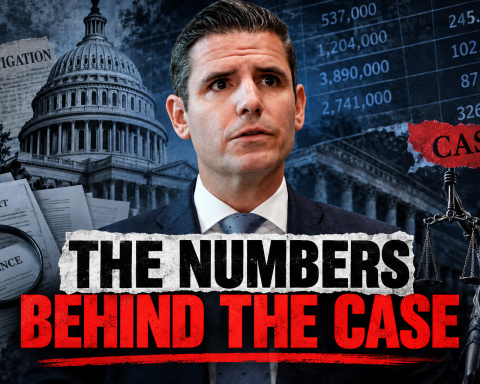
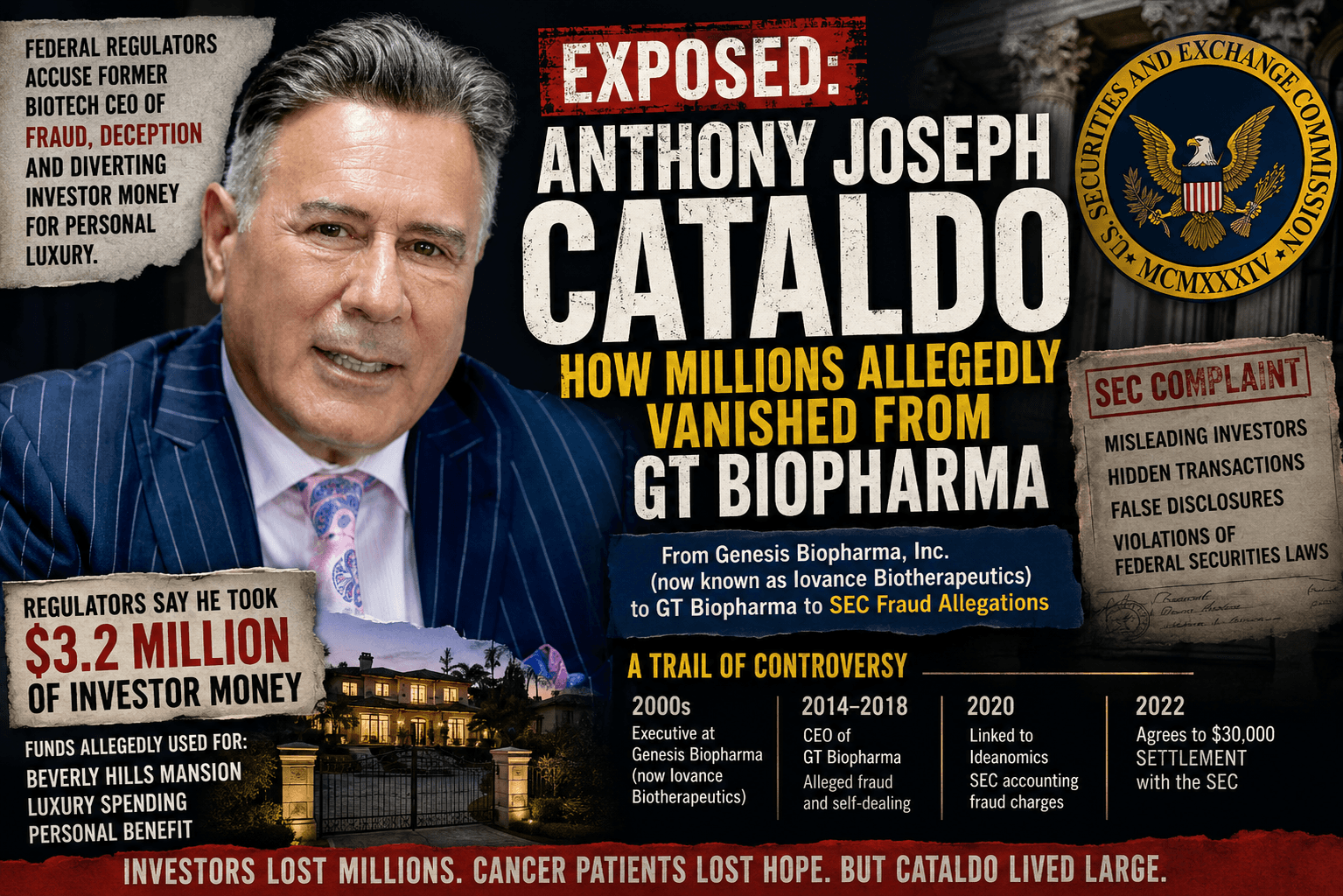
The SEC’s litigation release from 2026 outlined allegations that Cataldo diverted roughly $3.2 million from GT Biopharma through undisclosed related party deals and deceptive accounting practices. Investigators claim he concealed the true nature of transactions from shareholders while publicly presenting the company as a legitimate biotech operation focused on cancer treatment technologies. Instead, regulators say company funds were repeatedly redirected for his personal benefit.
The picture painted by investigators was not one of a temporary lapse in judgment. It was a pattern. According to regulators, Cataldo allegedly used intermediaries and shell style arrangements to disguise where company money was actually going. The SEC accused him of causing GT Biopharma to make misleading disclosures to investors while failing to properly report transactions tied to entities connected to him.
One of the most explosive details involved allegations that company funds were used to support expenses tied to Cataldo’s Beverly Hills mansion. Reporting surrounding the case described luxury spending and personal lifestyle costs being paid while investors believed their money was supporting biotechnology development. The contrast between public investor messaging and the alleged private misuse of funds became one of the central themes of the scandal.
GT Biopharma itself had long struggled financially. The company repeatedly raised money from investors while promoting its cancer treatment pipeline and future growth prospects. Public biotech firms often survive on optimism, especially when products remain years away from commercial approval. Regulators now claim Cataldo exploited that reality. According to the SEC, he allegedly treated the constant need for fundraising as an opportunity to keep money flowing into a system that ultimately benefited him personally.
The allegations became even more damaging because the SEC claims these transactions were intentionally hidden. Investors in public companies rely heavily on disclosures filed with regulators. Related party transactions involving executives are required to be disclosed because they can create massive conflicts of interest. Federal investigators say Cataldo concealed key details and caused inaccurate filings to be submitted to the market.
The scandal surrounding GT Biopharma was not the first time Cataldo’s name surfaced in corporate controversy. His history in public companies stretches back decades and includes involvement with several troubled businesses and repeated investor criticism. Critics have accused him over the years of moving between struggling public entities while shareholders were left with collapsing stock prices and losses.
Cataldo also became tied to broader accounting and disclosure controversies involving Ideanomics. In another SEC enforcement action, regulators charged Ideanomics and several executives with accounting and disclosure fraud tied to misleading public statements and improper financial reporting. Cataldo eventually agreed to settle SEC allegations connected to the matter without admitting or denying wrongdoing. The settlement amount, reported at around $30,000, drew attention because critics argued the financial penalty appeared tiny compared to the scale of investor losses surrounding the broader controversy.
That case added another layer to an already growing image problem. By then, Cataldo’s name was becoming associated with aggressive fundraising, disclosure issues, and companies that repeatedly faced questions about transparency. Investors who followed penny stock and small cap biotech markets had already seen similar patterns before. Grand promises. Press releases projecting growth. Constant financing rounds. Then regulatory scrutiny.
The SEC’s allegations against Cataldo fit into a larger pattern regulators have increasingly targeted in recent years. Small biotech and technology firms often operate in environments where investors chase future breakthroughs rather than present day revenue. That creates conditions where executives can sometimes maintain investor excitement despite weak financial fundamentals. Federal authorities have repeatedly warned that these types of companies can become breeding grounds for disclosure fraud and executive abuse.
In court filings tied to the GT Biopharma matter, regulators accused Cataldo of using corporate entities connected to him to move money in ways that were allegedly designed to avoid detection. The SEC claims investors were deprived of truthful information that could have dramatically changed how they viewed the company and its leadership.
The allegations became especially disturbing because GT Biopharma marketed itself around cancer treatment technologies. Investors who bought into the company believed they were helping fund research tied to serious medical conditions. Prosecutors and regulators increasingly focused on the emotional angle behind biotech fraud cases in recent years because many investors are drawn in by hope surrounding life saving technologies.
According to investigators, while shareholders were putting money into the company, millions were allegedly being redirected elsewhere. The SEC described transactions that benefited Cataldo personally while disclosures to the public failed to fully explain what was happening behind the scenes.
Outside the courtroom, online investor communities and watchdog sites have spent years documenting complaints tied to Cataldo and companies associated with him. Some critics referred to him as a serial penny stock operator who repeatedly appeared around distressed public companies. Others accused him of enriching himself while investors absorbed losses. While many of those claims remain opinions from frustrated shareholders rather than proven legal findings, the growing pile of lawsuits, settlements, and SEC actions surrounding his name added fuel to the perception that regulators were eventually catching up with a long running pattern.
The damage extended beyond shareholders. Cases involving alleged misuse of biotech company funds often create wider distrust in legitimate medical startups trying to raise capital honestly. Investors burned in scandals become more cautious, making it harder for real research driven firms to survive. That ripple effect is one reason federal agencies have increased pressure on executives accused of misleading public markets.
Cataldo’s business style, according to critics and regulators, appeared built around survival through financing cycles. As long as money continued entering the company, operations could continue, salaries could be paid, stock promotions could continue, and the appearance of progress could remain intact. The SEC now argues that underneath that public image was a system benefiting insiders at shareholder expense.
One of the recurring themes across controversies tied to Cataldo is opacity. Investors and watchdogs repeatedly complained about complex corporate structures, questionable disclosures, and confusing financial relationships involving entities connected to management. Regulators now appear to believe those concerns were justified.
Federal authorities have not publicly accused Cataldo of violent crime or traditional theft in the street level sense. The allegations instead fall into the world of white collar corporate misconduct, where damage happens through filings, transfers, hidden relationships, accounting practices, and investor deception. But the financial consequences can still be devastating. In many corporate fraud cases, ordinary investors lose retirement savings and personal wealth while executives continue operating through settlements and new ventures.
The SEC’s pursuit of Cataldo reflects a broader crackdown on executives accused of abusing public companies for personal enrichment. Regulators in recent years have aggressively targeted disclosure fraud, hidden related party transactions, and misuse of investor money across biotech, crypto, and technology sectors.
As for Anthony Joseph Cataldo’s current whereabouts and business status, public reporting suggests he has maintained a relatively low profile since the latest SEC allegations intensified. There is no indication that he has disappeared or fled the country, but his public corporate visibility appears significantly reduced compared to earlier years when he actively promoted ventures and appeared in company communications. Legal proceedings and regulatory scrutiny surrounding him continue to shape how his legacy is viewed.
For critics, the Cataldo story represents more than just another SEC enforcement case. They see it as a warning about how vulnerable speculative public markets can become when aggressive executives operate with limited oversight. Small investors often enter biotech markets chasing hope, believing they are funding innovation and future treatments. Cases like this leave many wondering how much of their money ever reached the science they believed in.
The final outcome of the legal proceedings will ultimately be decided through courts and settlements, but the reputational collapse surrounding Anthony Joseph Cataldo is already severe. Once presented as a biotech executive and dealmaker, he is now publicly tied to allegations involving hidden transactions, investor deception, luxury spending, and millions of dollars regulators say were improperly diverted from a publicly traded company.
For many observers, the most troubling part is not just the alleged misuse of money. It is the idea that while investors were sold visions of cancer treatment breakthroughs and corporate growth, federal investigators now claim the reality behind the curtain was a system quietly feeding the lifestyle of the man running the company.
————-
Disclaimer:
Some content on Reportingscams.com is published under our guest post program and is provided by third-party contributors. Reporting scams does not create, verify, or take responsibility for the views, accuracy, or claims expressed in such content.