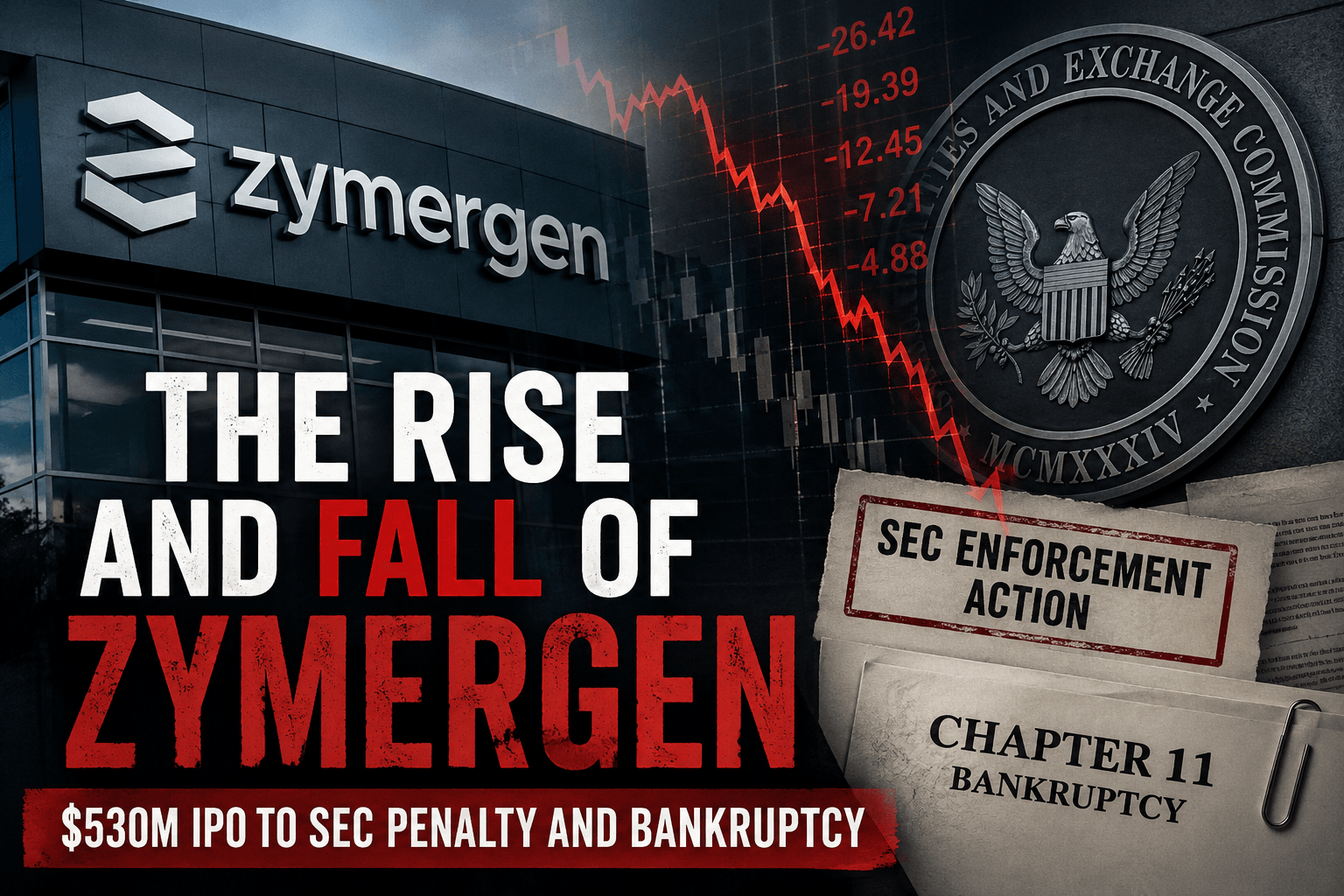
When Zymergen went public in April 2021, it looked like another Silicon Valley success story in the making.
The synthetic biology company raised about $530 million in its Nasdaq debut and carried the kind of hype investors had come to expect from fast-growing biotech startups. Backed by major venture capital firms and built around the idea that engineered microbes could create valuable new materials, Zymergen promised to change how products were developed and manufactured.
Just a few years later, the company was bankrupt, investors had lost billions, and the U.S. Securities and Exchange Commission was accusing it of misleading the market.
In September 2024, the SEC announced settled charges against Zymergen, saying the company made misleading statements about Hyaline, a specialty film it was developing for use in flexible electronic devices. According to regulators, Zymergen overstated the commercial opportunity for the product and gave investors an overly optimistic impression of its prospects.
The company’s problems centered on Hyaline because, by the time Zymergen went public, it had become the main product investors were counting on. IPO documents and public statements pointed to what appeared to be a large potential market and suggested meaningful revenue opportunities were within reach.
The SEC later concluded that some of those claims weren’t supported by the facts available inside the company.
Regulators said Zymergen promoted a market opportunity worth more than $1 billion even though key assumptions behind that figure lacked adequate support. The SEC also found that revenue expectations discussed with analysts were significantly higher than internal forecasts. More importantly, according to the agency, investors were not given a complete picture of serious obstacles that were already affecting Hyaline’s commercial rollout.
At the time, many shareholders had little reason to believe trouble was around the corner.
That changed abruptly in August 2021.
Only months after the IPO, Zymergen stunned Wall Street when it revealed that expected revenue from Hyaline would not materialize as previously anticipated. The company disclosed issues affecting customer adoption and commercialization efforts, forcing management to dramatically lower expectations.
The market reaction was immediate.
Shares plunged as investors tried to understand how a company that had recently completed one of the year’s most talked-about biotech offerings could miss expectations so badly. Billions of dollars in market value disappeared. The optimism surrounding Zymergen’s future was replaced almost overnight by questions about what management knew and when it knew it.
The fallout didn’t stop with the stock price.
Josh Hoffman, Zymergen’s co-founder and chief executive officer, stepped down shortly after the disclosure. The company attempted to regroup, but confidence had already been badly damaged. What had once been presented as a breakthrough growth story increasingly looked like a business struggling to turn scientific innovation into a commercial product customers actually wanted.
Investors soon turned to the courts.
Securities lawsuits accused the company and certain executives of failing to adequately disclose problems surrounding Hyaline before the stock collapsed. Plaintiffs argued that shareholders were left with an incomplete understanding of the challenges facing the product that was expected to drive future growth.
Years of litigation followed.
Meanwhile, Zymergen’s business continued to deteriorate. In 2022, the company agreed to be acquired by Ginkgo Bioworks in a deal that valued Zymergen at only a fraction of what investors had once imagined. The transaction was widely viewed as a rescue rather than a triumph.
The situation worsened further in 2023 when Zymergen filed for bankruptcy protection.
For many early investors, the outcome was difficult to ignore. A company that had entered public markets with a multibillion-dollar valuation had gone from IPO celebration to bankruptcy court in just a few years.
The SEC’s case added another chapter to that story.
Without admitting or denying the agency’s findings, Zymergen agreed to settle the charges and pay a $30 million civil penalty. The settlement resolved the SEC’s allegations but did not include any criminal charges. Regulators described the case as an example of a public company failing to provide investors with accurate and balanced information about a key product’s commercial prospects.
The agency’s whistleblower office later listed the enforcement action as a covered case for potential whistleblower awards, indicating that information provided to regulators may have helped support the investigation.
Today, Zymergen serves as a reminder of how quickly investor enthusiasm can disappear when expectations run ahead of reality.
The company’s technology may have been innovative, but innovation alone is rarely enough to justify lofty valuations. Public investors depend on accurate information when deciding where to put their money, especially in industries built around future promises rather than current profits.
In Zymergen’s case, the gap between the story presented to investors and the challenges facing its flagship product ultimately proved too large to ignore. The result was a stock market collapse, years of litigation, a bankruptcy filing, and a multimillion-dollar SEC penalty that ensured the company’s rise and fall would be remembered long after the IPO headlines faded.
————-
Disclaimer:
Some content on Reportingscams.com is published under our guest post program and is provided by third-party contributors. Reporting scams does not create, verify, or take responsibility for the views, accuracy, or claims expressed in such content.