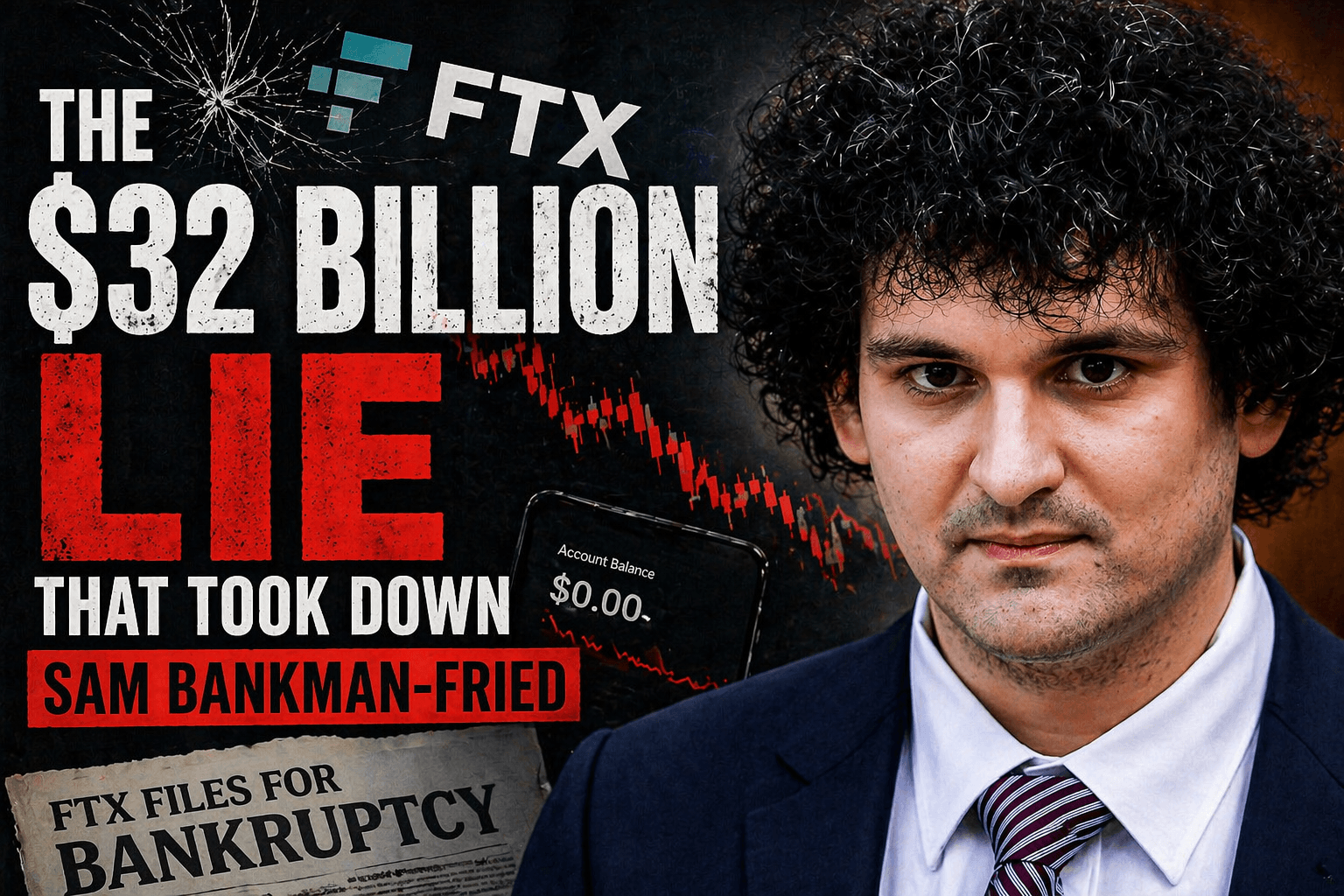
For a long time, Sam Bankman-Fried did not look like someone who would end up at the center of a massive fraud case. He did not act like the usual billionaire founders. No flashy suits, no aggressive interviews, no loud persona. Just a guy in shorts talking about math, risk, and doing good with money. That image worked better than any marketing campaign. People trusted him without questioning too much.
The truth, as it later came out, was far messier.
He started out like many others in finance. MIT graduate, sharp with numbers, landed a job at Jane Street where trading was all about speed and precision. That part of his story checks out. People who worked around him early on have said he was good at what he did. Not flashy, but sharp. From there he moved into crypto, which at that time still felt like a wild west with huge gaps in pricing across exchanges. That is where he built Alameda Research.
Alameda made money doing arbitrage. Buy cheap in one place, sell higher somewhere else. Simple idea, hard execution, and for a while it worked very well. The profits gave him confidence to go bigger. That is when FTX was born.
FTX did not grow slowly. It exploded. Within a few years it became one of the biggest exchanges in the world. Big investors came in. Celebrities promoted it. The brand was everywhere. At one point, it was valued at 32 billion dollars. That is not small money. That is serious scale.
What made it more powerful was the story around it. Bankman-Fried was not just another crypto founder. He positioned himself as the safe one. The one who wanted regulation. The one who talked about protecting users. That gave him an edge. In an industry full of noise, he sounded reasonable. That is what pulled in a lot of people.
But behind the scenes, things were not as clean as they looked.
The biggest problem sat between FTX and Alameda. On paper, they were separate companies. In reality, they were deeply connected. Alameda was not just another trading firm using FTX. It had special access. It could borrow more. It could keep trading even when it was losing money. It was not playing by the same rules as everyone else.
And where did that money come from
That is the part that shook everything.
Investigators later said that a huge chunk of the funds Alameda was using came from FTX customers. Regular people who deposited money thinking it would sit safely on the exchange. Instead, that money was quietly moved around to support trading bets.
At first, the system held up. Markets were good. Money was flowing in. Losses could be covered. Nothing looked broken from the outside. Users could withdraw. Trades worked. Everything felt normal.
But this kind of setup only works as long as confidence stays strong.
The moment people start asking questions, the cracks show.
That moment came in 2022. Reports started coming out about Alameda’s finances. There were questions about how much of its balance sheet was tied to FTX itself. That raised eyebrows. Then panic kicked in.
Users started pulling their money out.
A lot of money.
Very quickly.
FTX did not have it.
That is when everything collapsed.
Within days, one of the biggest crypto exchanges in the world went from stable to bankrupt. The numbers that came out later were shocking. More than 8 billion dollars in customer funds were missing. Not misplaced. Not delayed. Missing.
When new management stepped in, they basically said the same thing in different words. This was a mess. No proper records. No clear accounting. Decisions made casually without structure. For a company handling billions, that is not just careless. That is dangerous.
The fallout was immediate. Crypto markets dropped. Other companies got dragged into the chaos. People who had nothing to do with the internal workings of FTX lost money just because they were exposed to it in some way.
And then there were the actual users.
People who trusted the platform.
Some lost savings. Some lost business funds. Some lost everything they had put into crypto.
You start seeing interviews later. People talking about how their lives flipped in a matter of days. That part does not show up in balance sheets, but it matters.
After the collapse, things moved fast legally.
Sam Bankman-Fried was arrested in the Bahamas and sent to the United States. Charges followed. Fraud, conspiracy, money laundering. The core argument from prosecutors was simple. He knew what was happening with customer funds and still told the public everything was safe.
The trial pulled back the curtain even more.
People who were close to him spoke in court. They explained how Alameda could access funds freely. How risks were known internally. How decisions were made in a small group without real oversight. It was not one bad move. It was a pattern.
The defense tried to say it was mismanagement. That things got out of control too fast. That there was no intent to defraud.
The jury did not buy that.
He was found guilty.
In 2024, Sam Bankman-Fried was sentenced to 25 years in prison. Regulators like the U.S. Securities and Exchange Commission backed the view that investors and users were misled on a large scale.
There is another layer to all this that people still talk about. His influence. He was not just running a company. He was involved in politics. Donating money. Meeting policymakers. Talking about the future of crypto regulation. That gave him credibility at a level most founders never reach.
Which makes the fall even harder to ignore.
Because it was not just a company failing. It was a system built on trust breaking apart.
Even now, the impact is still playing out. Regulations are being discussed more seriously. Investors are more cautious. People ask more questions before trusting platforms with their money.
The story of Sam Bankman-Fried is not just about crypto. It is about how fast things can grow when trust is high, and how quickly they can collapse when that trust disappears.
At one point, he was seen as the future of finance.
Now he is a case study in what happens when the story does not match what is actually happening behind the scenes.
————-
Disclaimer:
Some content on Reportingscams.com is published under our guest post program and is provided by third-party contributors. Reporting scams does not create, verify, or take responsibility for the views, accuracy, or claims expressed in such content.