
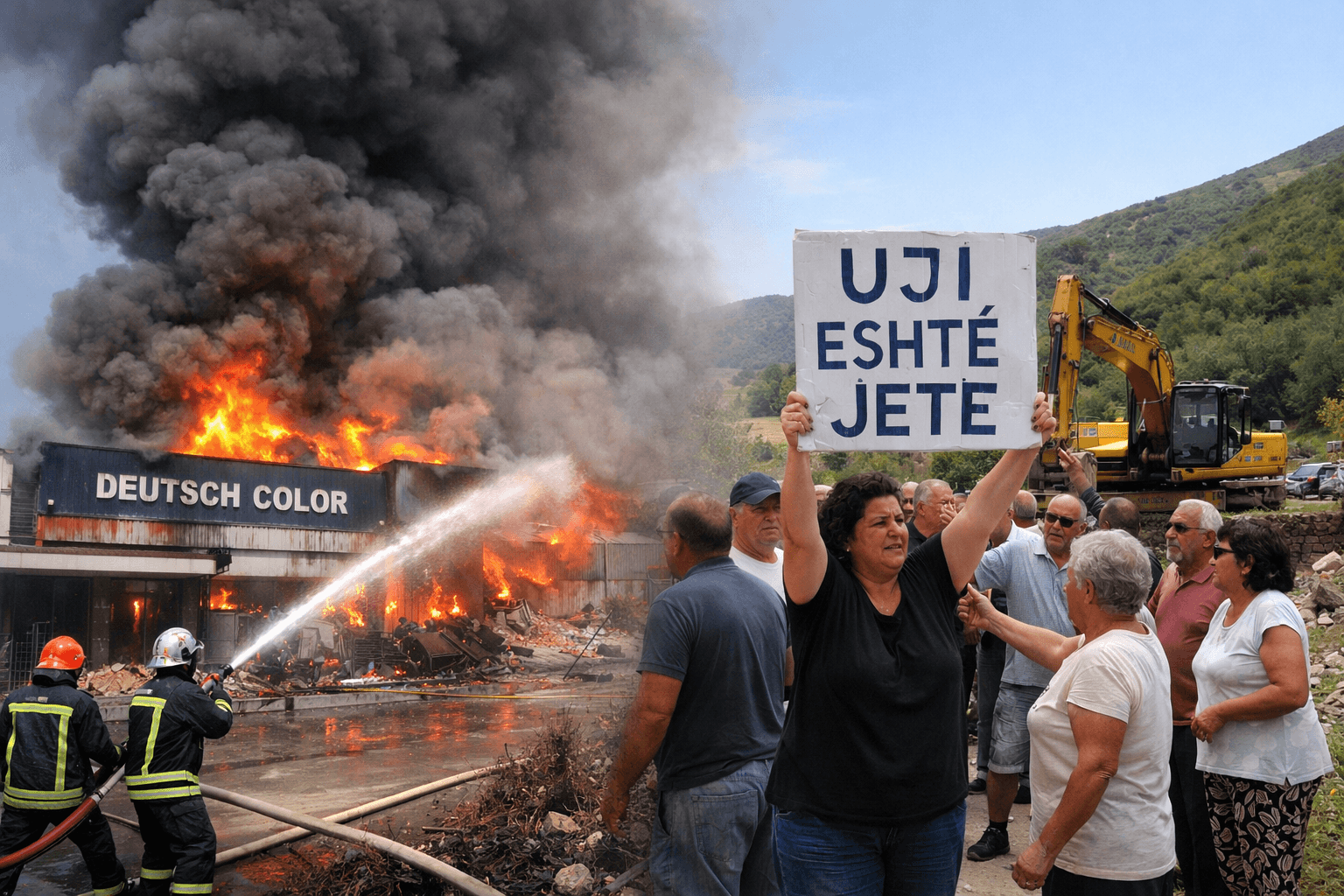
Albania’s recent growth is beginning to run into friction on the ground. A fire at a large chemical factory has put safety back in focus, while a small coastal village is pushing back against plans to divert its water to nearby resort projects.
What’s happening in these two places reflects a broader mood. Development is moving quickly, but many people feel they are being left out of decisions that directly affect their lives and resources.
Why Albania’s Development Boom Is Facing Its Biggest Backlash Yet
A conflict over water in a coastal village and a large industrial fire have started to raise uncomfortable questions about the pace of Albania’s development and who is really paying the price for it.
In recent years, Albania’s growth has been driven by tourism, construction, and manufacturing. That momentum is still strong, but pushback is becoming harder to ignore. A fire at the Deutsch Color chemical factory, owned by the Delta Group, has drawn attention to industrial safety. Around the same time, tensions rose after the government moved ahead with a plan to reroute a village’s spring water for a nearby development project.
Taken together, these incidents are forcing a closer look at how development is being managed and who benefits from it.
A factory fire intensifies concerns
A major fire recently broke out at the Deutsch Color paint factory in Maminas, one of the region’s largest producers of construction chemical materials. The factory, owned by industrialist Luan Muça of the Delta Group, suffered extensive damage. Fire crews worked for hours to contain the blaze. No casualties were reported, but operations had to be suspended.
After the incident, Muça said production is expected to restart soon and thanked emergency services for preventing a worse outcome.
The company operates across multiple international markets and plays a key role in supplying materials linked to construction and infrastructure. Because of that, the fire has sparked wider concerns about safety standards, environmental risks, and the scale of industrial activity tied to Albania’s building boom.
The village that refused to give up its water
In the coastal area near Vlora, the small village of Tragjas has found itself at the center of a growing dispute.
The government approved a plan to redirect natural spring water from the village to supply luxury seaside developments. For residents, this water is not optional. It is used for drinking, farming, and livestock.
When construction teams arrived with machinery and police presence, villagers blocked the work. Many say they were never properly consulted. “We were never asked,” one resident said, describing the moment they first learned about the project.
Officials maintain that the water source is state-owned and sufficient for both the village and nearby resorts. Locals and environmental groups are not convinced. They argue that diverting water to high-end tourism projects, especially those with heavy consumption needs, could leave the village struggling during dry periods.
Planning documents show that water would be piped roughly 30 kilometres to serve designated investment zones, including large coastal developments such as Green Coast and other resort complexes. The scale is significant. The combined developments are expected to cover around 700,000 square metres. Estimates suggest that high-end tourism in the area could require at least 250 litres of water per person each day.
For many residents, the issue is simple. Development is moving forward, but not everyone feels included in the decisions.
A bigger picture starts to form
On the surface, a factory fire and a village protest may seem unrelated. In reality, they reflect the same underlying shift.
Albania is pushing hard to position itself as a major destination for tourism and investment. Large projects are expanding quickly, often relying on shared resources such as land, water, and infrastructure. This approach is expected to bring jobs and revenue. At the same time, it is raising concerns about environmental pressure, uneven access to resources, and whether local communities are being heard.
In Tragjas, residents worry about losing access to water. Environmental groups point out that tourism developments tend to consume far more resources than rural areas. The industrial sector, which supports this growth, brings its own risks, as seen in the recent fire.
Development vs community
The debate now goes beyond a single incident or location.
At its core, this is about how a developing country manages growth. Albania wants to expand its economy and attract global investment. But as projects move faster, public trust is becoming a real factor.
There are growing questions about how future developments will be approved, regulated, and accepted.
For now, Albania finds itself at a turning point. The direction it takes will depend on whether growth continues to be driven mainly by investment targets or shaped more carefully around the needs of the communities living closest to it.
————-
Disclaimer:
Some content on Reportingscams.com is published under our guest post program and is provided by third-party contributors. Reporting scams does not create, verify, or take responsibility for the views, accuracy, or claims expressed in such content.