
OmegaPro was promoted as a modern investment company that claimed to generate profits through foreign exchange trading. Over several years, it expanded rapidly across Africa, Asia, Europe, Latin America, and the Middle East, attracting investors with promises of high returns and an image of luxury and success. Large events, social media campaigns, and a network of promoters helped the company build a global following. Many people believed they were joining a legitimate financial platform. Today, many of those same investors say they were left with empty accounts and unanswered questions.
The latest effort to seek accountability has come from Nigeria, where a group of investors has launched a public petition asking the Government of Dubai to investigate OmegaPro and the people behind it. The petition, published on Change.org by lawyer Dr. Ope Banwo on behalf of the OmegaPro Action Nigeria Investors group, argues that thousands of Nigerian investors suffered heavy losses after putting their money into the platform. The organizers are urging Dubai authorities to examine the company’s operations and determine whether any laws were broken.
The petition is part of a much larger story that has unfolded over the past few years. OmegaPro presented itself as an international investment business, saying it used experienced traders to generate returns in the foreign exchange market. Investors were encouraged to purchase investment packages using cryptocurrency, with the expectation that their money would grow over time. Many participants also earned commissions for introducing new members, helping the company spread quickly through word of mouth and social media.
Its marketing strategy played a major role in that growth. OmegaPro held events in luxury hotels and major venues around the world, often featuring flashy presentations, expensive cars, and promises of financial independence. Videos and photographs from these events were widely shared online. The company also used well-known football personalities in promotional campaigns, giving many potential investors greater confidence in the business.
For many people, those campaigns created the impression that OmegaPro was a successful international company. Investors often pointed to its global conferences and high-profile appearances as proof that the business was trustworthy. Financial experts, however, have long warned that polished marketing should never be treated as evidence that an investment company is properly regulated or financially sound.
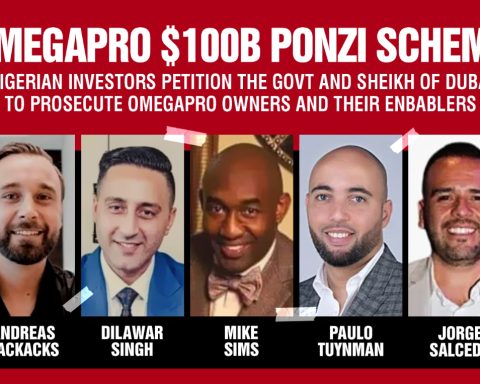
The petition identifies Andreas Szakacs, Dilawar Singh, Mike Simms, and Paulo Tuynman as individuals associated with OmegaPro. It alleges that the company collected money from investors while presenting itself as a legitimate forex investment platform. According to the organizers, many investors eventually lost access to their funds after the company stopped processing withdrawals. These are allegations made in the petition and have not been proven in court.
Investor complaints began to increase toward the end of 2022 when users reported difficulties accessing their money. OmegaPro later announced that it had suffered a cyberattack and said customer accounts would be transferred to another platform known as Broker Group. Instead of restoring confidence, the announcement created more confusion. Many investors later claimed they still could not access their investments after the migration.
For people who had invested their savings, the situation quickly became serious. Some said they had borrowed money to invest after being convinced by friends, relatives, or local promoters that the platform was safe. Others claimed they had invested retirement funds or family savings in the hope of earning extra income. As communication from the company became less frequent, many investors started looking for answers through online groups and support networks.
The Nigerian petition estimates that investors in the country lost more than ₦200 billion. It also claims that losses around the world exceeded one hundred billion dollars. Those figures come from the petition organizers and have not been independently verified by any court or government investigation. Even so, the numbers reflect the scale of losses that many investors believe they experienced.
The concerns surrounding OmegaPro are not limited to Nigeria. Before the platform collapsed, financial regulators in several countries had already issued public warnings about the company. Authorities in Spain, Belgium, and France warned that OmegaPro was not authorized to provide investment services under their respective financial regulations. These notices did not accuse the company of fraud, but they advised consumers to exercise caution before investing.
Warnings from financial regulators are important because they give the public an opportunity to check whether a company is licensed to offer investment products. In many cases involving online investment platforms, people only discover these warnings after they have already transferred their money.
Industry analysts also questioned OmegaPro’s business model before investor withdrawals stopped. Some raised concerns about the company’s emphasis on recruiting new members alongside investment products. Others questioned how the company was able to deliver the returns it promoted while providing very little public information about its trading activities. Those concerns became more widely discussed after investors reported problems accessing their funds.
The Nigerian petition also points to the role played by local promoters. According to the organizers, many people joined OmegaPro because they trusted individuals in their communities who recommended the platform. Some promoters held seminars, organized online presentations, and encouraged others to invest. The petition argues that any official investigation should also examine the wider promotional network that helped OmegaPro attract investors. These claims remain allegations made by the petition organizers.
One reason the case has attracted international attention is the number of countries involved. OmegaPro operated across several jurisdictions, accepted cryptocurrency payments, and promoted its services worldwide. That international structure has made it more difficult for investors seeking legal action or compensation. Different countries have different financial laws, and cryptocurrency transactions often make tracing funds more complicated than traditional bank transfers.
The petition specifically calls on Dubai authorities because the organizers believe key parts of OmegaPro’s business were connected to Dubai. They are asking officials to investigate the company’s activities, determine whether any offences were committed, and identify anyone who may have helped facilitate the operation. At the time of writing, there has been no public announcement confirming that Dubai authorities have opened an investigation in response to the petition.
Although a public petition cannot establish legal responsibility, it can bring attention to issues that victims believe deserve further investigation. For many investors, signing the petition is one way of keeping pressure on authorities while continuing to search for answers.
The OmegaPro story also highlights a wider problem facing regulators around the world. Online investment platforms can reach millions of people through social media, messaging apps, and referral networks in a relatively short period of time. Attractive marketing, success stories, and luxury branding can persuade people to invest even when little information is available about how a business actually operates.
Financial experts have repeatedly advised investors to carry out independent research before committing money to any investment opportunity. Checking whether a company is licensed, understanding how profits are generated, and seeking professional financial advice remain some of the most effective ways to reduce risk. High promised returns should always be examined carefully, particularly when they are accompanied by pressure to recruit additional investors.
For many former OmegaPro investors, those lessons came too late. They are still trying to understand what happened to their money and whether they will ever recover it. Some continue to share information through online support groups, while others are pursuing legal options in different countries.
The petition from Nigerian investors reflects that continuing search for accountability. Whether it leads to further action remains to be seen, but it shows that many victims are not prepared to let the matter fade away. They want authorities to examine the company’s activities, establish the facts, and, where appropriate, hold those responsible accountable.
Until that happens, OmegaPro will remain a case that continues to raise difficult questions about online investment platforms, international regulation, and the challenges of protecting investors in an increasingly digital financial world.
————-
Disclaimer:
Some content on Reportingscams.com is published under our guest post program and is provided by third-party contributors. Reporting scams does not create, verify, or take responsibility for the views, accuracy, or claims expressed in such content.