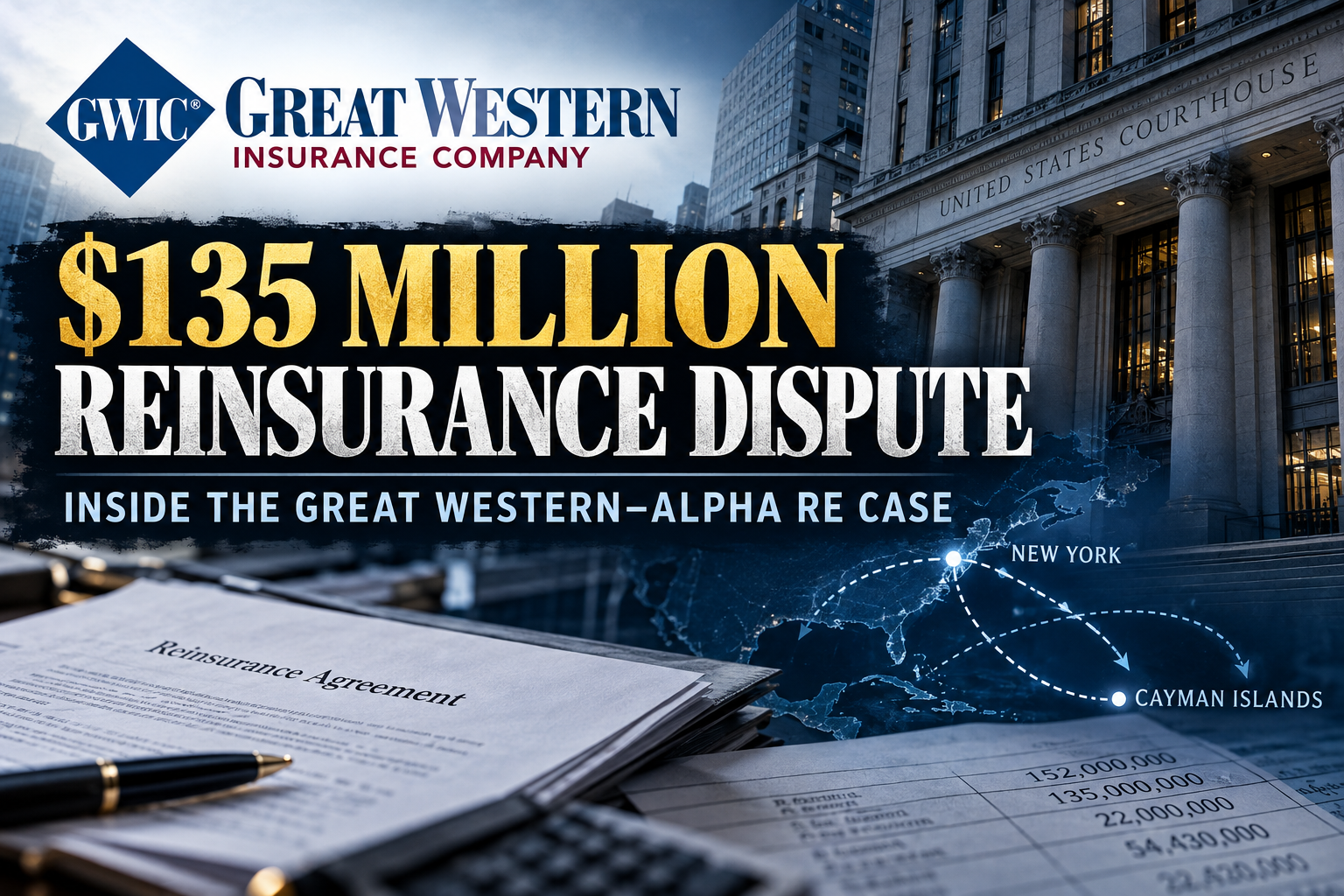
A complex reinsurance arrangement involving a U.S. insurance company, Cayman Islands-based entities and a network of investment managers has developed into a long-running legal dispute over more than $135 million in funds that Great Western Insurance Company says were improperly handled or lost. The litigation has raised questions about collateral security, conflicts of interest, financial reporting and the movement of assets through interconnected companies. Although several individuals and businesses were originally named in the allegations, the case has evolved considerably, and the legal position of each defendant must be assessed separately.
The dispute centres on Great Western Insurance Company, a Utah-domiciled insurer that provides life insurance and annuity products associated with pre-arranged funeral plans. Its claims arose from a reinsurance arrangement initially involving Ability Reinsurance (Bermuda) Limited and later transferred to Alpha Re Limited, a Cayman Islands company. Reinsurance allows an insurer to transfer part of its insurance risk to another company, but arrangements of this kind depend heavily on whether the assets promised as security actually exist, remain available and meet the contractual requirements.
According to court records, Great Western transferred $135 million to Ability Re under a coinsurance agreement established in 2009. The funds were placed in a trust account intended to secure Ability Re’s obligations. In 2012, when Ability Re said it was leaving the reinsurance business, its chief financial officer, Dan Cathcart, introduced Great Western to Alpha Re and recommended that the insurer transfer its reinsurance relationship. Great Western subsequently entered into a novation agreement with Ability Re and Alpha on June 28, 2012. The arrangement required Alpha to maintain qualifying assets equal to 102% of its reserve obligations in a trust account, alongside a supplementary account providing additional security. By July 2012, the assets backing the arrangement reportedly totalled approximately $153 million. The purpose of these safeguards was straightforward: Great Western needed reliable, accessible assets to support the obligations Alpha had assumed.
The insurer’s subsequent complaint alleged that the arrangements failed to provide the protection promised. Court filings describe an investment structure in which funds held for Great Western were placed into transactions involving Cygnet 001 Master Trust Series 2011-C, an investment vehicle connected to other entities associated with the people managing the money. Great Western alleged that the assets backing the arrangements were not as secure or valuable as represented and that statements provided to the insurer overstated the value of the collateral. These are allegations advanced in civil litigation, not a criminal conviction against every person or company named in the proceedings.
The financial transactions described in the court record are particularly significant. In its proposed third amended complaint, Great Western alleged that approximately $22 million was diverted from the trust account in August 2012. According to the insurer, part of that amount was used to satisfy a $6 million collateral obligation that Alpha was supposed to fund itself, while approximately $15 million was used to pay a ceding commission owed to Ability Re. The complaint further alleged that, in September 2012, the trust account invested $148 million in a repurchase agreement with Series 2011-C. Such agreements generally involve the sale of assets with a commitment to repurchase them later, usually at an agreed price plus interest. In this case, Great Western alleged that the assets supporting the arrangement were subsequently directed into riskier investments and related entities rather than remaining in qualifying, readily available collateral.
Mark Graham, an investment manager associated with Blue Alternative Asset Management LLC and Blue Capital Management, Inc., is a central figure in the later pleadings. Great Western alleged that Graham held management roles on both sides of transactions involving the trust account and Series 2011-C, creating conflicts of interest. The insurer also alleged that the true value of the assets fell substantially below the figures represented in account statements. The proposed complaint described payments and transfers involving management companies, investment funds and insurance-related entities, including Blue Elite Fund Ltd., Blue II Ltd., Sancus Capital Blue Credit Opportunities Fund Ltd. and Advantage Capital Holding LLC. The court documents identify these entities as part of the financial relationships relevant to the dispute, although their legal exposure differs and has changed as the case progressed.
The complaint also described a later transfer of assets that Great Western says harmed its interests. In March 2017, Series 2011-C reportedly sold investments for approximately $54.43 million. Great Western alleged that the proceeds were redirected to an insurance-related trust benefiting Ability Insurance Company rather than being received by Series 2011-C as required. It further alleged that Series 2011-C transferred shares in Blue Elite Fund Ltd., valued at approximately $45.56 million, to Advantage Capital Holding for inadequate compensation. The insurer contended that these transactions reduced the value available to satisfy its own claims. The figures describe transactions and losses alleged in the pleadings; they should not be treated as separate, proven losses that can simply be added together.
The case had already reached a critical point before the broader lawsuit was filed. On November 27, 2017, an arbitration panel issued an award requiring Alpha Re to deposit approximately $126.99 million in cash or Treasury bills into the relevant trust accounts and provide an additional letter of credit of approximately $4.70 million. Alpha did not comply by the applicable deadline. On December 21, 2017, a federal court in Manhattan confirmed the arbitration award. The court’s action established an enforceable obligation against Alpha Re; it was not a criminal judgment against every individual subsequently named in the civil litigation. Alpha entered voluntary liquidation in the Cayman Islands in January 2018, shortly after the award was confirmed. Great Western’s later proceedings sought to address the wider alleged losses and the roles of other parties.
The federal lawsuit, filed in 2018, named a broad group of individuals, investment managers, insurance businesses, trusts and offshore funds. Donald Solow was among those named. The earlier complaint identified him as an Alpha board member and linked him to Regatta Holdings LLC and the Cygnet trust structure. Great Western’s allegations against him formed part of a much wider dispute concerning the ownership, management and movement of assets. However, the procedural history is important: the court’s January 6, 2026 opinion records that Great Western and Solow had stipulated to the dismissal of claims against him and Regatta Holdings. The available record does not establish that this dismissal amounted to a finding that Solow committed fraud, nor does the dismissal by itself establish that the allegations were false. It would therefore be misleading to present him as having been convicted or as a defendant still facing the same claims in the current version of the action.
A March 22, 2020 letter from attorney John Lambert of Lambert Worldwide, supplied for this review, sought the removal of OffshoreAlert articles concerning Solow. The letter said the reporting contained facts that lacked necessary context or were incorrect, and that its online availability had harmed Solow personally and professionally. It requested removal, de-indexing or removal of his name from the articles. The letter expressly stated that it was not a notice of intent to take legal action. It did not provide detailed evidence identifying which statements were supposedly wrong, and the document alone does not establish whether the publisher accepted or rejected the request. The request is relevant to the history of the reporting, but it is not proof either that the original allegations were correct or that they were false.
The litigation continued to develop after the initial pleadings. In June 2020, the court allowed some claims to proceed while dismissing others, including certain fraud-related and conspiracy claims against particular defendants. Later decisions and stipulated dismissals further narrowed the dispute. In its January 6, 2026 ruling, the court allowed Great Western to add certain claims, including a securities-fraud claim and a claim for aiding and abetting a breach of fiduciary duty, while limiting other proposed amendments. The court also directed that several entities be removed from the case caption and required the parties to address outstanding summary-judgment motions and other pending matters. The January ruling was a procedural decision about the complaint, not a final determination that every allegation had been proven.
The broader significance of the case extends beyond one insurer or a single offshore company. Reinsurance arrangements can protect policyholders and strengthen an insurer’s financial position, but those protections depend on transparent accounting, enforceable security and meaningful oversight of the people controlling the assets. When a trust account is represented as holding safe, qualifying investments, the insurer and its policyholders need confidence that the reported figures correspond to assets that actually exist and can be accessed when required. The Great Western dispute illustrates the consequences when that confidence breaks down: years of litigation, a substantial arbitration award, an offshore liquidation and continuing arguments over the allocation of financial responsibility.
The final legal outcome must be judged by the evidence and rulings that apply to each party, not by the number of names in a complaint or the size of the headline figure. The arbitration award against Alpha Re and the later civil allegations against other parties are important parts of the record, but they are not interchangeable. As the remaining proceedings develop, the central questions are whether the assets backing Great Western’s reinsurance arrangements were properly managed, who bears legal responsibility for the alleged shortfall, and whether the insurer can recover what it says it lost. Those questions matter because the integrity of insurance depends not only on promises made on paper, but on whether the money intended to honour them is there when it is needed.
Source:
OffshoreAlert
————-
Disclaimer:
Some content on Reportingscams.com is published under our guest post program and is provided by third-party contributors. Reporting scams does not create, verify, or take responsibility for the views, accuracy, or claims expressed in such content.