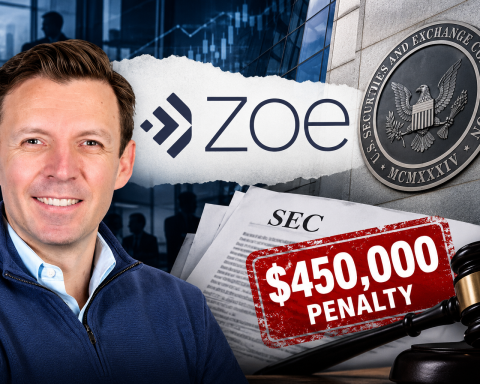

Noah Davis became a central figure in one of the stranger legal fights surrounding the collapse of 777 Partners: a former technology executive accused by his former employer of breaking into company systems and taking laptops to help a lender pursuing a much larger fraud case. But the public record has since changed materially. The Florida lawsuit naming Davis was voluntarily dismissed with prejudice in April 2025, with all parties agreeing to bear their own costs. That ended the case against Davis, but it did not produce a judicial finding that the underlying allegations were true or false.
The story begins with 777 Partners, the Miami investment group founded by Joshua “Josh” Wander and Steven Pasko. Before its financial troubles became impossible to ignore, 777 built a sprawling portfolio spanning sports, aviation, insurance, fintech and other investments. Its football ambitions attracted particular attention: the company became associated with clubs including Genoa, Standard Liège, Hertha Berlin, Vasco da Gama and Red Star, while its proposed takeover of Everton eventually collapsed. The company’s problems later expanded well beyond football, with lenders and investors pursuing it over alleged unpaid debts and disputed collateral.
By 2024, the most consequential dispute was between 777 and London-based Leadenhall Capital Partners. Leadenhall had provided more than $600 million in financing through a group of investment entities and claimed that roughly $350 million of collateral supporting its loans either did not exist, was not controlled by 777’s borrowers or had already been pledged elsewhere. Leadenhall sued 777 and associated individuals and companies in New York, accusing them of fraud, conspiracy and RICO violations. Those claims were disputed by 777 and other defendants.
Then came the counterattack.
In September 2024, 777 Partners and SuttonPark Capital sued Leadenhall, its Irish life-insurance investment vehicle, SAIPH Consulting, SAIPH founder Paul Kosinski and Noah Davis in federal court in Florida. The case was brought under the Computer Fraud and Abuse Act and included allegations concerning theft of computer equipment. Court records identify Davis as a former head of IT at 777; contemporaneous reporting described him as the company’s former IT chief or CTO.
777’s complaint painted an extraordinary picture. It claimed Davis had used his knowledge of the company’s technology infrastructure and improperly retained access credentials after leaving the firm. According to the complaint, he entered 777’s computer networks without authorization, searched databases for information that could benefit Leadenhall in the New York litigation, attempted to copy data and gave himself administrator-level privileges. The complaint specifically claimed that Davis targeted the email files of Pasko, one of 777’s co-founders and a defendant in the Leadenhall litigation.
The allegations did not stop at computer access. 777 claimed surveillance footage showed Davis entering a SuttonPark office without permission and removing several company laptops. The complaint said SAIPH subsequently acknowledged Davis’s physical access, while 777 alleged that an initial communication from SAIPH referred to Leadenhall before a subsequent version removed that reference. 777 interpreted that sequence as evidence of a relationship between Davis’s actions and Leadenhall’s litigation strategy.
Leadenhall strongly rejected the broader theory. Its lawyers characterized the Florida lawsuit as another attempt by 777 and its financial backers to obstruct Leadenhall’s efforts to enforce its contractual rights. Leadenhall maintained that it was attempting to determine the condition of collateral securing its investment and pointed to a separate court proceeding in which it had obtained significant interim relief.
The litigation became more complicated as the parties fought over discovery. Davis did not simply ignore the allegations. In October 2024, through attorney Leonard Feuer, he filed a motion to dismiss and separately opposed 777’s request for a preliminary injunction. The docket shows that 777 later amended its complaint, rendering Davis’s original motion to dismiss moot. A federal magistrate subsequently allowed discovery concerning the alleged computer access, the audit and the relationship between the Florida case and the separate New York litigation.
That distinction matters because much of the language used in reporting around the case can sound more conclusive than the court record actually was. The allegations were serious, but they remained allegations. Davis was never convicted of computer fraud or theft in connection with the dispute, and the research reviewed for this report found no criminal charge, regulatory penalty or civil judgment establishing that he committed the alleged conduct.
The case ultimately ended on April 22, 2025. 777 Partners, SuttonPark, Leadenhall, Leadenhall’s investment fund, SAIPH, Kosinski and Davis jointly stipulated that the entire Florida action and every claim in it would be dismissed with prejudice, with each side responsible for its own costs, expenses and fees. The filing expressly states that the agreement applied only to that case and did not resolve the separate New York litigation between Leadenhall and other 777-related defendants. The federal docket reflects the dismissal and closure of the case on April 23, 2025.
Davis later made that outcome public himself. In October 2025, he wrote to OffshoreAlert requesting correction or removal of reports about the case. He argued that the dismissal with prejudice had resolved the allegations in his favor and that continued publication without the dismissal could create a misleading impression about his conduct. His letter also attached the dismissal stipulation.
There is, however, an important legal nuance in Davis’s characterization. A voluntary dismissal with prejudice is final as to the claims in that lawsuit and prevents the plaintiffs from simply bringing the same claims again. But the April 2025 stipulation was not a verdict after trial, and it did not state that 777’s allegations were false, that Davis was exonerated, or that Leadenhall or SAIPH admitted wrongdoing. The parties agreed to end the litigation without a merits determination. That is the most accurate description of what happened.
The larger 777 story also continued after the Davis case disappeared from the docket. In October 2025, federal prosecutors charged 777 co-founder Josh Wander with conspiracy to commit wire fraud, wire fraud, conspiracy to commit securities fraud and securities fraud, alleging a scheme involving more than $500 million. Prosecutors accused Wander and others of double-pledging collateral, falsifying financial information and misleading investors about the company’s financial condition. Wander pleaded not guilty and his defense characterized the allegations as a business dispute being treated as a criminal matter. The charges concern Wander and the alleged financial scheme—not Davis.
The SEC also filed a civil case naming Wander, Pasko, former CFO Damien Alfalla and 777-related entities. Meanwhile, the Leadenhall civil litigation has continued through 2026, including appellate proceedings and disputes involving 777, Advantage Capital Holdings and other defendants. A June 2026 federal ruling, for example, addressed an A-CAP contempt motion and left the broader litigation alive.
777 itself entered Chapter 11 bankruptcy proceedings in August 2026, underscoring how dramatically the investment firm’s position has deteriorated since its aggressive expansion into sports and other industries. Recent reporting says Leadenhall is now seeking to provide debtor-in-possession financing to the bankrupt company, even as the parties remain embroiled in litigation over the firm’s liabilities and collateral.
As for Davis himself, the public record provides surprisingly little reliable biographical information. No credible source located in this review establishes his age, an alias, family background or a current executive position. Public employment databases identify him as a former 777 senior IT executive, while the court record establishes his connection to SAIPH Consulting during the dispute. SAIPH remains listed as an active Florida entity, with Paul Kosinski identified in state records as its manager. Beyond Davis’s 2025 correspondence concerning the lawsuit, his current professional activities are not reliably established in public sources reviewed for this article.
That is ultimately what makes the Davis episode worth separating from the much larger 777 scandal. A serious accusation made it into a federal complaint, received international financial and business coverage, and became part of a sprawling battle over hundreds of millions of dollars. But the lawsuit against Davis ended without a finding of liability. The record today supports saying that he was accused, that he contested the case, and that the case was voluntarily dismissed with prejudice. It does not support turning an unresolved allegation into a proven act of computer theft or fraud. At the same time, the dismissal did not erase the wider questions surrounding 777 Partners, its financing structure and the subsequent criminal and regulatory scrutiny of its leadership. For investors, lenders and anyone assessing a fast-growing financial enterprise, that distinction is crucial: allegations can trigger enormous reputational consequences long before a court determines what actually happened.
Source:
OffshoreAlert
————-
Disclaimer:
Some content on Reportingscams.com is published under our guest post program and is provided by third-party contributors. Reporting scams does not create, verify, or take responsibility for the views, accuracy, or claims expressed in such content.