When Josh Wander stood on football pitches across Europe announcing new investments in famous clubs, 777 Partners projected the image of an ambitious financial empire with seemingly unlimited capital. The Miami-based investment firm expanded at remarkable speed, buying stakes in airlines, insurance businesses, media ventures and a growing portfolio of football clubs that included Genoa, Standard Liège, Hertha Berlin, Vasco da Gama and Melbourne Victory, while pursuing a takeover of Everton FC. Behind that rapid expansion, however, U.S. regulators now allege a business struggling to stay afloat, relying on deceptive financing practices, misleading investors and repeatedly using the same assets to secure multiple loans.
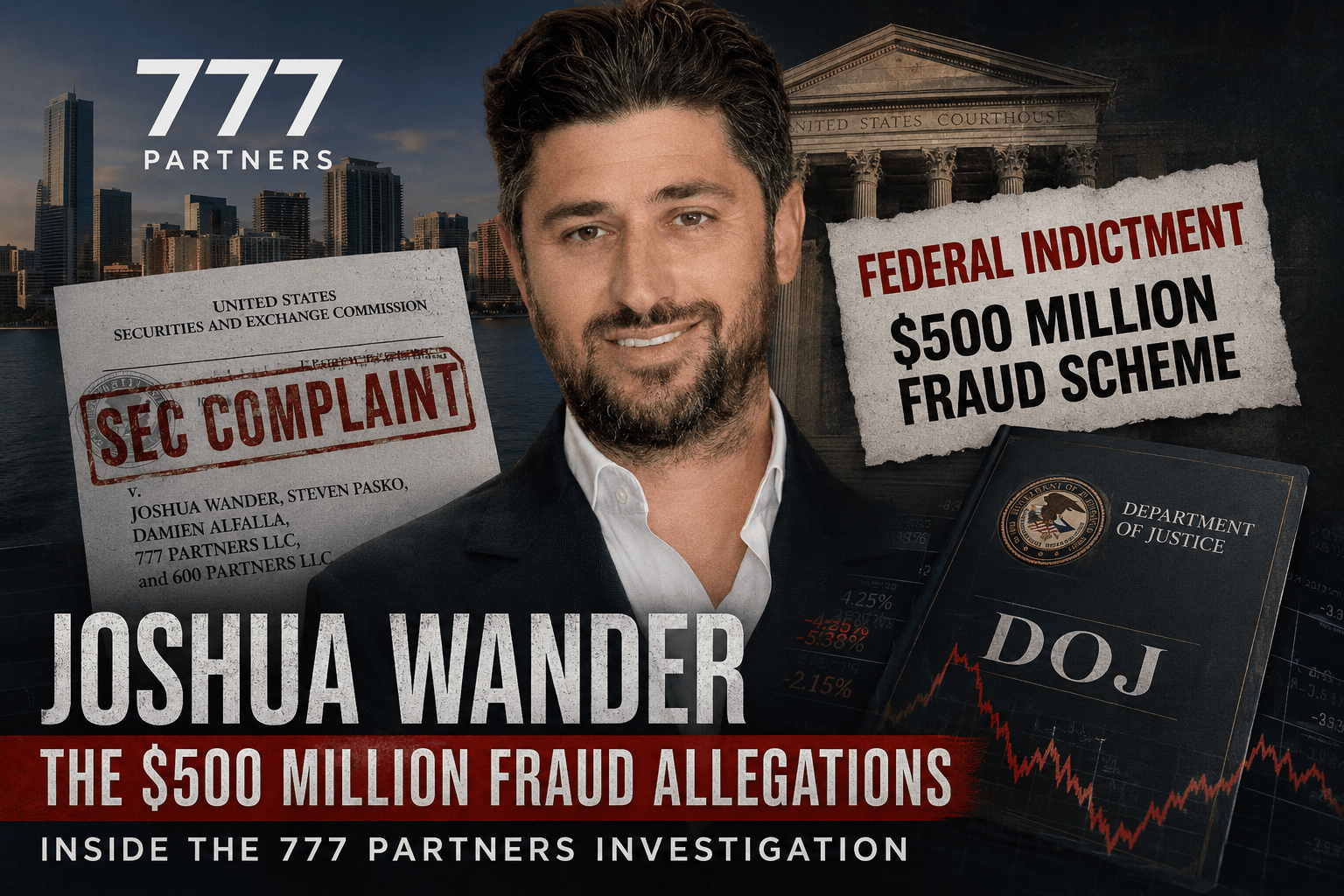
That contrast now sits at the center of one of the most significant investment fraud cases to emerge from the private credit industry in recent years. In October 2025, the U.S. Securities and Exchange Commission filed civil fraud charges against Joshua Wander, his longtime business partner Steven Pasko, former chief financial officer Damien Alfalla, and their companies, 777 Partners LLC and 600 Partners LLC. On the very same day, federal prosecutors in New York unsealed a criminal indictment accusing Wander of orchestrating a fraud scheme that allegedly cost lenders and investors more than $500 million.
According to prosecutors, the image presented to investors bore little resemblance to the firm’s actual financial condition. The indictment alleges that Wander and others secured financing by providing lenders with materially false information about 777 Partners’ assets, liquidity and collateral. Investigators say the firm pledged assets it did not own outright, pledged some collateral multiple times to different lenders, manipulated financial records and even falsified bank statements to conceal mounting financial problems. The alleged scheme enabled the company to obtain hundreds of millions of dollars in financing that prosecutors argue would never have been approved had lenders known the true state of the business.
The SEC’s civil case focuses on a separate but closely related fundraising campaign. Between 2021 and 2024, regulators allege that Wander, Pasko and their companies raised approximately $237 million by selling preferred equity investments to investors while portraying the business as financially healthy and capable of consistently paying a 10 percent annual dividend. The Commission contends those representations were false because the firm’s principal credit facility had become deeply overdrawn, creating an acute liquidity crisis that investors were never told about. Instead of disclosing those risks, the SEC alleges executives continued marketing the investment while providing misleading compliance reports and incomplete financial information.
Regulators also allege that assets connected to the firm’s structured settlement and insurance operations became a source of significant concern. The SEC complaint describes a pattern in which collateral tied to life insurance and annuity businesses was diverted or used in ways that conflicted with representations made to investors and lenders. Those allegations mirror claims raised months earlier in private litigation filed by lenders who accused 777-related entities of repeatedly recycling collateral and misrepresenting ownership of valuable assets.
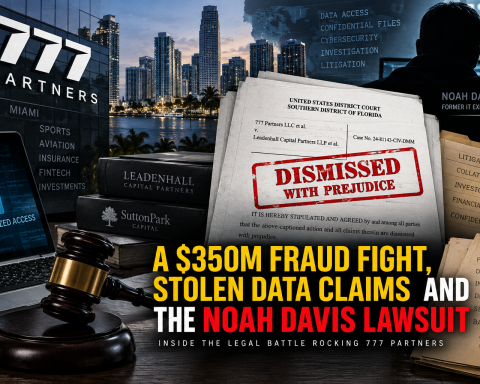
One of the earliest warning signs appeared long before federal authorities intervened. During 2024, London-based Leadenhall Capital Partners sued 777 entities in New York, accusing the firm of using the same assets as collateral for multiple loans and breaching financing agreements. At the time, those allegations were dismissed by supporters of the company as commercial disputes common in complex finance. As additional lawsuits accumulated and creditors began examining the firm’s books, a broader pattern started to emerge. Several lenders claimed they discovered significant discrepancies between collateral schedules and the assets actually available to secure outstanding loans. Those civil disputes became an important backdrop to the criminal and regulatory investigations that followed.
The federal indictment paints an even broader picture. Prosecutors allege Wander directed a years-long effort to conceal severe financial distress while continuing to borrow aggressively. According to investigators, fabricated financial statements, altered bank records and false borrowing-base calculations allowed 777 Partners to maintain access to desperately needed financing. The Department of Justice says the scheme generated nearly $500 million from private lenders and investors who relied on information that prosecutors now claim was intentionally misleading.
Damien Alfalla, the firm’s former chief financial officer, has already become a central figure in the government’s case. Federal authorities announced that Alfalla pleaded guilty before the criminal indictment against Wander was unsealed and is now cooperating with prosecutors. His cooperation is expected to provide investigators with firsthand evidence regarding the firm’s internal financial reporting, lending practices and communications with investors. Wander, by contrast, was charged with conspiracy to commit wire fraud, wire fraud, conspiracy to commit securities fraud and securities fraud. He has not been convicted, and the criminal case remains pending.
The SEC’s enforcement action remains civil rather than criminal, but the potential consequences are substantial. The Commission is seeking permanent injunctions, disgorgement of allegedly ill-gotten gains, financial penalties and officer-and-director bars that would prevent the defendants from serving in leadership roles at public companies. Those proceedings will run independently of the criminal prosecution, meaning multiple courts could ultimately determine different aspects of the defendants’ liability.
While the legal battles intensified in the United States, the collapse of 777 Partners reverberated throughout the sports world. The firm’s strategy of acquiring football clubs across several continents had once been promoted as an innovative investment model capable of sharing talent, commercial opportunities and scouting networks. Instead, many clubs experienced financial uncertainty, delayed payments, ownership disputes and regulatory scrutiny. Everton’s proposed acquisition by 777 Partners ultimately collapsed after months of uncertainty, while questions continued surrounding the financing of several other football investments. The unraveling of the firm’s business became a cautionary tale about highly leveraged ownership structures entering professional sports.
Despite the mounting allegations, Wander has not admitted wrongdoing. Court filings submitted after his indictment argue that government actions and media coverage unfairly damaged the company before charges were formally announced. His legal team has disputed the government’s characterization of the business and continues to contest the criminal allegations. Separate reporting has also revealed that Wander became one of several high-profile business figures seeking a presidential pardon while the criminal proceedings remained active, underscoring both the seriousness of the charges and the uncertainty surrounding their eventual outcome.
The story of 777 Partners extends well beyond one investment firm. It highlights how rapidly expanding private investment businesses can operate outside the level of public scrutiny faced by listed companies, particularly when they rely on complicated lending arrangements, private capital and interconnected corporate structures. Many investors assumed the firm’s growing collection of high-profile assets reflected financial strength. Regulators now argue that the appearance of success concealed an increasingly unstable operation sustained by new borrowing, disputed collateral and misleading financial disclosures. Whether prosecutors ultimately prove every allegation will be decided in court, but the investigations have already reshaped the firm’s legacy.
For investors, lenders and even football supporters whose clubs became part of the 777 empire, the outcome of these proceedings will carry consequences that extend far beyond a single company. The criminal prosecution and SEC lawsuit will test not only the government’s evidence but also the safeguards designed to protect private markets from sophisticated financial misconduct. Regardless of the verdicts eventually reached, the rise and collapse of 777 Partners has become a reminder that impressive acquisitions and rapid expansion can sometimes mask risks that remain hidden until the money runs out, creditors demand answers and regulators finally obtain access to the books.
————-
Disclaimer:
Some content on Reportingscams.com is published under our guest post program and is provided by third-party contributors. Reporting scams does not create, verify, or take responsibility for the views, accuracy, or claims expressed in such content.