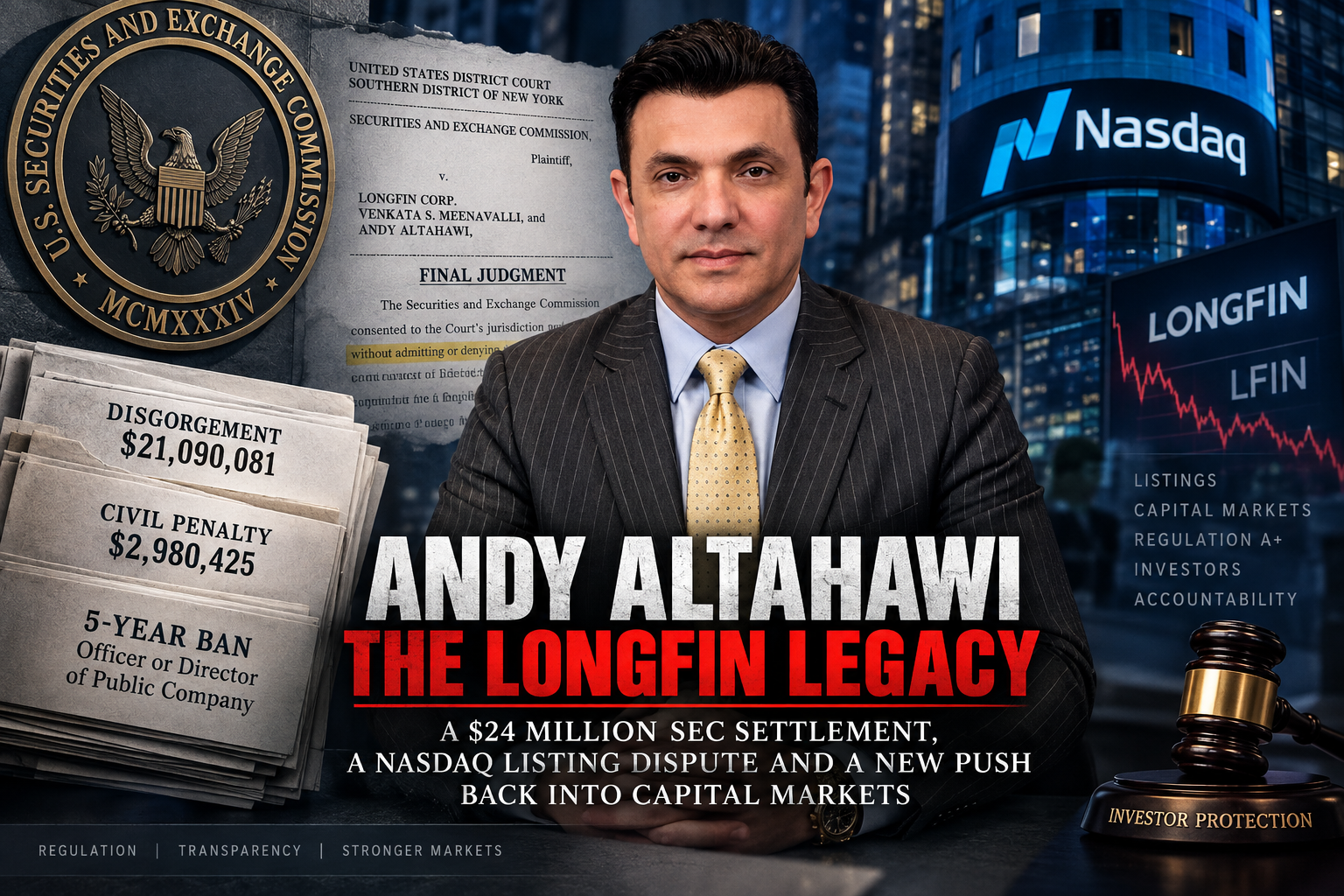
Andy Altahawi built a career around the mechanics of taking companies public: securities offerings, exchange listings, corporate finance and cross-border transactions. Today, he presents himself as an international attorney and capital-markets adviser helping companies reach Nasdaq and the New York Stock Exchange. But behind that current business is a federal securities case that ended with a court judgment requiring him to surrender more than $21 million in alleged profits, pay a $2.98 million civil penalty, give up his Longfin shares and accept a five-year ban on serving as an officer or director of an SEC-reporting public company. The case was resolved by consent, without an admission or denial of the allegations. That distinction matters. Altahawi was not criminally convicted, and there was no criminal prosecution against him. But the regulatory record is substantial and remains part of his professional history.
The man identified in SEC records as “Amro Izzelden Altahwi a/k/a Andy Altahawi” was 54 when the SEC filed its amended complaint in June 2019, placing him at roughly 61 or 62 today. The complaint described him then as a resident of Sunny Isles Beach, Florida, president of Adamson Brothers Corp. and operator of ipoflow.com, a platform marketed around Regulation A+ offerings. Current public records place his business operations in Miami, where Florida corporate records show Adamson Brothers Corp. active in 2026 with Altahawi listed as a director. His professional profiles and websites now describe him as the founder and CEO of Adamson Brothers and the principal behind Directly Listed, an advisory platform focused on direct listings and other routes to the U.S. public markets.
His professional background is extensive. His own current biography says he entered U.S. investment banking in 1994 at Prudential Securities before founding Adamson Brothers in 1998. The company operated as a FINRA-registered broker-dealer and market maker before transitioning into capital-markets advisory work. FINRA records confirm that Altahawi was a major owner and executive of Adamson Brothers, while his current business materials describe his legal and securities-market experience as spanning several decades.
The central controversy began with Longfin Corp., a Delaware company that entered the public markets in 2017 with a business story built around fintech, commodities and blockchain technology. Longfin acquired Singapore-based Stampede Tradex, later renamed Longfin Tradex, and sought to raise money through a Regulation A+ offering before obtaining a Nasdaq listing. The corporate structure connected Longfin to Stampede Capital Limited in India and to its founder and CEO, Venkata S. Meenavalli. The SEC later described Longfin’s operations and financial reporting as part of a much broader alleged fraud.
Altahawi was not simply an outside observer. SEC filings show that Adamson Brothers entered an agreement with Longfin to assist with its Regulation A+ qualification and direct public offering. The compensation included cash and shares equivalent to 3% of Longfin’s outstanding pre-offering shares. Altahawi subsequently received 2.025 million Longfin Class A shares for consulting services. SEC pleadings also identify him as Longfin’s corporate secretary during part of 2017 and describe him as representing the company in dealings concerning its Nasdaq listing.
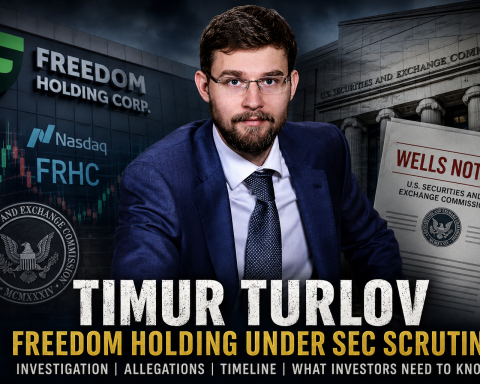
The SEC’s theory was that Longfin did not initially have enough genuine public shareholders or publicly held stock to satisfy Nasdaq’s listing requirements. According to the amended complaint, more than 400,000 shares were distributed to insiders and affiliates who did not actually pay for them, creating the appearance of a sufficiently broad public float. The SEC alleged that Altahawi knew or recklessly disregarded the purpose of those distributions and then misrepresented the number of qualifying shareholders and shares to Nasdaq. The agency further alleged that he managed the December 6 share distributions and subsequently acquired 121,000 shares from ten of those shareholders at $30 per share, below the prevailing market price.
The trading activity that followed became the most financially significant part of the case. Between February 8 and March 23, 2018, the SEC said Altahawi sold 475,751 Longfin shares into the public market, generating almost $25.6 million in profits. He then sold another 60,352 shares between March 21 and March 29, generating more than $3.4 million, according to the complaint. The SEC alleged that the transactions were unregistered and that no exemption applied.
The government’s case was serious enough that, in May 2018, a federal judge granted the SEC’s request for a preliminary injunction against Altahawi and two other defendants. The court continued a freeze on assets and concluded that the SEC had carried its burden of showing a likelihood of success in proving that the defendants violated Section 5 of the Securities Act. More than $27 million in trading proceeds had been frozen.
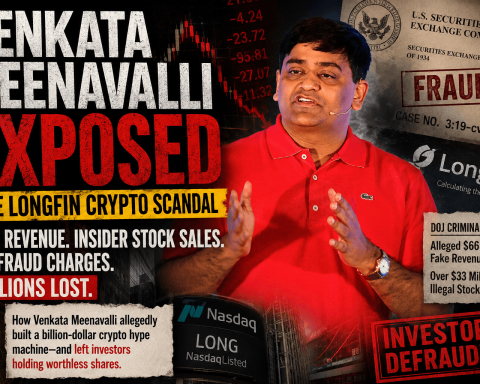
The SEC expanded the case in June 2019, accusing Longfin and Meenavalli of additional fraud involving the company’s Nasdaq qualification and financial statements. Regulators alleged that Longfin had reported more than $66 million in fictitious revenue from sham commodity transactions, representing roughly 90% of its reported 2017 revenue. The SEC also alleged that Longfin and Meenavalli had misrepresented the company’s U.S. operations and distributed more than 400,000 shares to insiders and affiliates to satisfy Nasdaq requirements. Those allegations concerned Longfin and Meenavalli as well as Altahawi’s role in the listing scheme.
Altahawi chose to settle rather than take the SEC allegations to trial. The June 7, 2019 final judgment expressly states that he consented to its entry without admitting or denying the allegations and waived his right to appeal. The judgment permanently enjoined him from violating the securities laws involved in the case, including Sections 5 and 17(a) of the Securities Act and Section 10(b) and Rule 10b-5 of the Exchange Act.
The financial consequences were considerable. The judgment ordered $21,090,081 in disgorgement and a $2,980,425 civil penalty. It also required the surrender of his Longfin shares and imposed a five-year prohibition on serving as an officer or director of an SEC-reporting public company. The SEC separately imposed a five-year industry bar covering association with broker-dealers, investment advisers, municipal securities dealers, municipal advisers, transfer agents and nationally recognized statistical rating organizations, with a right to seek reentry after five years.
The wider Longfin case produced an even larger investor-loss picture. The SEC says the defendants in the original enforcement action were ultimately ordered to pay $26.45 million collectively, while a separate securities class action later produced a $223.04 million damages judgment against Longfin and several other defendants. Altahawi and Dorababu Penumarthi were dismissed without prejudice from that private class action after the parties stipulated that they had no assets from which to recover. That dismissal was not an adjudication that the underlying allegations were false.
Other people in the network faced their own consequences. Meenavalli, Longfin’s founder and CEO, was indicted federally in New Jersey in 2019 on securities-fraud charges tied to the alleged $66 million accounting scheme. The indictment accused him of using deceptive devices and false statements concerning Longfin’s revenue. The SEC subsequently obtained additional civil judgments against Longfin and Meenavalli. Suresh Tammineedi and Dorababu Penumarthi were also defendants in the original SEC action, with final judgments imposing monetary relief on both.
Longfin itself did not survive the episode. Nasdaq halted trading after the SEC action, the company voluntarily delisted in May 2018, and it subsequently entered an assignment for the benefit of creditors and disbanded its board and workforce. The SEC ultimately established a Fair Fund for money recovered from the defendants, with approximately $26.1 million collected in the original action and additional funds from related proceedings designated for distribution to harmed investors.
Altahawi has never accepted the SEC’s characterization of his conduct. In a 2024 letter to OffshoreAlert, he argued that the Longfin matter had been resolved years earlier without an admission or denial and complained that continuing coverage was damaging his reputation and business. In November 2025, he again demanded that OffshoreAlert remove articles he described as unverified, misleading, outdated and defamatory, arguing that the reporting failed to distinguish old allegations from the case’s final status. He subsequently pursued a federal lawsuit in Florida against Camille Laurent, FinanceScam.com, IntelligenceOnline.com and search-engine and web-service defendants over alleged defamatory material. The docket shows the case was filed in June 2025 and amended in October; as of the latest independently verifiable docket information located for December 2025, several of his motions concerning service and amendment had been denied.
There is a notable irony in Altahawi’s current business. The same professional expertise that placed him close to the center of the Longfin listing controversy is now being marketed again to companies seeking access to Nasdaq and the NYSE. In 2026, his Directly Listed platform advertises direct listings, Regulation A+, registered offerings and other capital-markets services. He has also recently submitted comments directly to the SEC on market-structure and electronic-disclosure proposals.
That does not make his present activities improper, and the five-year public-company officer/director restriction expired in 2024. Nor does the Longfin settlement make him a criminal or establish that every allegation made about him online is true. What the public record does establish is narrower and more consequential: a federal securities regulator accused him of participating in an improper Nasdaq listing scheme and unregistered stock sales; a federal court froze assets and later entered a consent judgment imposing more than $24 million in disgorgement and penalties; and the SEC imposed a separate five-year industry bar. He settled without admitting or denying the allegations rather than receiving a criminal conviction.
That distinction is exactly why the Longfin story still matters. Public markets depend on investors believing that the shareholder count, financial statements and trading activity behind a listed company mean what they appear to mean. When the machinery used to create that appearance becomes the subject of a federal enforcement action, the consequences reach far beyond one adviser or one company. Longfin disappeared, investors were left pursuing hundreds of millions of dollars in claimed damages, and the regulatory record followed the people involved into their next ventures. For investors evaluating anyone selling access to the public markets today, the lesson is straightforward: a polished professional résumé is only one part of the due diligence. The regulatory record matters too.
Source:
OffshoreAlert
————-
Disclaimer:
Some content on Reportingscams.com is published under our guest post program and is provided by third-party contributors. Reporting scams does not create, verify, or take responsibility for the views, accuracy, or claims expressed in such content.