Jonathan C. Lucas was out to profit from one of the cryptocurrency boom’s hottest investment trends. In 2017, with investors flooding initial coin offerings (ICOs) with little regulatory oversight, Lucas launched a project called Fantasy Market, an adult entertainment site that promised to combine the blockchain and a marketplace where customers could buy services with a proprietary digital token. The pitch was ambitious, the marketing was polished, and the white paper painted the picture of a fast-growing technology startup poised to disrupt an industry. But a lot of that story was just not true, the U.S. Securities and Exchange Commission (SEC) said.
In September 2019, the SEC charged Lucas with civil fraud, alleging that the former founder and chief executive officer of Fantasy Market conducted a fraudulent ICO that used a series of material misrepresentations to persuade investors to buy unregistered digital securities. While the offering itself was relatively small compared with many of the multi-million-dollar crypto projects that later collapsed, regulators argued that the case demonstrated an important point: securities fraud does not become acceptable simply because the dollar amounts are smaller or because the assets involved are digital.
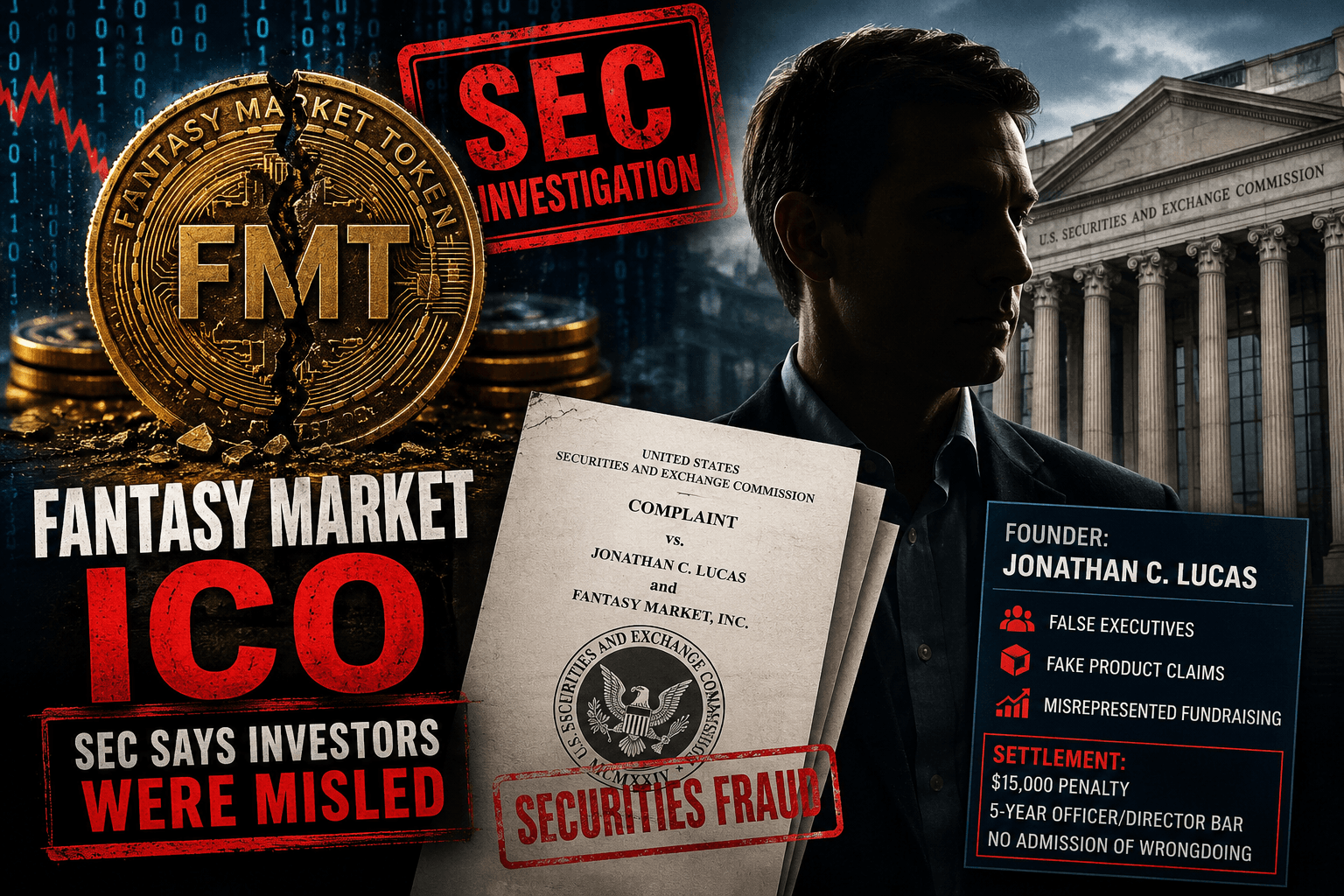
Fantasy Market came to life during the ICO craze in 2017. Like hundreds of blockchain startups at the time, the company promoted its own cryptocurrency token. In this case, the Fantasy Market Token (FMT) which investors were told would eventually power an online adult entertainment marketplace. The tokens, according to the promotional material, would be used by customers to buy bespoke interactions and services on the platform, and token holders could profit as adoption grows. The project aimed to raise as much as $25 million Fantasy Market Founder Jonathan Lucas Faced SEC Fraud Charges Over Misleading ICO through its token sale, an ambitious goal for a company with little operating history.
The SEC’s complaint alleges that Lucas began marketing the ICO in August 2017 through a white paper, social media and cryptocurrency forums. The regulator says investors were given a series of statements that gave the impression that Fantasy Market was much further along in its development than it actually was. One of the biggest claims was a so-called “working beta” version of the platform. But the SEC says no such functioning beta product was in existence, despite repeated representations that there was one.
Regulators also said the company’s leadership team was mostly fake. SEC complaint alleges some of the executives and advisers identified in Fantasy Market’s marketing materials were fictitious. To investors reading the white paper it would have appeared that they were getting an experienced management team with niche expertise in technology and the adult entertainment industry. Instead, the SEC said a number of biographies were made up entirely. Lucas also was charged with inflating his own professional background, giving credentials that regulators said were misleading.
The complaint also accused Lucas of misrepresenting the level of interest from investors in the ICO itself. Promotional material stated that the presale was successful with about 150 institutional and accredited investors and that millions of dollars were effectively committed. Those statements were false, the SEC said. The ICO did not raise millions, but ended up raising only around $63,000 in cryptocurrency from just over 100 investors. The regulator also said Lucas made false statements about the use of investor funds and about the progress of the project.
Like many ICOs at the time, Fantasy Market promoted FMT tokens as a way to get in on the future growth of a new blockchain business. The SEC contended that the digital tokens qualified as securities based on the fact that investors were investing money with the expectation of profits that would come from the efforts of others. The regulator also alleged that the tokens were not registered with the SEC or exempted from registration requirements, and thus violated federal securities laws, in addition to the fraud committed by making misleading statements during the fundraising campaign.
The project began to get bad press, and investors started to question delays and inconsistencies in the development of the platform. The media reports on complaints from the token buyers provided additional examination. The SEC said Lucas later gave back the cryptocurrency that was raised in the ICO after investors’ concerns were made public. The refunds mitigated the financial harm investors suffered, but regulators said the alleged fraud had already taken place as investment decisions had been induced by materially false information.
The SEC filed the lawsuit in the U.S. District Court for the Southern District of New York on September 20, 2019. The complaint accused Lucas of violating anti-fraud provisions of Section 17(a) of the Securities Act of 1933, Section 10(b) of the Securities Exchange Act of 1934 and Rule 10b-5, and registration provisions in Sections 5(a) and 5(c) of the Securities Act. These provisions are intended to protect investors by requiring disclosure of truthful information and proper registration of the securities when they are offered to the public.
Instead of fighting the allegations in a long legal battle, Lucas settled the SEC’s case.
Importantly, he neither admitted nor denied the allegations against him, which is typical in many SEC civil settlements. Lucas agreed in connection with the proposed judgment to permanent injunctions against future violations of the securities laws alleged in the complaint. He also agreed to pay a civil penalty of $15,000, to be barred for five years from serving as an officer or director of a public company, and comply with a five-year conduct-based injunction prohibiting him from participating in unregistered offerings of securities involving digital assets or other securities, except for transactions involving his own personal investment account.
Unlike some of the larger cryptocurrency enforcement cases pursued by federal prosecutors, which have been brought as criminal prosecutions, the Fantasy Market matter remained a civil enforcement action. There is no public record indicating that Lucas was ever criminally charged as a result of the ICO and no evidence of other SEC enforcement actions against him in the public record after the settlement. The investigation effectively killed off the Fantasy Market itself and the project was dead.
The case, observers said, was a case study in the broader approach the SEC has taken in the post ICO crackdown. While billion-dollar token offerings often generated headlines, regulators also pursued comparatively modest offerings when they believed investors had been misled. To enforcement officials, the size of the fundraising effort was less important than the conduct used to obtain investor money. The action in the Fantasy Market served to reaffirm the message that blockchain startups could not get around time-honored securities laws just by calling investments cryptocurrency tokens or conducting them online.
The allegations against Fantasy Market also highlighted a recurring pattern that became familiar throughout the ICO boom. White papers were often the primary source of information for potential investors, but buyers had little practical ability to verify technical claims, management credentials or product development milestones on their own.
In the case of Fantasy Market, the SEC alleged that investors relied on representations about an experienced executive team, an operational beta platform and growing investor demand that regulators said never existed. Claims like these can have a big influence on investment decisions, particularly in early stage ventures where there are few tangible business results.
The Fantasy Market case, nearly a decade after the ICO craze started, serves as a reminder that technological innovation does not eliminate the need for honesty and transparency.
Cryptocurrency has come a long way since 2017, but the core principle regulators have enforced has remained about the same investors need honest information before they put their money at risk. Misrepresenting products, executives or fundraising amounts can destroy trust across a market, whether a project raises $63,000 or $25 million. For investors, the Fantasy Market story is less about one failed blockchain startup than it is about the importance of checking bold promises before believing them.
————-
Disclaimer:
Some content on Reportingscams.com is published under our guest post program and is provided by third-party contributors. Reporting scams does not create, verify, or take responsibility for the views, accuracy, or claims expressed in such content.