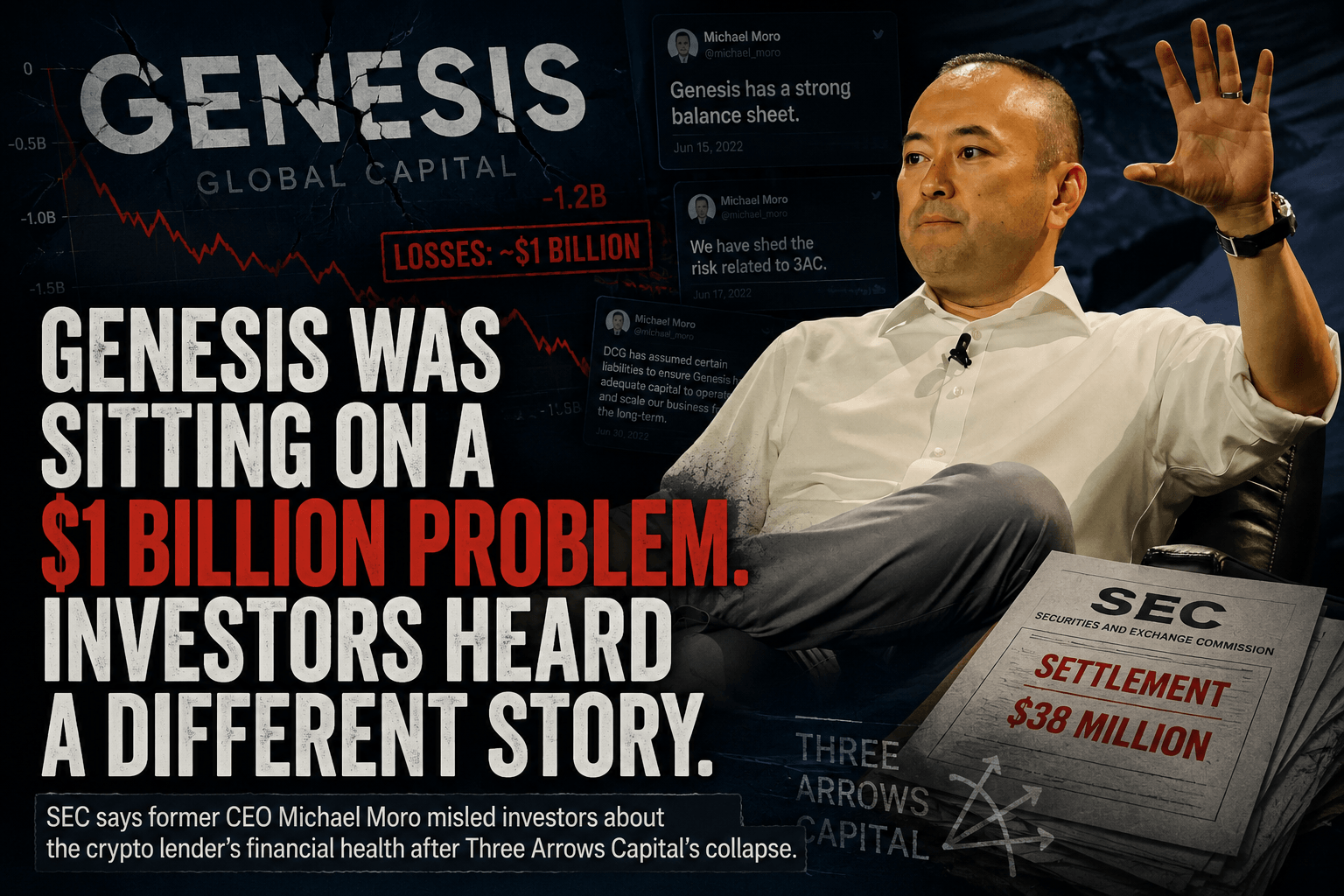
When one of crypto’s biggest lenders was staring down losses that threatened its survival, Genesis Global Capital CEO Michael Moro wasn’t warning investors about the storm ahead. According to U.S. regulators, he was helping reassure them that everything was under control. In January 2025, the Securities and Exchange Commission charged Moro and Digital Currency Group (DCG), Genesis’s parent company, with misleading investors about Genesis’s financial condition after the spectacular collapse of crypto hedge fund Three Arrows Capital (3AC). The case ended with DCG agreeing to pay a $38 million civil penalty, while Moro personally agreed to pay $500,000. Neither admitted nor denied the SEC’s findings.
The story begins in June 2022, when Three Arrows Capital, once one of the most influential firms in crypto, imploded under the weight of reckless bets. Genesis had loaned billions to the hedge fund, and when 3AC defaulted, Genesis was left with losses that regulators say amounted to roughly $1 billion. Internally, executives understood how serious the situation had become. Confidence was the lifeblood of crypto lending, and if counterparties lost faith in Genesis’s stability, the business could unravel quickly.
Yet the public message was far more reassuring. On June 15, Genesis tweeted that its balance sheet remained “strong.” According to the SEC, Moro reviewed, edited, and approved the statement before it was published. Regulators later concluded that the claim was materially misleading because it failed to reflect the enormous financial hit Genesis had already suffered. Just two days later, Moro posted from his personal Twitter account that Genesis had “shed the risk” associated with the Three Arrows Capital default. The SEC says that wasn’t true either. Genesis still faced significant exposure tied to the failed hedge fund, but investors and counterparties were left with the impression that the danger had largely passed.
Then came what would become one of the most controversial aspects of the Genesis saga. In an effort to address the damage, Digital Currency Group issued Genesis a 10-year promissory note worth approximately $1.1 billion. To outsiders, it appeared that DCG had stepped in with a major rescue package and absorbed the losses. But according to regulators, the note wasn’t fresh cash and didn’t provide the immediate liquidity Genesis desperately needed. It was essentially a decade-long IOU.
Despite that distinction, Moro later tweeted that DCG had assumed certain Genesis liabilities to ensure the company had “adequate capital to operate and scale our business for the long-term.” The SEC concluded that statement gave investors a false impression about Genesis’s true financial strength. The promissory note may have improved the accounting picture, but regulators found that it did not improve the company’s real ability to withstand a crisis in the way the public was led to believe.
The scrutiny didn’t stop with the SEC. The New York Attorney General’s separate civil fraud lawsuit alleged that Genesis, DCG, Moro, and other executives continued assuring counterparties that Genesis was financially sound while failing to disclose critical details about the promissory note. According to the complaint, the note carried a ten-year maturity and a 1% interest rate, making it far less meaningful than many investors assumed. The lawsuit also alleged that executives withheld information that would have helped outsiders understand just how fragile Genesis had become.
Even as the cracks widened, the optimistic messaging continued. Genesis projected confidence while the pressure mounted behind the scenes. Then reality caught up. In November 2022, Genesis halted withdrawals after being overwhelmed by redemption requests it couldn’t satisfy. Customers who had trusted the firm’s stability suddenly found themselves unable to access their funds. By January 2023, Genesis had filed for Chapter 11 bankruptcy protection.
The fallout spread far beyond Genesis itself. Thousands of users connected to products like Gemini Earn were caught in the collapse, turning the failure into one of the defining moments of crypto’s contagion crisis. The industry had already been battered by the failures of Terra, Celsius, Voyager, and Three Arrows Capital. Genesis became another reminder of how quickly confidence could evaporate when the truth emerged.
The SEC’s case against Moro wasn’t built on allegations that he caused Three Arrows Capital to collapse or engineered the broader crypto meltdown. Instead, regulators focused on what investors were told during one of the most critical periods in Genesis’s history. According to the agency, investors deserved an accurate picture of the company’s condition. Instead, they received assurances about a “strong balance sheet,” claims that risks had been contained, and suggestions that adequate support had been provided when Genesis was already facing a massive financial crisis.
“It is vital that companies and their officers speak truthfully to the investing public, especially in times of financial instability or turmoil,” SEC Acting Enforcement Director Sanjay Wadhwa said when announcing the settlement.
Michael Moro has since moved on professionally, taking a leadership role at digital asset firm INX, while DCG has maintained that it acted appropriately and emphasized that it neither admitted nor denied the SEC’s findings. But the Genesis saga remains one of the clearest cautionary tales from crypto’s most chaotic era. The losses themselves were devastating, but what regulators found even more troubling was that investors were allegedly reassured while the extent of those losses remained hidden from public view. In the end, Genesis didn’t just collapse under the weight of bad bets. According to the SEC, it collapsed after investors were told a story that didn’t match the reality unfolding behind the scenes.
————-
Disclaimer:
Some content on Reportingscams.com is published under our guest post program and is provided by third-party contributors. Reporting scams does not create, verify, or take responsibility for the views, accuracy, or claims expressed in such content.