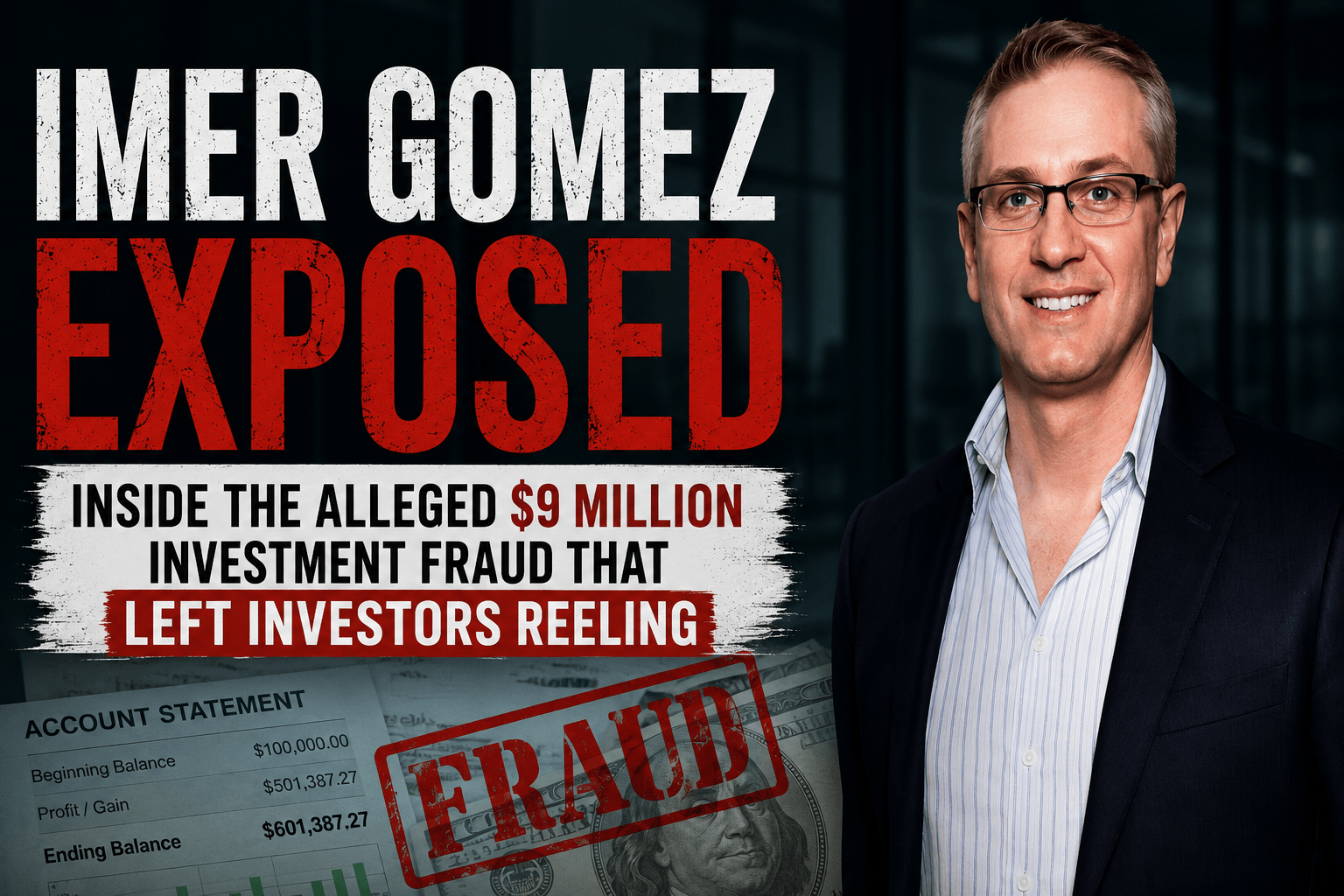
It usually starts the same way. Someone shows you numbers that look too good to ignore, a steady rise on a screen, a statement that seems to confirm everything is working exactly as promised. That is what investigators say happened here, where Texas investment adviser Imer Gomez is now at the center of a federal fraud case involving roughly $9 million.
To the people who put their money in, it did not feel like a scheme at all. It felt like access. Like they had finally been invited into something most people never see. Gomez presented himself as a trader who knew how to make the market work in his favor, someone who could turn deposits into consistent gains. And for a while, the updates seemed to back that up. Account balances went up. Some investors even saw money come back out.
That is often the point where trust locks in. Once you have seen a return, once a friend has told you they got paid, the doubt gets harder to hold on to. According to regulators, that trust is exactly what kept the operation moving.
The U.S. Securities and Exchange Commission now says the entire setup was built on false performance and misused investor money. Gomez, through entities like K&G Investment Solutions and later Helios Venture Fund, allegedly told clients their funds were being actively traded. In reality, regulators say there was no real trading strategy producing the results people were shown. Instead, the numbers investors were watching were not coming from the market at all.
What they were seeing were account statements that looked real enough to believe. Profits showed up on paper. Balances climbed. It created a sense that something powerful was happening in the background, even if no one fully understood how.
But behind those statements, the flow of money allegedly told a different story. According to the SEC, investor funds were being shifted around in ways clients were never told about. Some of it went toward personal spending. Some of it was used to pay earlier investors, which helped reinforce the idea that everything was working as advertised. When someone gets paid, they usually do not ask too many questions about where the money came from.
That is how these things tend to survive longer than they should. Not through complexity, but through momentum.
As more people joined, the system depended less on trading and more on new money coming in. Early investors told others. Friends brought in friends. Family members vouched for it because they believed they had seen it working. From the outside, it looked like growth. From the inside, according to regulators, it was increasingly just circulation.
Eventually the pressure changed. Withdrawals started to matter more than deposits. That is usually where the story shifts. Investors who once felt comfortable suddenly began asking for their money back, and the explanations started to get longer and less clear. They were told about delays, about temporary setbacks, about restructuring, about outside financing that would fix everything soon.
None of it, regulators say, ever materialized in the way investors were led to believe.
By the time the SEC stepped in, the operation had already taken in about $9 million. One detail in the case points to roughly $666,000 that was transferred into real estate-related purchases involving third parties who are not accused of wrongdoing but are now being pulled into the recovery process because the funds are allegedly tied back to investor money.
What is left now is a legal battle over what the operation actually was. On paper, it was an investment advisory business. In the SEC’s version, it was something very different, a system that relied on constant inflows of new money while presenting the illusion of consistent trading success.
Cases like this rarely feel obvious while they are happening. They only become obvious in hindsight, when the statements stop matching reality and the explanations stop holding up. For the people involved, that gap between what they were shown and what actually existed is where the damage sits.
The allegations are still just that, allegations. Gomez has the right to respond in court, and the full picture will depend on how the evidence plays out. But for the investors already caught in the middle of it, the story has moved past promises and into something much harder to unwind: where the money went, and why it looked so convincing while it was gone.
————-
Disclaimer:
Some content on Reportingscams.com is published under our guest post program and is provided by third-party contributors. Reporting scams does not create, verify, or take responsibility for the views, accuracy, or claims expressed in such content.