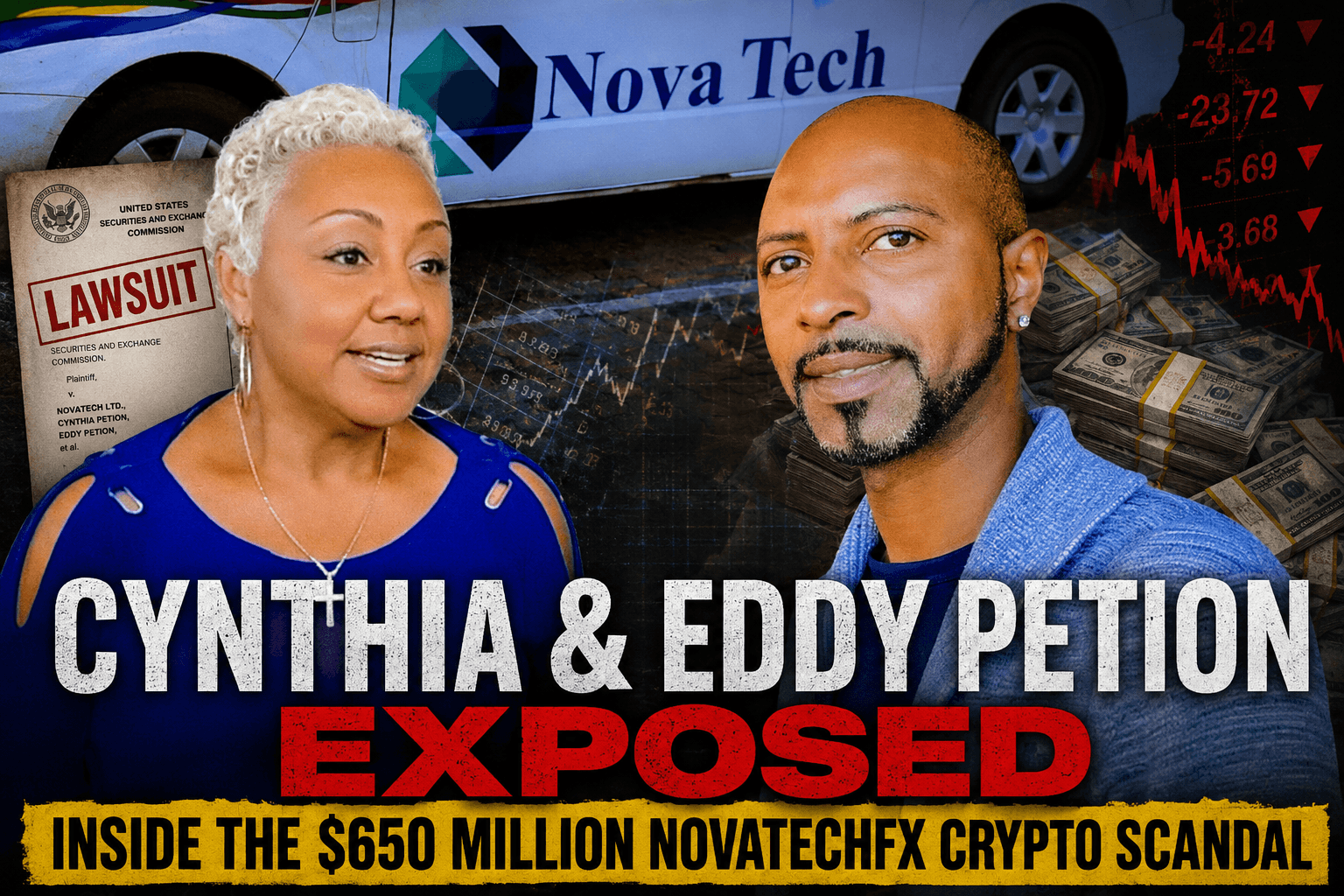
When Cynthia and Eddy Petion started pushing NovaTechFX online, they didn’t market it like a risky crypto investment company. They sold it like a movement. Their videos talked about faith, freedom, generational wealth, and “changing lives.” Social media was filled with screenshots of profits, luxury trips, smiling promoters, and promises that ordinary people could finally escape financial struggle. Thousands believed them. Many now say it cost them everything.
Federal regulators claim the husband-and-wife duo built NovaTechFX into a massive crypto and forex scheme that pulled in more than $650 million from investors around the world. According to the U.S. Securities and Exchange Commission, over 200,000 people were tied to the operation before it started collapsing under complaints, frozen withdrawals, lawsuits, and investigations.
For a while, Cynthia Petion carefully built the image of a trustworthy businesswoman and spiritual mentor. She often called herself the “Reverend CEO” and mixed religion into NovaTech’s marketing. That approach worked especially well in tight-knit communities where people trusted recommendations coming from church groups, family members, and friends. Investors weren’t just being sold crypto. They were being sold hope.
The company claimed it used advanced crypto and forex trading strategies to generate weekly profits for members. Investors were told they could earn passive income simply by depositing funds into the platform. But regulators now allege most of the money coming into NovaTech was not being generated through successful trading at all. Authorities believe the business relied heavily on new investor deposits to keep the system alive while top promoters and insiders collected commissions.
Long before the SEC officially sued the company in 2024, warning signs had already started piling up online. People complained they could not withdraw their money. Others said support teams stopped responding. Some users claimed they were pressured into recruiting friends and relatives because recruiting brought bigger rewards than the actual investment returns.
Critics had also noticed something else: NovaTechFX looked very similar to another troubled crypto business connected to the Petions called AWS Mining. That company had already faced accusations and regulatory scrutiny years earlier. Anti-fraud researchers accused the couple of simply repackaging the same business model under a different name after AWS Mining fell apart.
Even with those concerns floating around online, NovaTech kept growing. Weekly Zoom calls and livestreams continued attracting new investors. Promoters showed off luxury lifestyles and claimed financial freedom was available to anyone willing to “trust the process.” Some people emptied retirement savings. Others borrowed money or convinced relatives to join.
The SEC later alleged that the company’s success depended heavily on constant recruitment. According to the complaint, NovaTech had little or no legitimate outside revenue source beyond investor deposits. Regulators described the operation as a classic pyramid and Ponzi-style structure where money from newer investors allegedly helped pay earlier participants.
Authorities say Cynthia and Eddy Petion personally benefited while ordinary investors struggled to access their funds. Court filings allege millions of dollars in crypto assets moved into wallets linked to the couple. Investigators also claimed large sums were transferred through accounts connected to Eddy Petion while the company continued publicly claiming everything was stable.
As complaints increased, NovaTech leadership reportedly kept reassuring investors that delays were temporary. But behind the scenes, panic was growing. Social media groups filled with angry users demanding answers. Some claimed they waited months for withdrawals that never arrived. Others said their accounts were suddenly locked.
The situation became worse once regulators across different states and countries started issuing warnings. Authorities in Canada, Washington State, South Carolina, and other jurisdictions accused NovaTechFX of operating without proper registrations. The New York Attorney General later filed a lawsuit accusing the company and related entities of defrauding investors through false promises connected to cryptocurrency investments.
One reason NovaTech managed to survive for so long was because early investors did receive payouts. That helped create the illusion that the business was legitimate. People trusted what they saw with their own eyes. Someone would join, receive returns for several months, then convince friends and family to invest too. That cycle reportedly fueled explosive growth.
The company also leaned heavily into emotional marketing. Cynthia Petion frequently framed NovaTech as something bigger than business. In promotional material and online speeches, she spoke about purpose, faith, blessings, and helping communities build wealth together. Critics now argue that emotional messaging made people less likely to question obvious red flags.
By 2023, however, the cracks were impossible to ignore. Withdrawal problems became widespread. Investors started posting videos online accusing NovaTech of stealing funds. Some top promoters quietly disappeared or stopped publicly defending the company. Others allegedly continued recruiting even while complaints exploded across social media.
The SEC’s lawsuit eventually named not only Cynthia and Eddy Petion, but also several high-profile promoters accused of helping spread the scheme. Regulators alleged these individuals earned significant commissions while encouraging more victims to deposit money into the platform despite growing evidence that the operation was failing.
Authorities estimate investor losses reached staggering levels. Some victims reportedly lost their life savings. Others lost college funds, retirement accounts, or emergency savings built over decades. Entire communities were affected because recruitment often happened through personal relationships. Friends recruited friends. Family members recruited relatives. Church members recruited each other.
One of the most damaging parts of the NovaTech story is how trust itself became part of the business model. People were not cold-called by strangers. Many joined because someone they knew personally vouched for the company. That personal trust made it harder for victims to recognize the danger until it was too late.
Questions also remain about the current whereabouts of Cynthia and Eddy Petion. Multiple online investigators and fraud researchers have claimed the couple relocated to Panama as legal pressure intensified in the United States. While lawsuits continue moving through court, many victims are still trying to figure out whether they will ever recover any of their money.
The SEC is now seeking financial penalties, repayment of alleged illegal profits, and permanent bans against the Petions and others connected to the case. But for many former investors, the damage goes beyond money. Relationships were destroyed. Families turned against each other. Some victims publicly admitted they ignored obvious warnings because they desperately wanted the opportunity to be real.
NovaTechFX has now become one of the most talked-about crypto fraud cases tied to multilevel marketing in recent years. Regulators believe the company used religion, community influence, social media hype, and financial desperation to build a global network of investors before the entire operation started collapsing under its own weight.
For critics, the story of Cynthia and Eddy Petion is not just about crypto anymore. It is about how easily people can be manipulated when fear, hope, and money are mixed together. The promises sounded simple: passive income, financial freedom, weekly profits. But investigators now say behind all the motivational speeches and online success stories was a business model that allegedly depended on one thing above everything else — bringing in more victims before the money stopped flowing.
————-
Disclaimer:
Some content on Reportingscams.com is published under our guest post program and is provided by third-party contributors. Reporting scams does not create, verify, or take responsibility for the views, accuracy, or claims expressed in such content.