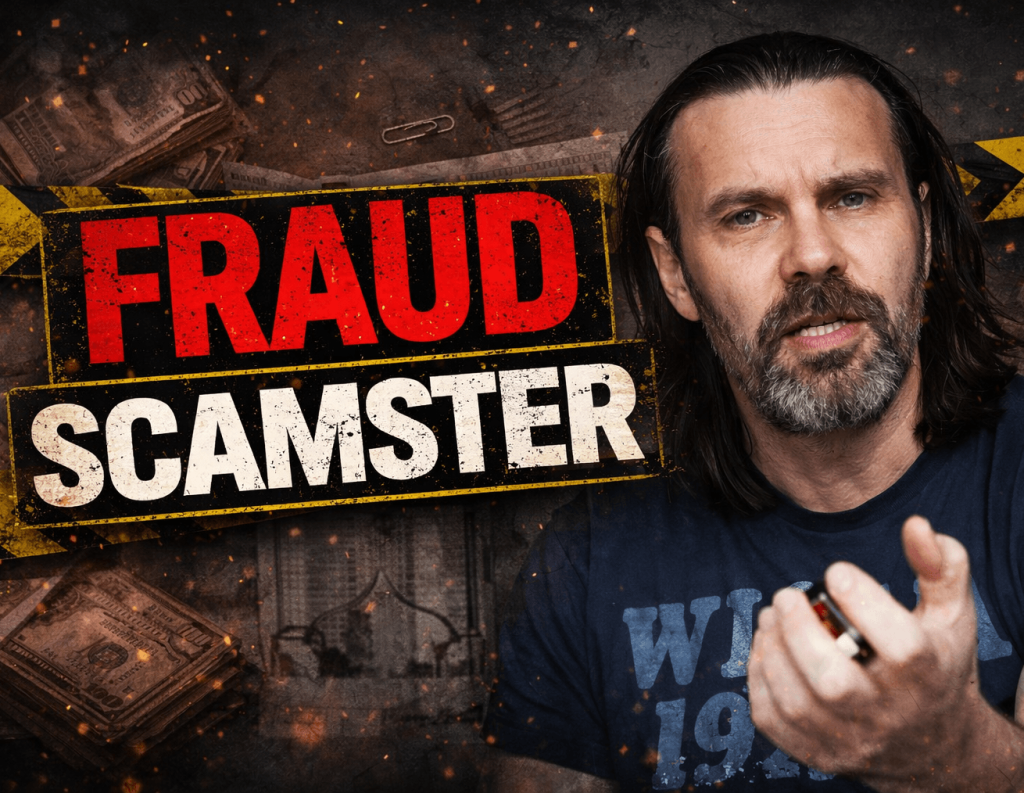
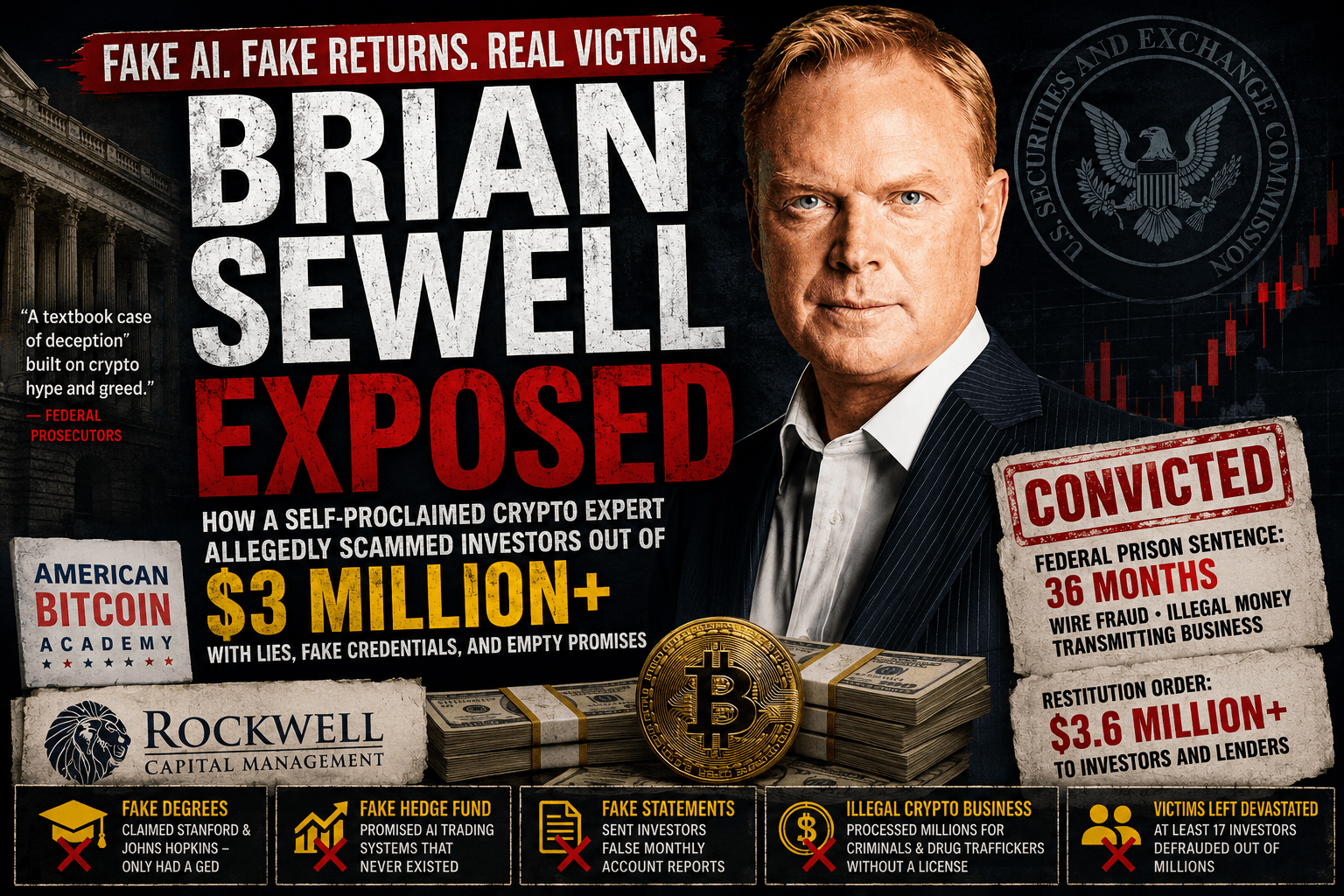
Investors believed Brian Sewell had cracked the code to crypto wealth using artificial intelligence and elite trading systems. Prosecutors now say the entire operation was built on deception, fake credentials, and promises that collapsed into one of Utah’s most disturbing crypto fraud cases. Behind that carefully crafted image, federal prosecutors and regulators now say, was a long running fraud operation built on deception, fabricated credentials, fake promises, and millions of dollars in investor losses.
What started as an online crypto education platform eventually spiraled into criminal prosecutions, SEC enforcement actions, accusations of money laundering related conduct, and allegations that Sewell’s companies processed cryptocurrency transactions tied to fraudsters and drug traffickers. The collapse of his empire has become another cautionary tale from the darker side of the crypto industry where buzzwords, social media credibility, and investor desperation created the perfect environment for exploitation.
According to the U.S. Securities and Exchange Commission, Brian Sewell operated the so called “American Bitcoin Academy,” an online crypto trading course that attracted hundreds of students eager to profit from the cryptocurrency boom. Through the academy, Sewell positioned himself as an expert investor with elite education credentials and advanced technological systems supposedly capable of delivering high returns with minimal risk.
Federal authorities later alleged much of that image was fiction.
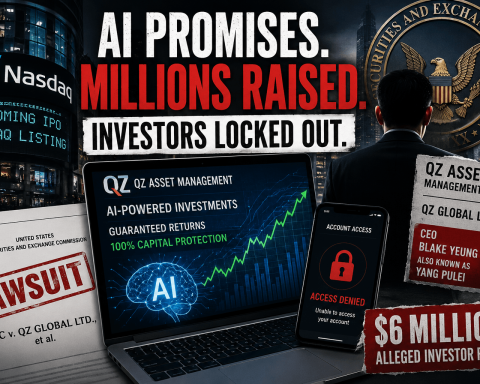
The SEC stated that from early 2018 through mid 2019, Sewell encouraged students from his online academy to invest in something called the “Rockwell Fund,” a hedge fund supposedly operated through his company, Rockwell Capital Management. Sewell allegedly claimed the fund would use cutting edge artificial intelligence and crypto asset trading strategies to generate consistent returns. Investors were told the operation had sophisticated infrastructure, management systems, administrators, and custodians supporting it. Prosecutors later said many of those claims were false.
The SEC alleges that approximately 15 investors handed over around $1.2 million after trusting Sewell’s promises. But according to regulators, the hedge fund never actually launched. No advanced AI trading system existed. Instead, authorities claim Sewell simply held investor money in Bitcoin wallets while continuing to tell victims the operation was legitimate and profitable.
The allegations became even more damaging when investigators revealed that Sewell allegedly sent fake monthly account statements to investors to maintain the illusion that the fund was operational. The SEC also claimed Sewell concealed the truth after the Bitcoin holdings were allegedly hacked and looted, keeping investors in the dark instead of admitting their money had effectively vanished.
The SEC’s enforcement action against Sewell and Rockwell Capital Management was filed in February 2024. Without admitting or denying the allegations, Sewell agreed to settle the fraud charges. Rockwell Capital Management agreed to pay more than $1.6 million in disgorgement and prejudgment interest, while Sewell himself agreed to pay a civil penalty exceeding $223,000.
But the SEC case turned out to be only part of a much larger federal investigation.
By mid 2024, the U.S. Department of Justice unveiled criminal indictments that painted an even broader picture of alleged misconduct. Prosecutors accused Sewell of operating a fraudulent scheme from December 2017 through April 2024 that defrauded at least 17 investors out of more than $2.9 million.
According to court filings, Sewell allegedly lied repeatedly about his background and qualifications in order to gain investor trust. Prosecutors said he falsely claimed to possess degrees from prestigious institutions including Johns Hopkins University and Stanford University despite allegedly only obtaining a GED and never completing college. Authorities also accused him of fabricating claims about prior successful cryptocurrency funds and falsely portraying himself as a highly experienced investment manager with proven trading systems.
Federal investigators also accused Sewell of making false statements to mortgage lenders and financial institutions. In one example described in the indictment, Sewell allegedly submitted fabricated W 2 documents claiming annual wages of hundreds of thousands of dollars in order to obtain loans and mortgages. Prosecutors said he provided false earnings statements connected to Rockwell Capital Management and misrepresented his educational history during the application process.
The criminal investigation did not stop there.
Authorities separately charged Sewell and another individual, Keen Lee Ellsworth, with operating an unlicensed money transmitting business involving millions of dollars in cryptocurrency transactions. According to the Department of Justice, Sewell used Rockwell Capital Management to convert large amounts of cash into cryptocurrency without registering the business as required under federal law.
Investigators alleged that from March through September 2020, more than $2.5 million moved through transactions involving Ellsworth’s company and Sewell’s crypto conversion operation. Prosecutors later claimed Sewell processed over $5.4 million worth of cryptocurrency transactions for third parties, including individuals involved in fraud and drug trafficking activities.
That accusation dramatically escalated the seriousness of the case. Federal authorities argued that Sewell’s operation effectively functioned as an underground financial network capable of moving illicit money through cryptocurrency channels without the safeguards required under anti money laundering laws.
IRS Criminal Investigation officials said the scheme harmed not only direct investors but also the integrity of the broader financial system. FBI officials accused Sewell of preying on victims by promising returns he could not deliver while misrepresenting nearly every aspect of his business operations. Homeland Security Investigations also joined the case, arguing the operation undermined public trust in financial markets and cryptocurrency systems.
In January 2026, the case finally reached sentencing. Brian Garry Sewell, then 54 years old, was sentenced to 36 months in federal prison after pleading guilty to wire fraud and operating the unlicensed money transmitting business. Federal Judge Ann Marie McIff Allen also ordered Sewell to pay approximately $3.6 million in restitution to investors, lenders, and financial institutions. An additional restitution order exceeding $217,000 was imposed related to losses involving the Department of Homeland Security.
Despite the prison sentence, critics argue the punishment was relatively light considering the scale and duration of the alleged misconduct. Prosecutors described a scheme stretching across nearly seven years and involving fabricated credentials, investor deception, fake financial documents, and millions in losses. Yet Sewell received only three years behind bars with concurrent sentences. That outcome has already triggered criticism from portions of the crypto community and financial crime observers who believe white collar offenders in crypto cases often avoid harsher punishments compared to traditional financial criminals.
The rise and fall of Brian Sewell also exposes a recurring pattern inside the cryptocurrency industry. Many alleged crypto fraudsters present themselves as educators before transitioning followers into investment schemes. By establishing credibility through courses, mentorships, trading groups, or social media influence, operators can build trust long before asking followers for money. In Sewell’s case, prosecutors allege his students became the primary targets.
The use of fashionable tech terminology also played a major role. Authorities repeatedly highlighted Sewell’s alleged use of phrases like “artificial intelligence,” “machine learning,” and advanced crypto trading systems. Regulators now argue those claims were largely fabricated and served mainly as marketing tools designed to lure inexperienced investors.
Today, Sewell’s once marketed image as a crypto educator and financial innovator has largely collapsed under the weight of federal prosecutions and regulatory findings. Public records indicate he had relocated from Hurricane, Utah to Puerto Rico before parts of the investigation intensified. He is now serving his federal prison sentence following the January 2026 sentencing.
The Brian Sewell case ultimately stands as another brutal reminder of how easily crypto hype can be weaponized against ordinary investors. Beneath the language of innovation, decentralization, and AI powered finance, prosecutors say there was something far more familiar: old fashioned fraud dressed up in modern technology branding.
————-
Disclaimer:
Some content on Reportingscams.com is published under our guest post program and is provided by third-party contributors. Reporting scams does not create, verify, or take responsibility for the views, accuracy, or claims expressed in such content.