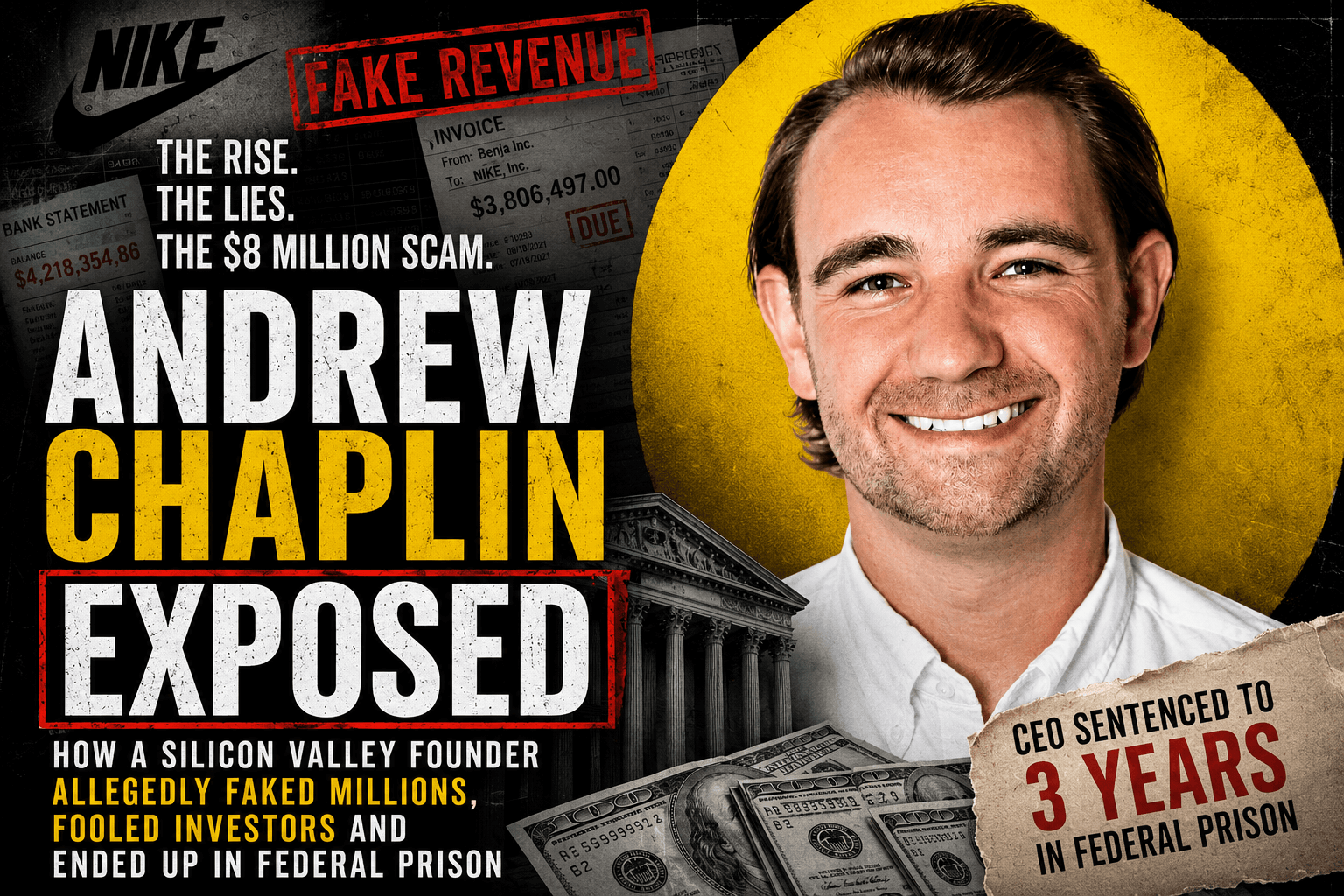
Andrew James Chaplin built the image of a young Silicon Valley founder who claimed he was changing digital advertising with artificial intelligence and data driven marketing. Investors bought the story. Banks bought the story. Employees believed they were working at the next big ad tech company. But behind the polished presentations, luxury lifestyle, investor pitches and promises of explosive growth, federal prosecutors say Chaplin was running one of the more brazen startup fraud schemes to come out of California’s tech world in recent years.
For years, Andrew Chaplin presented his company as a fast growing advertising startup with blue chip clients and soaring revenue. He told investors his business had relationships with major brands including Nike. He allegedly showed fake bank records, fabricated invoices and manipulated financial statements to create the illusion of a thriving company that was pulling in millions. The reality, according to federal investigators, looked very different. Prosecutors later accused him of using lies, forged documents and fabricated business activity to secure loans and convince investors to hand over money while the company quietly collapsed behind the scenes.
The downfall of Andrew J. Chaplin became public after the U.S. Securities and Exchange Commission filed fraud charges tied to his startup Delu Holdings, the parent company behind the digital advertising business known as Benja. The SEC accused Chaplin of misleading investors by falsely inflating company revenue and inventing business relationships that never existed. According to regulators, Chaplin raised millions while feeding investors false narratives about explosive growth and major partnerships.
Federal prosecutors painted an even darker picture. The U.S. Department of Justice accused Andrew Chaplin of orchestrating a scheme that defrauded investors and financial institutions out of more than $8 million. Authorities said the startup founder fabricated revenue figures and forged records in order to secure financing and investment capital. By the time the fraud was exposed, the damage had already spread through banks, venture investors and employees who believed they were part of a legitimate tech success story.
The story followed a familiar Silicon Valley pattern. A charismatic founder promises disruption. Investors rush in, afraid to miss the next unicorn. Numbers grow too quickly to question. Employees stay silent because everyone wants the dream to be real. Chaplin understood that culture well. Prosecutors say he used it to his advantage.
According to court records, Chaplin’s company claimed it had strong advertising relationships with household brands. One of the most shocking allegations involved fake revenue supposedly tied to Nike. Investigators said Andrew J. Chaplin and his associates created false invoices and misleading records that suggested Nike business was generating massive income for the startup. Those claims allegedly helped convince lenders and investors that the company had stable, high value clients. In reality, prosecutors said much of the revenue simply did not exist.
The SEC’s litigation release described how investors were allegedly fed misleading financial information during fundraising rounds. Chaplin reportedly inflated company performance and concealed the company’s actual financial condition. The startup was presented as a booming ad tech platform while internally struggling to survive. According to regulators, the deception stretched across multiple fundraising efforts as the company attempted to stay afloat through increasingly questionable tactics.
Former employees and people close to the company described a workplace driven by pressure, secrecy and constant image management. Like many startups chasing venture capital money, appearance became everything. Growth needed to look endless. Client lists needed to look impressive. Investors needed to believe they were getting into the next billion dollar company before everyone else did. In that environment, questioning leadership could quickly make someone an outsider.
The fraud allegations eventually reached criminal court. Chaplin pleaded guilty to fraud related charges tied to the scheme. In 2023, a federal judge sentenced him to three years in prison for defrauding banks and investors. Prosecutors said the scheme caused millions in losses while allowing Andrew Chaplin to maintain the illusion of success long after the business was financially collapsing.
Court filings showed that financial institutions relied on falsified documents submitted by Chaplin and his company. The startup allegedly secured loans based on fake accounts receivable and fabricated contracts. Investors, meanwhile, were shown manipulated data meant to prove the company was scaling rapidly. Authorities argued the fraud was not a one time mistake or accounting error. They described it as a deliberate and ongoing pattern of deception.
The case became another warning sign about the darker side of startup culture. In Silicon Valley, founders are often rewarded for selling massive visions long before profits exist. Investors sometimes overlook red flags if a company appears capable of explosive growth. That culture can blur the line between aggressive marketing and outright fraud. Prosecutors argued Andrew J. Chaplin crossed that line repeatedly.
The Bloomberg Law report on the case highlighted how fake Nike revenue became central to the deception narrative. Investors were allegedly shown inflated financial records that made the company appear far larger and more successful than it actually was. The image of a startup working with global brands carried enormous value in venture capital circles. It helped create credibility quickly. Authorities say Chaplin exploited that dynamic aggressively.
What made the allegations particularly damaging was how detailed the fraud allegedly became. Investigators claimed the scheme involved fabricated invoices, altered bank statements and manipulated accounting records. This was not simply a founder exaggerating future projections. Prosecutors argued the company created an entirely false financial reality designed to attract money and delay collapse.
The DOJ said investors lost millions after relying on those false representations. Some believed they were backing a fast growing technology company with major commercial relationships and strong recurring revenue. Instead, investigators later uncovered a company drowning in financial instability while leadership allegedly scrambled to keep the illusion alive.
Chaplin’s legal troubles also exposed how vulnerable banks and venture capital firms can become when founders control access to financial information. Startups are often private companies with limited transparency. Investors depend heavily on founder supplied data, presentations and accounting reports. In Chaplin’s case, authorities say those documents were manipulated from the inside.
The SEC lawsuit against Delu Holdings and Chaplin revealed how regulators believed the fraud affected multiple investors across different financing rounds. According to the complaint, investors were misled about revenue generation, client relationships and the overall health of the business. Those claims formed the foundation of fundraising efforts that allegedly brought in millions.
The company itself marketed an image of innovation and disruption. Benja was promoted as a digital advertising and rewards platform that connected users, advertisers and brands through mobile engagement tools. Like many venture backed startups, it leaned heavily into the language of technology disruption. But federal investigators later argued that behind the pitch decks and polished branding sat a business propped up by fabricated financial activity.
As the company’s finances deteriorated, prosecutors say Andrew Chaplin continued seeking additional capital rather than revealing the truth to investors and lenders. The fraud allegedly became a cycle. New money helped cover old obligations while the company attempted to survive long enough to secure another financing round. That strategy is common in startup collapses where founders convince themselves future success will eventually justify present deception. But regulators said Chaplin’s conduct moved far beyond optimism into criminal fraud.
The sentencing drew attention across business media because it fit into a growing pattern of startup executives facing criminal scrutiny for misleading investors. Silicon Valley has produced several high profile fraud cases in recent years, from Theranos founder Elizabeth Holmes to FTX founder Sam Bankman Fried. While Chaplin’s case operated on a smaller financial scale, investigators argued it reflected the same dangerous obsession with image over reality.
Judge statements during sentencing reportedly emphasized the seriousness of deceiving investors and financial institutions. Fraud involving fabricated financial documents strikes directly at trust within the financial system. Once that trust collapses, the damage spreads beyond individual victims into broader markets and industries.
The CFO.com coverage of the case described how the startup founder allegedly used fake documentation to inflate revenue and secure funding. The reporting noted that Chaplin’s company painted itself as a rapidly scaling advertising platform despite mounting internal problems.
CBS News coverage focused on the prison sentence itself, underscoring how prosecutors believed Andrew J. Chaplin intentionally misled both investors and banks for personal and corporate gain. The sentencing closed one chapter of the case, but the financial and reputational fallout continued for those tied to the company.
For many observers, the Andrew Chaplin scandal became another reminder that startup fraud often hides behind ambition, charisma and carefully manufactured hype. Investors want to believe they have found the next breakthrough company. Founders want to maintain momentum at all costs. In that environment, basic due diligence sometimes gets ignored until the numbers stop making sense.
The allegations against Chaplin suggest a founder who allegedly understood exactly how to manipulate that system. By attaching his company to recognizable global brands, inflating revenue and manufacturing financial credibility, prosecutors say he created a fantasy that survived far longer than it should have. The fraud only collapsed once regulators and investigators dug deeper into the company’s records.
Today, Andrew Chaplin’s name sits alongside a growing list of startup executives whose companies promised innovation but ended in lawsuits, federal investigations and prison sentences. What once looked like a Silicon Valley success story became a cautionary tale about deception dressed up as entrepreneurship.
The bigger question left behind is how many similar stories remain hidden inside private startups still chasing investment money today. Because the Andrew J. Chaplin case exposed something uncomfortable about modern tech culture. Sometimes the appearance of success matters more than the truth itself, at least until federal investigators start asking questions.
————-
Disclaimer:
Some content on Reportingscams.com is published under our guest post program and is provided by third-party contributors. Reporting scams does not create, verify, or take responsibility for the views, accuracy, or claims expressed in such content.