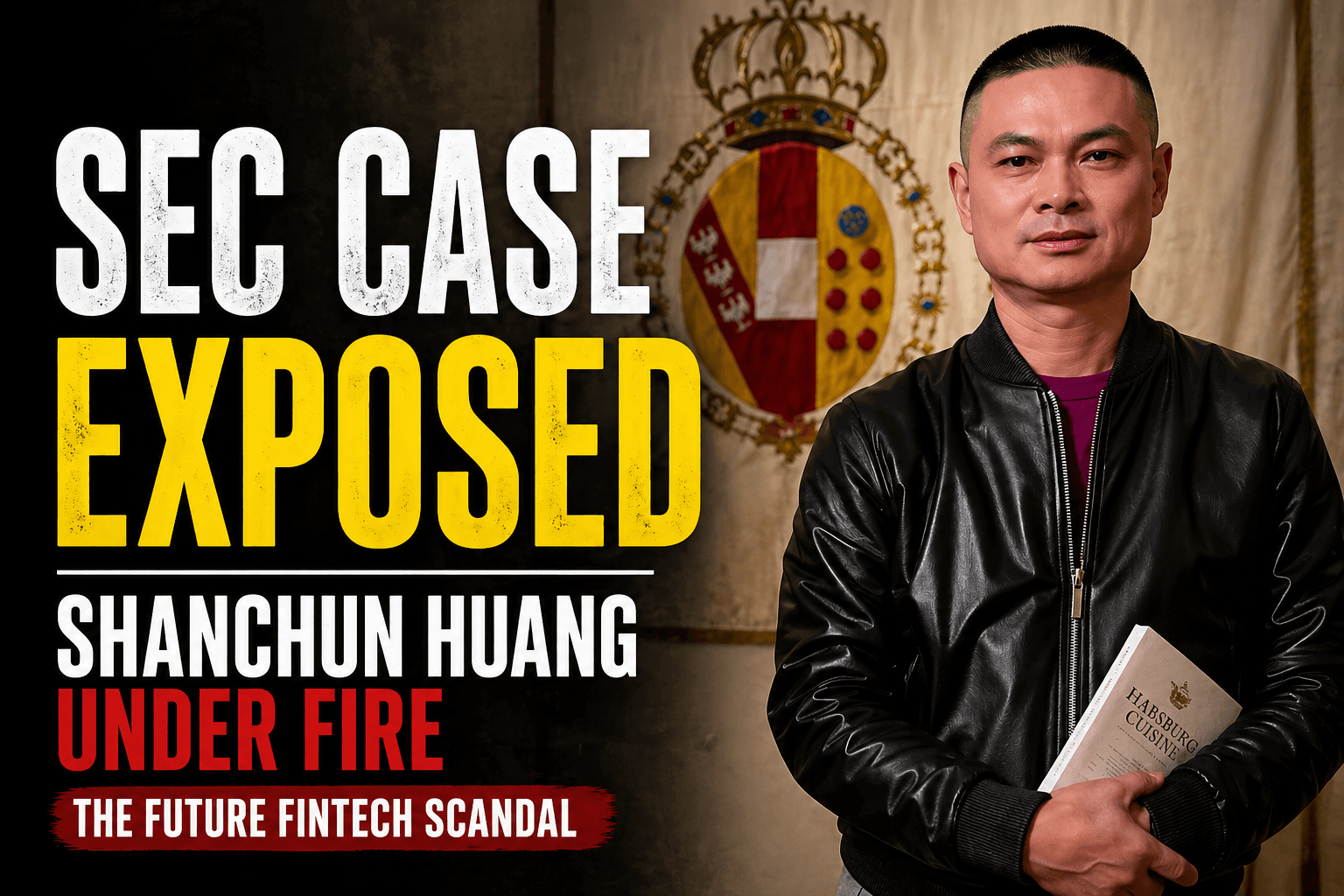
The story around Shanchun Huang did not start as a scandal. It started the way many struggling public companies try to rewrite their fate. A new leader steps in. The messaging shifts. Investors are told a turnaround is underway. For a while, that is exactly what it looked like at Future FinTech Group Inc.. But regulators now say that behind that narrative, something very different was quietly playing out.
By the end of 2019, the company was hanging by a thread. Its stock had slipped below one dollar, which meant it was at risk of being kicked off Nasdaq. That kind of pressure can break a company. It can also push people into making decisions they would not otherwise make. According to the U.S. Securities and Exchange Commission, this is exactly the moment when Huang stepped in, not just as a future CEO, but as an active trader of the company’s stock.
Before he officially took the top job in March 2020, Huang had already begun buying shares through an account based out of Hong Kong. This is where things start to feel less like a normal investment move and more like something else. The SEC says these were not quiet purchases spread out over time. They were aggressive, repeated, and often large enough to move the market on their own. Over a span of weeks, Huang picked up more than half a million shares. On some days, his trades made up a huge portion of the entire trading activity.
One day in particular stands out. Early February 2020. The stock was still struggling, still below the level needed to stay listed. Within minutes, a series of buy orders came in, each slightly higher than the last. The price started climbing. From under a dollar to above it, just like that. According to regulators, Huang’s trades made up around sixty percent of that day’s volume. It was enough to push the company back into compliance, at least on paper. Enough to buy time. Enough to keep the story alive.
This is where the tone of the case shifts. Because for regulators, this was not about timing or coincidence. They argue the trades did not make sense for someone trying to get the best price. They looked more like someone trying to create a price. That difference matters. A lot.
Then comes what might be the most damaging part of the entire case. Once Huang officially became CEO, he was required to tell investors about his ownership in the company. That is not optional. It is one of the basic rules of being in charge of a public company. Investors have a right to know how much skin the leadership has in the game. According to the SEC, that disclosure never came. Not for months. Not for more than a year.
And when it finally did come, after Huang had already sold his shares, the filing said he owned none. On paper, it looked clean. But regulators say that left out the entire backstory. The buying. The selling. The period where he held a significant stake while preparing to lead the company. To them, it was not just late disclosure. It was a version of events that erased what really happened.
The deeper you go into the filings, the more complicated it gets. This was not a handful of trades. It was hundreds. Shares moving in and out through the same offshore account. Money flowing back and forth. According to the SEC, some of the proceeds were used for personal expenses. Some of it, they say, even made its way back into the company as loans. It creates a loop that is hard to ignore. The same person allegedly influencing the stock, trading it, and then putting money back into the business.
Huang has denied the allegations. His side says the case is flawed and that he intends to fight it. That part of the story is still unfolding in court. But the impact of the charges is already visible. Investors have filed lawsuits of their own, claiming they were kept in the dark about what was really driving the company’s stock. When the SEC made its case public, the market reacted quickly. The confidence that once held the story together started to crack.
What makes this case stand out is not just the numbers or the legal arguments. It is how familiar the setup feels. A struggling company. A last minute push to stay afloat. A narrative of recovery that looks convincing from the outside. And then, slowly, the details start to come out. Details that change how everything before it is understood.
Future FinTech had positioned itself as part of the fintech and blockchain wave, something forward looking, something modern. That is what investors were buying into. But the SEC’s version of events paints a different picture. One where survival may have depended less on innovation and more on carefully timed moves behind the scenes.
Right now, the case is still open. No final ruling has been made. But the questions it raises are already sitting there. How much of a company’s story is real, and how much of it is shaped? How far can someone go in trying to hold a stock together before it crosses a line? And how often do investors only find out after the damage is done?
For Shanchun Huang, those questions are no longer theoretical. They are now part of a legal fight that could decide not just what happened, but what it all meant.
————-
Disclaimer:
Some content on Reportingscams.com is published under our guest post program and is provided by third-party contributors. Reporting scams does not create, verify, or take responsibility for the views, accuracy, or claims expressed in such content.