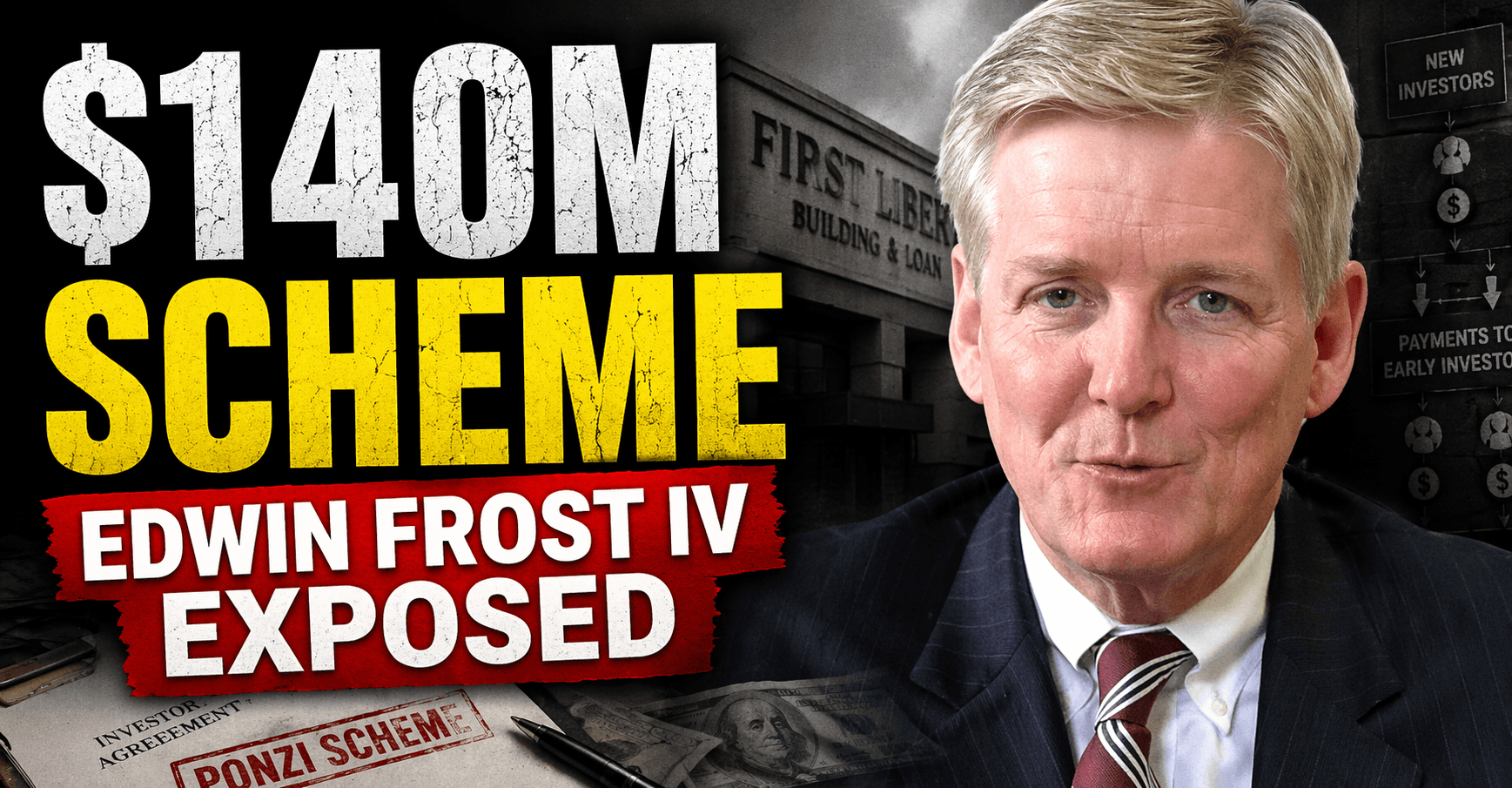
Edwin Brant Frost IV did not build his operation from scratch in the way most financial operators do. He stepped into the market with a name that already carried weight. First Liberty Building and Loan was presented as a steady private lending firm, the kind that does not attract headlines but quietly delivers returns. That image became the foundation of everything that followed. Investors were not stepping into something that felt risky. They believed they were entering a structured system that had already been tested over time.
The pitch was crafted in a way that made doubt feel unnecessary. Investors were told their money would be placed into short term bridge loans, often tied to small businesses waiting for larger financing such as SBA backed loans. Returns were framed as strong but still believable, often quoted as high as 18 percent annually. That number sat in a range that felt attractive without appearing unrealistic to those unfamiliar with how such lending actually works.
For years, the system appeared to deliver. Payments were made. Investors saw returns land in their accounts. Statements reflected activity that looked legitimate. Some started small, then increased their exposure once they felt comfortable. Others reinvested earnings, building larger positions over time. This is where the operation gained real momentum. It did not rely on aggressive selling tactics. It relied on repetition and consistency.
Behind that surface, regulators say something very different was happening. According to the Securities and Exchange Commission, the actual use of investor funds did not align with the story being told. While some money was used to fund loans, those loans did not perform as advertised. Many of them defaulted and stopped generating income. Yet investors continued to receive payments, creating the impression that everything was functioning normally.
That gap is where the structure begins to shift. Since at least 2021, authorities allege that the operation had effectively turned into a Ponzi style setup, where new investor money was used to pay earlier investors. This kind of system can survive longer than most people expect. As long as fresh capital continues to come in, the illusion holds. Once that flow slows down or scrutiny increases, the entire structure begins to collapse.
By the time regulators stepped in, the scale had already reached a level that is difficult to ignore. Around 300 investors had placed money into the operation, with total exposure estimated at approximately 140 million dollars. This was not a small circle of participants. It was a wide network of individuals who believed they were investing in a stable financial product.
The SEC moved quickly once the case was formalized. They filed charges in federal court and sought emergency relief, including an asset freeze and the appointment of a receiver to take control of the entities involved. That step alone signals urgency. It is typically used when regulators believe assets may be at risk of being moved or depleted further. The court granted that relief, effectively locking down what remained of the operation while the investigation continued.
What made the case even more striking was how investor money was allegedly used beyond the core business. According to the complaint, millions of dollars were diverted for personal use. This included more than 2.4 million dollars in credit card payments, over 3,35,000 dollars spent with a rare coin dealer, and roughly 2,30,000 dollars used for family vacations. These details shifted the narrative from a failed investment model to something that looked far more deliberate.
There were also signs that the operation relied heavily on targeted outreach. Regulatory filings and investor reports suggest that the offering began within close networks before expanding outward. In some cases, it was marketed within faith based communities, which often carry higher levels of trust. That kind of positioning can make people less likely to question the structure, especially when recommendations come through personal or community connections.
Another layer that drew attention was the political trail connected to the operation. Reports indicate that more than 5,70,000 dollars in political donations were made using investor funds. While political contributions are not illegal on their own, the source of those funds becomes critical when tied to alleged fraud. It raised questions about how far the operation’s reach extended and whether those connections helped reinforce its credibility during its growth phase.
The structure itself was built on financial instruments that appeared legitimate on paper. Investors were sold promissory notes and loan participation agreements, which are common in private lending. That detail is important because it shows the operation did not rely on obviously suspicious tools. It used mechanisms that exist in legitimate markets, making it harder for participants to detect problems early.
At its peak, the operation had the outward appearance of a functioning lending business. There were deals, documents, and communication that suggested real activity. That is what made it effective. It did not feel chaotic or unstable. It felt managed.
The collapse, when it came under scrutiny, revealed how dependent the system had become on new investor inflows. Once that slowed and regulators began digging deeper, the gap between the promised model and the actual flow of funds became impossible to hide. That is when the narrative shifted from performance to investigation.
Frost himself later acknowledged his role in what happened. In a statement reported publicly, he said he takes full responsibility and expressed intent to repay those affected, though he also noted restrictions on what he could say publicly during the legal process. Statements like that often come at a stage where the legal pressure is already significant and the outcome is no longer fully within the operator’s control.
The legal case is still unfolding. The SEC has outlined its allegations, and the court has already granted emergency measures. What remains is the process of determining final penalties, potential criminal outcomes, and how much of the lost funds can realistically be recovered. In cases of this scale, recovery is often partial at best.
For investors, the damage goes beyond the immediate financial loss. Many were relying on these returns for long term plans such as retirement or education funding. When payments stopped, the impact was not just financial. It disrupted plans that had been built over years of perceived stability.
What makes this case stand out is not just the number attached to it, but how long it managed to operate without being fully exposed. From around 2014 through mid 2025, the system continued to grow, pulling in more investors while maintaining the appearance of consistency. That kind of longevity is what gives operations like this their credibility. It creates a track record that feels real.
At its core, the Frost case follows a pattern that has appeared repeatedly in financial fraud investigations. It begins with trust. It builds through consistent returns. It expands quietly. Then it breaks when the structure can no longer support itself. The difference here is the scale and the environment in which it operated.
This was not a loud, aggressive scheme that raised immediate suspicion. It was controlled, steady, and believable. That is what allowed it to run for as long as it did.
Now, with regulators involved, assets frozen, and legal proceedings underway, the operation that once appeared stable is being taken apart piece by piece. What remains is a case that will likely continue to unfold over time, with consequences that extend far beyond one individual.
At the center of it all is a simple reality. Investors were not just buying into an opportunity. They were buying into trust. And once that trust collapsed, everything built on top of it came down with it.
————-
Disclaimer:
Some content on Reportingscams.com is published under our guest post program and is provided by third-party contributors. Reporting scams does not create, verify, or take responsibility for the views, accuracy, or claims expressed in such content.