Who is Francisco D’Agostino?
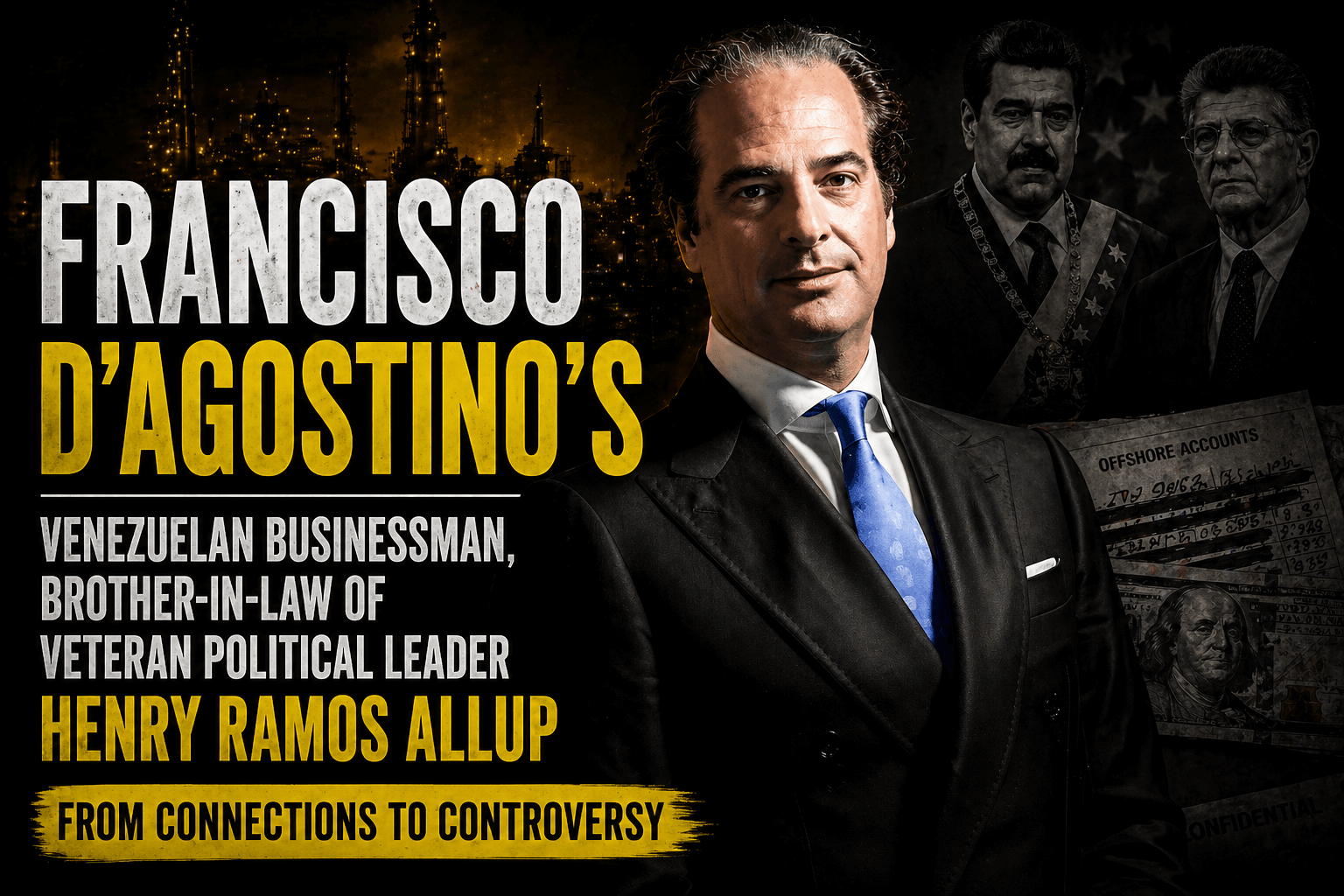
Francisco D’Agostino is a Venezuelan businessman whose name keeps appearing in discussions tied to oil, money, and influence. He is connected through family to veteran political leader Henry Ramos Allup, which places him close to Venezuela’s political ecosystem from the start. Over the years, he has been based across Spain and Italy while maintaining links to Venezuelan business activity. His profile is not built around one single event. It comes from repeated appearances in investigations, financial dealings, and international reports that continue to raise questions. The more you look into it, the more his name shows up in situations that revolve around high value transactions and sensitive sectors.
Where this starts to build
This situation did not suddenly appear. It builds slowly over time, starting from the period when Venezuela’s oil economy was already under pressure. Revenue was falling, systems were weakening, and money began moving in ways that were harder to track.
That is when certain individuals start appearing more often in the background. Not loudly, not in headlines, but quietly across different transactions and business activity. D’Agostino’s name begins to show up in that environment. At first, it looks like standard business movement. Over time, the pattern becomes harder to ignore because the same name keeps coming back in different contexts tied to the same sector.
The Epstein connection that changes the tone
One part of this case shifts everything. The connection with Jeffrey Epstein.
Records show that D’Agostino was in contact with Epstein starting in 2012. This was already after Epstein’s legal issues were known publicly. The communication was not distant. It involved discussions about business, political conditions, and access to people inside Venezuela.
He presented himself as someone who could connect Epstein to individuals within Venezuela’s financial and political space. People linked to PDVSA, operators within the oil economy, and figures who had influence over decisions.
There is also a financial angle that makes this harder to dismiss. Epstein invested around 4.5 million dollars into Venezuelan oil bonds based on guidance linked back to D’Agostino. This happened at a time when the risks inside Venezuela’s oil system were already visible.
That timing matters. It suggests a level of insight into the system that was not obvious to outsiders. It also suggests influence over financial decisions tied to a sector that was already unstable.
Then there is the personal side of that relationship. Continued communication. Familiar interaction. Reported visits to Epstein’s private island. Once that is part of the picture, it becomes difficult to separate the business connection from the broader context.
Oil is where everything comes together
No matter where you start in this case, it keeps leading back to oil.
Authorities have linked D’Agostino to activity involving PDVSA ( Venezuela’s state-owned oil and natural gas company ). The accusations suggest that oil was being moved outside official channels using structures that made tracking difficult.
These structures are not simple. They involve offshore entities, multiple layers of transactions, and routes that do not follow normal reporting. When each part is looked at individually, it can appear technical. When all of it is seen together, it begins to look intentional.
There are also mentions of shipments moving without clear tracking. Tankers operating in ways that reduce visibility. This is not standard trade behavior. It is the kind of movement that raises questions about where the oil is going and who benefits from it.
When oil is involved, the scale is always large. Even a single shipment carries serious value. Once that expands across a network, the financial impact grows quickly. Authorities claim these activities led to losses for Venezuela, which is why the case has not faded.
When things became official
By 2023, the situation reached a point where it could not stay in the background. Arrest warrants were issued. The allegations became formal.
The charges include illegal oil activity, money laundering, fraud, smuggling, and criminal association. When multiple charges like this appear together, it usually means investigators are looking at something structured rather than isolated incidents.
The mention of criminal association is important. It suggests that this is not about one person acting alone. It points toward a wider network where roles are shared and activity is connected.
The Italy arrest that did not hold
In January 2026, the case reached a visible moment when D’Agostino was detained in Italy. It happened during what was described as a routine check. For a short time, it looked like the process had finally caught up with the allegations.
That moment did not last.
He was released the same day. The court did not deny the seriousness of the case. In fact, it accepted that there was strong evidence presented. The decision was influenced by concerns about Venezuela’s legal system and whether a fair process would be guaranteed.
So instead of moving forward, the situation paused. The allegations remained, but the legal process slowed down because of jurisdiction issues.
The role of his legal team
During the detention, he was represented by Italian lawyer Gianluca Visca. The defense approach focused on the conditions of extradition rather than directly arguing the details of the accusations.
This is a strategy often used in international cases. The argument shifts toward where the case should be handled instead of what the case contains. The court’s decision reflects that. It does not clear the accusations. It simply avoids enforcing detention based on concerns about the destination country.
The network around him
His name is rarely mentioned alone.
It appears alongside broader investigations into PDVSA and financial networks connected to Venezuela. These networks often involve intermediaries, traders, and politically connected individuals operating across borders.
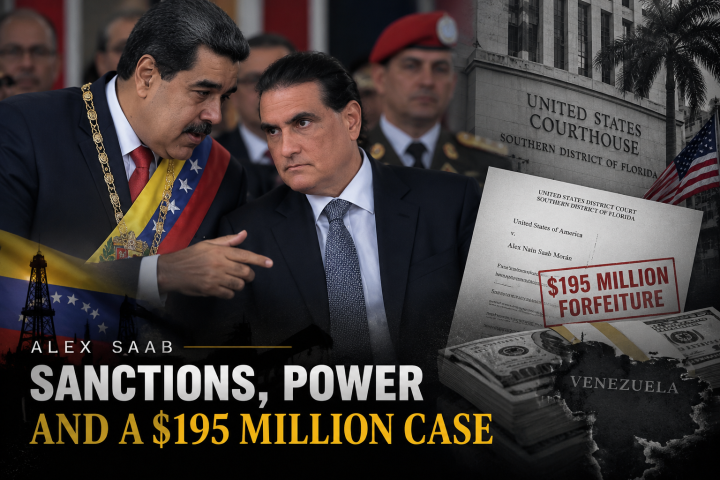
Figures like Álex Saab have been central to similar investigations involving money movement and state-linked contracts. While each case has its own structure, the overlap in environments is noticeable.
This is not a straight line from one person to one action. It is a web where different individuals operate within the same system.
The sanctions that complicate everything
Another layer that makes this case harder to read is the U.S. sanctions timeline.
D’Agostino was sanctioned in 2021 for alleged involvement in oil-related activity connected to Venezuela. This included financial restrictions and asset freezes.
Later, those sanctions were removed.
U.S. authorities stated that there was no confirmed link between his activity and direct support for the Maduro government. That changes the picture, but it does not fully resolve it.
Now there are two realities sitting next to each other. One where he is connected to ongoing investigations tied to oil and financial structures. Another where a major authority steps back from its earlier position.
Where things stand now
At this point, nothing is fully settled.
He is not in custody. The charges remain active. The extradition request is still in place, but its outcome is uncertain. Investigations continue across different jurisdictions, each looking at the situation from its own legal perspective.
The case is not closed. It is still moving, just not in a straight line.
What this case actually shows
This situation goes beyond one individual.
It shows how financial systems behave when oversight weakens. It shows how industries like oil create environments where complex structures can be used to move value without clear visibility. It shows how people with access can move across borders while remaining connected to multiple systems at once.
It also shows something else that stands out. Different countries can look at the same set of facts and reach very different conclusions.
Final takeaway
Francisco D’Agostino’s name keeps appearing in places where high value transactions and sensitive sectors overlap.
Not once. Not by coincidence. Repeatedly.
Some systems treat it as a serious case. Others step back. Some connections are documented. Others remain unclear.
What remains consistent is the pattern.
And patterns like this usually mean there is more happening beneath the surface than what is immediately visible.
https://contrapunto.com/nacional/judicial/italia-detuvo-al-venezolano-francisco-dagostino-por-investigaciones-sobre-trafico-de-petroleo/
https://www.abc.es/gente/cunado-margarita-vargas-detenido-italia-presunto-trafico-20260114120016-nt.html
https://www.infobae.com/america/agencias/2026/01/20/luis-alfonso-de-borbon-guarda-silencio-tras-la-detencion-de-su-cunado-francisco-dagostino/
https://www.globovision.com/nacional/51896/venezuela-solicita-a-italia-la-extradicion-de-francisco-dagostino-por-desfalco-a-pdvsa
https://www.miamiherald.com/news/nationworld/world/americas/venezuela/article314728608.html
https://www.businessage.com/post/u-s-removes-francisco-dagostino-from-sanctions-list-after-confirming-no-ties-to-venezuelan-regime
https://www.occrp.org/en/scoop/epstein-bought-venezuelan-oil-bonds-on-advice-from-chavez-era-insider
————-
Disclaimer:
Some content on Reportingscams.com is published under our guest post program and is provided by third-party contributors. Reporting scams does not create, verify, or take responsibility for the views, accuracy, or claims expressed in such content.