Who is Omar Wala
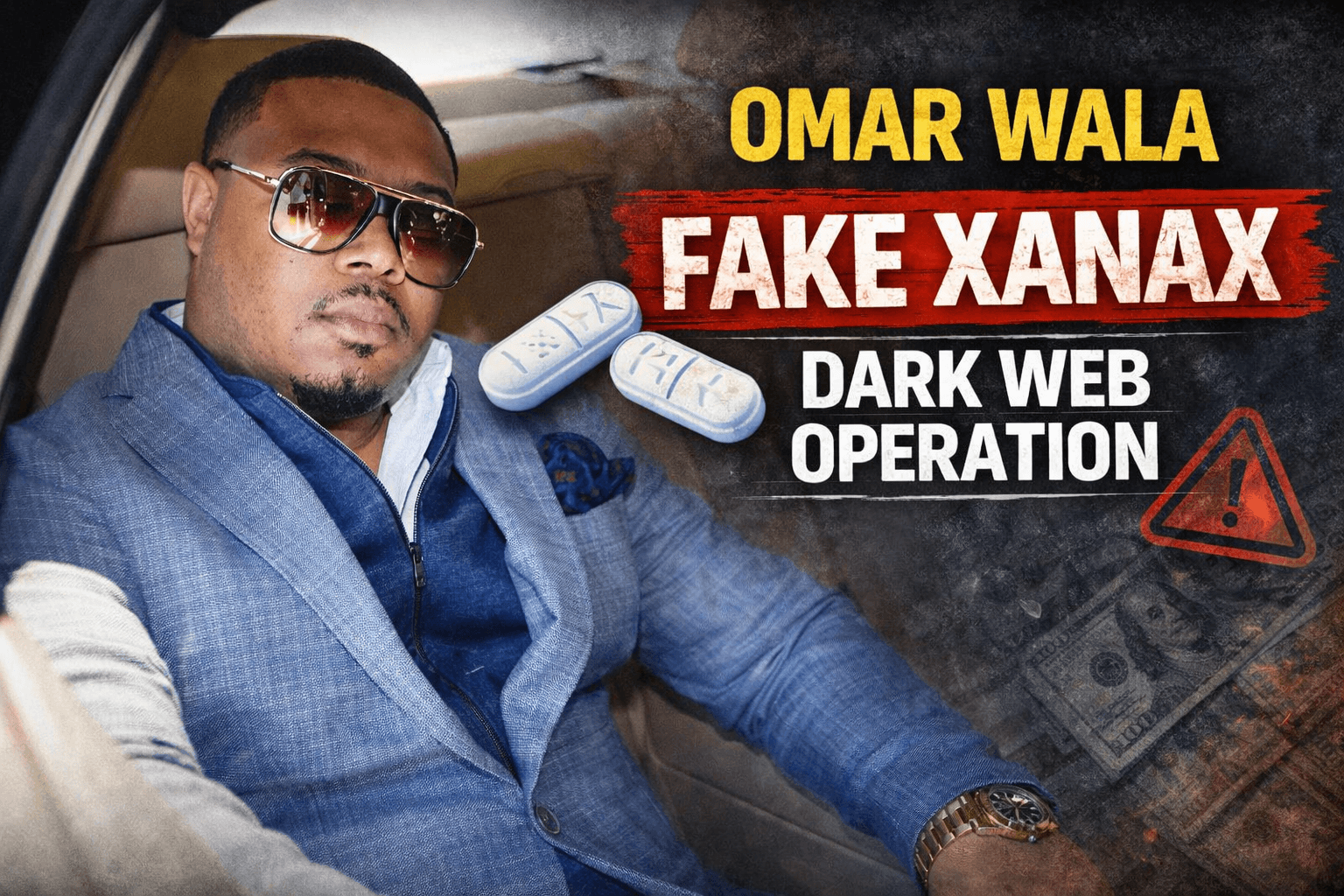
Omar Thomas Wala is a 35 year old self proclaimed Entrepreneur from Hialeah, Florida who was convicted in the United States for running a large counterfeit drug operation. He was part of a group that produced fake prescription pills made to look like Xanax and sold them across the country. These pills were mainly distributed through the dark web, which allowed the operation to reach buyers without direct contact. Wala later pleaded guilty in federal court and in November 2024 he was sentenced to 90 months in prison for his role in the case.
The Image He Built Before Everything Came Out
Before his name showed up in a federal case, Omar Wala was trying to be known for something completely different.
If you searched him online back then, you would not find anything about drugs or the dark web. Instead, you would come across articles presenting him as a real estate entrepreneur. The kind of story that talks about starting from nothing, working hard, and building success. These articles appeared on platforms like Flaunt, Yahoo News, Thrive Global, Future Sharks, and Disrupt Magazine. They painted a consistent picture someone focused on real estate, growth, and business ambition.
But when you look at them more closely, something feels off.
Most of these pieces were not traditional journalism. They read more like promotional profiles than independent reporting. There is no real scrutiny, no outside verification, and no serious questioning. Everything is presented in a positive light, almost like a personal brand campaign.
This is where paid PR comes in. In simple terms, paid PR allows someone to get featured in publications by paying for placement. The article looks like a normal interview or feature, but it is essentially controlled messaging. To a regular reader, it can be hard to tell the difference.
That seems to be what was happening here. The same themes repeat across multiple articles ; success, struggle, vision, real estate. But there is very little actual evidence of large-scale projects, deals, or anything that would normally back up that kind of image.
And at the same time, according to federal records, he was involved in something completely different behind the scenes.
That contrast is hard to ignore.
On one side, there was this clean, polished online identity. On the other side, there was an operation that had been running for years, involving counterfeit drugs and dark web distribution.
It shows how easy it is to shape perception today. A few well-placed articles can make someone look credible, even when there is no real foundation behind it.
Looking back now, those features do not really tell you who he was. They tell you how he wanted to be seen.
How It All Started
This was not something that happened overnight. The operation ran quietly for years before it was fully uncovered. Between May 2017 and December 2022, Wala and his network built a system that allowed them to produce and move counterfeit drugs on a large scale.
He was not doing this alone. The group included Vienna Cavanaugh, Michael Basalyga, Reina Chirinos de Urena, and Philbert Campbell. Together they focused on producing pills that looked exactly like real prescription medication. Their main target was alprazolam, the drug most people know as Xanax.
At first glance, it could look like a typical illegal setup, but this was much bigger and far more organized than that.
What People Thought They Were Buying
The pills were designed to look real in every way possible. They had the same shape, same markings, and the same appearance as legitimate pharmaceutical products. If you saw them, you would not easily question them.
But the reality was very different. These pills did not contain real alprazolam. Instead, they were made using substances like clonazolam and etizolam. These chemicals can produce similar effects, but they are not approved and they can behave very differently in the body.
So from a buyer’s point of view, it looked like they were getting a known medication. In reality, they were taking something unpredictable with no guarantee of safety.
How Big This Operation Was
This was not a small operation running in the background. It reached a level that most people would not expect.
According to court records, more than 16.1 million counterfeit pills were distributed through this network. That number alone shows how far the operation had spread.
The money involved was just as serious. Authorities estimated that the value of the operation reached around 32 million dollars based on how the pills were sold. Wala himself was ordered to give up over 6.9 million dollars that were linked to the case.
When you look at those numbers, it becomes clear that this was not just about selling drugs. It was a full system built to move large volumes and generate serious money.
How the Dark Web Made It Possible
A big part of the operation relied on the dark web. This is where things start to look very different from traditional drug cases.
Wala used online marketplaces where buyers could stay anonymous. Orders were placed without revealing identity, and payments were made using cryptocurrency like Bitcoin or Monero. This made it harder to trace where the money was coming from and where it was going.
This setup allowed the operation to grow fast. It also meant the pills could reach people all across the United States without any physical interaction.
The bigger issue is what happened after those first sales. Many buyers were not the final users. They were reselling the pills. By the time the pills reached the end user, there was almost no way to know what was actually inside them.
Why This Became a Serious Problem
This case was not just about fake products. It was about real risk.
When someone takes a counterfeit pill, they have no way of knowing what they are putting into their body. The dosage can be off. The substance itself can be different. In some cases, it can be far more dangerous than expected.
There is no quality check in this kind of setup. No regulation. No safety control. Once the pill is out there, anything can happen.
Because of this, the court recognized that the operation carried a real risk of serious harm. That played a role in how the sentence was decided.
The Charges and Court Case
Wala eventually faced federal charges and chose to plead guilty. The charges were tied to conspiracy and the production and sale of counterfeit drugs.
His guilty plea was accepted in November 2023. By that time, the investigation had already uncovered the scale of what was happening and the role he played in it. The case was built on evidence showing how the operation worked, how the pills were made, and how they were distributed.
The Sentence
The sentencing happened on November 5, 2024. Wala was given 90 months in prison, which is seven and a half years. After that, he will be under supervised release for three years.
Vienna Cavanaugh, who was also involved in the case, received a 26 month sentence.
Under federal rules, they are required to serve most of their time before they can be released. It is not a situation where they walk out early without serving a major portion of the sentence.
The court looked at both the financial side and the risk involved when deciding how long the sentence should be.
The Appeal and What Happened Next
Wala later tried to challenge his sentence. His argument focused on how the financial loss was calculated. He believed the numbers used by the court were too high.
In February 2026, the case was reviewed by the Sixth Circuit Court of Appeals. The court looked at his arguments but decided to reject them.
The original sentence stayed exactly the same. The loss calculation and the additional factors used during sentencing were upheld.
That decision basically closed the case from a legal standpoint.
The Bigger Picture
This case shows how much things have changed when it comes to illegal drug operations. This was not happening on the street. It was happening online, through systems that allowed people to stay hidden.
The use of the dark web and cryptocurrency made it easier to scale the operation. It also made it harder for buyers to understand what they were actually getting.
For someone on the outside, it might just look like another drug case. But when you look deeper, it shows how technology can be used to build something much larger and much more complex.
Final Take
At the center of this case is one simple thing. People were sold something that looked real but was not.
Millions of pills were made to look like trusted medication. They were distributed widely, and many people who took them likely had no idea what they were actually consuming.
That is what makes this case stand out. It is not just about money or scale. It is about trust being broken at a level that can directly affect people’s health.
For anyone reading this, the takeaway is simple. Just because something looks like a real prescription drug does not mean it is safe.
https://www.courtlistener.com/audio/100917/united-states-v-omar-wala/
————-
Disclaimer:
Some content on Reportingscams.com is published under our guest post program and is provided by third-party contributors. Reporting scams does not create, verify, or take responsibility for the views, accuracy, or claims expressed in such content.