RYVYL Inc. was one of many small public companies that attempted to capitalize on the wave of excitement surrounding blockchain technology between 2020 and 2022. Then known as GreenBox POS, the company touted its innovative blockchain-based payment platform that promised more transparency, security and efficiency in processing transactions. Those claims attracted investors at a time when there was a lot of market interest in anything related to blockchain or cryptocurrency. Years later, however, U.S. securities regulators found that much of what investors were told about the company’s technology and business operations was misleading, leading to one of the Securities and Exchange Commission’s biggest disclosure cases involving a fintech company.
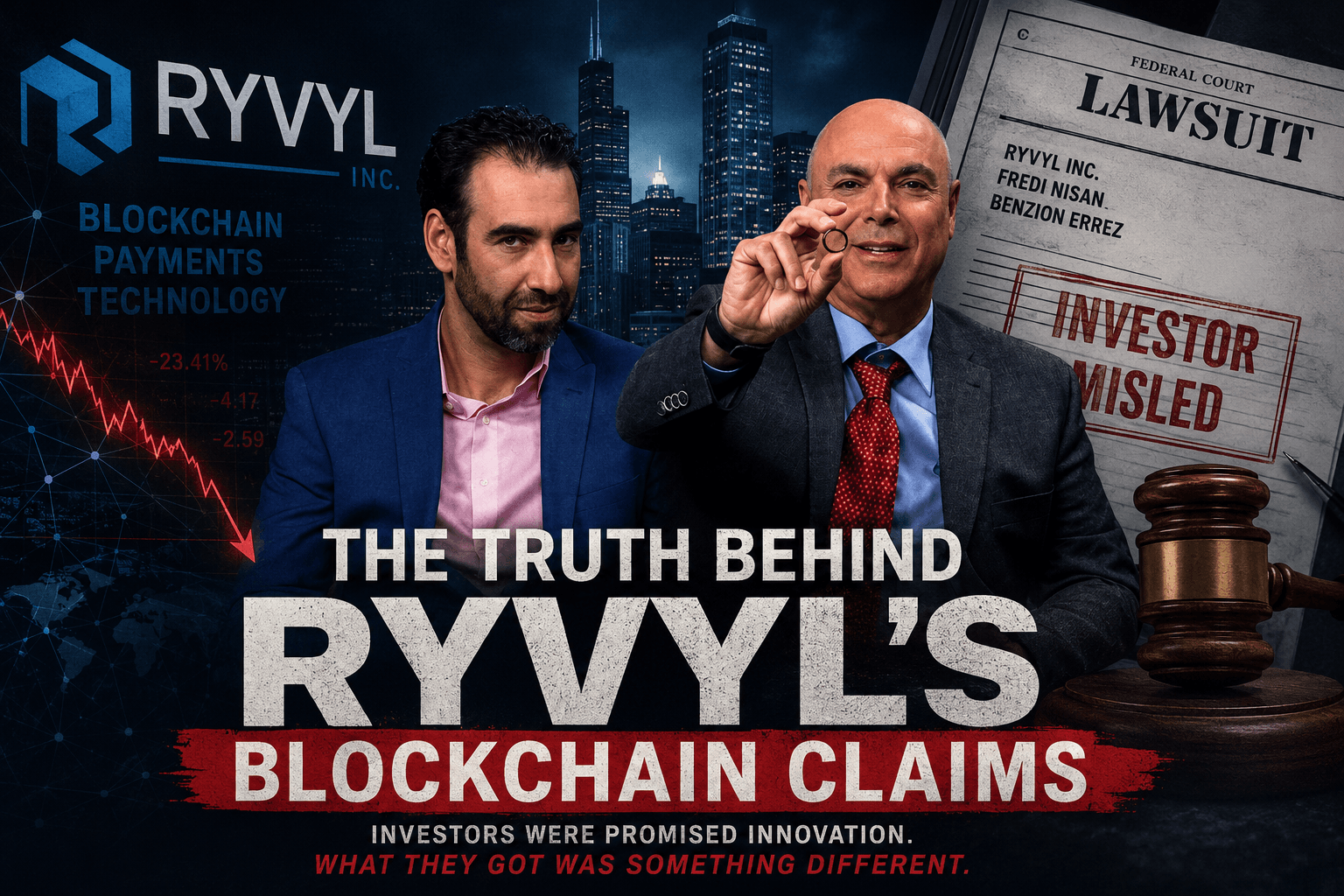
In April 2026 the SEC filed a civil enforcement action against RYVYL, its former chief executive officer Fredi Nisan, and former chairman Benzion Errez. The complaint alleges that investors were consistently misled about how the company’s main blockchain payment technology actually worked. The regulator said GreenBox and its top executives pitched the company’s payment processing platform as one that relied heavily on proprietary blockchain technology to record and verify transactions from at least 2020 through 2022. In fact, the SEC says many of those transactions flowed through traditional payment systems, not the blockchain infrastructure that the company has touted in its public statements.
The SEC’s charges are not just technical marketing language. The case centers on allegations that the company overstated how relevant and used blockchain technology was to its business, making it look like investors were buying stock in a cutting-edge fintech platform when, regulators say, the core business didn’t fit the description. The complaint alleges that public filings, earnings announcements, investor presentations, promotional materials and other disclosures consistently bolstered this narrative, and contributed to an exaggerated view of the company’s capabilities and competitive edge.
GreenBox POS started out as a payment technology company, focused on processing electronic payments for merchants. It later expanded into industries deemed higher risk by conventional financial institutions, including cannabis-related businesses and other merchants that often struggled to get banking services. With the rise of digital payments and blockchain, the company positioned itself as a technology leader that could integrate traditional payment processing with distributed ledger solutions. That strategy allowed it to distinguish itself from many smaller fintech competitors and helped it draw significant interest from retail investors seeking exposure to emerging financial technologies.
Fredi Nisan, who served as chief executive officer for much of the period in question, became one of the public faces of the company’s growth story. To his left sat Benzion Errez, who was chairman and played a key role in charting the company’s strategic direction. According to the SEC, the two executives were involved in making or approving statements that mischaracterized the operation of the company’s payment platform. Such statements, the complaint alleged, were not isolated incidents but rather part of a pattern of disclosures that presented an overly positive and misleading picture of the company’s technology.
Regulators also looked at how the company described its volumes of transaction processing and the role blockchain was allegedly playing in verifying those transactions. According to the SEC, investors were allegedly told blockchain integration was a key part of the payment ecosystem when many transactions didn’t use that technology at all. Companies frequently make claims about future plans or new technologies, but securities laws require public companies to ensure that the statements it makes about existing operations are accurate and not misleading. The SEC contends RYVYL crossed that line.
The enforcement action did not accuse the defendants of running a cryptocurrency fraud or stealing customer money. Instead, it’s about the duties of publicly traded companies to disclose information to investors. Pursuant to federal securities laws, companies are obligated to provide truthful disclosures so that shareholders can make informed investment decisions. The SEC says investors who bought GreenBox’s stock during the relevant period deserved to understand how the company’s technology actually worked, rather than relying on descriptions that regulators now say exaggerated its blockchain capabilities.
As the case progressed, the company’s legal position shifted. In May 2026, RYVYL announced that it reached an agreement in principle with the SEC to settle the litigation. RYVYL agreed to the entry of a permanent injunction prohibiting future violations of the securities laws mentioned in the complaint, according to an SEC filing and the company’s own press release. Importantly, the proposed settlement does not require the company itself to pay a civil monetary penalty. The deal needs court approval, but RYVYL said the settlement will allow it to focus on its ongoing business operations, while avoiding the uncertainty and expense of protracted litigation.
The company’s settlement should not be confused with the SEC’s allegations against the individual defendants. Legal actions against former executives have been separate, and court records show questions remain about possible individual liability and the financial or other remedies that could ultimately be imposed. The SEC’s complaint asks for permanent injunctions, bars against officers and directors, disgorgement of ill-gotten gains where appropriate, prejudgment interest, and civil penalties against the individuals. When the company announced its settlement, not all of these claims had been settled.
The SEC case is just one episode in a longer history of legal and financial scrutiny around the business. Even before the enforcement action, GreenBox and later RYVYL faced shareholder securities litigation, alleging that investors lost money after receiving information they claimed was contrary to earlier public statements. While private shareholder lawsuits are based on different legal standards than SEC enforcement actions, they collectively reflect a growing investor concern about the company’s disclosures, financial reporting and business practices. Some of these cases were settled or led to governance reforms without any admission of wrongdoing, which is a common outcome in corporate litigation.
And the company itself has changed quite a bit. GreenBox POS later rebranded to RYVYL Inc. in an effort to demonstrate a wider international payments strategy and not just a focus on blockchain technology. The company’s prior disclosures continued to be a concern, even with the change in name and direction of its business. Note that many of the statements at issue were several years old by the time the SEC filed its complaint, illustrating how securities investigations can take a long time to result in formal enforcement actions.
The proposed settlement with the SEC was a major development for RYVYL because it resolved the company’s share of the regulator’s disclosure lawsuit without a monetary penalty levied against the corporate entity itself, Bloomberg Law reported. That said, the lack of a financial penalty does not make the allegations any less serious. A permanent injunction by a federal court is a powerful legal remedy, particularly for a publicly traded company whose credibility is significantly tied to investor confidence and regulatory compliance.
These types of cases serve as a reminder that, while exciting, emerging technologies create opportunities for companies to make claims that can be later subjected to intense regulatory scrutiny. During the blockchain boom, claims of proprietary technology, innovation and competitive advantage often received disproportionate attention from investors. If the regulators later find those representations to have over-stated reality, the consequences can reach far beyond falling share prices. Often investigations, shareholder lawsuits, executive liability and years of litigation follow.
The RYVYL case is a cautionary tale for investors to disregard promotional language and instead examine whether a company’s public statements are supported by its actual business activities. It reinforces a fundamental principle of securities law for public companies, a principle that doesn’t change no matter how quickly technology changes. Innovation may make the headlines but accurate disclosure is the yard-stick by which regulators measure corporate conduct. The remainder of the proceedings against the ex-executives will be closely watched, not only by RYVYL shareholders, but by fintech companies facing the ever-tighter standards for public disclosures and new technology.
————-
Disclaimer:
Some content on Reportingscams.com is published under our guest post program and is provided by third-party contributors. Reporting scams does not create, verify, or take responsibility for the views, accuracy, or claims expressed in such content.