Ryan Wear and the WaterStation Scheme That Left Investors Facing More Than 200 Million Dollars in Losses
Ryan Wear built his reputation in an industry that rarely attracts Wall Street attention. He started selling vending machines as a teenager in Everett, Washington, eventually expanding into a nationwide vending operation and, later, a business built around water purification machines. By 2022, business publications were describing Wear as an experienced entrepreneur with hundreds of employees and ambitions to build a major national convenience-services company.
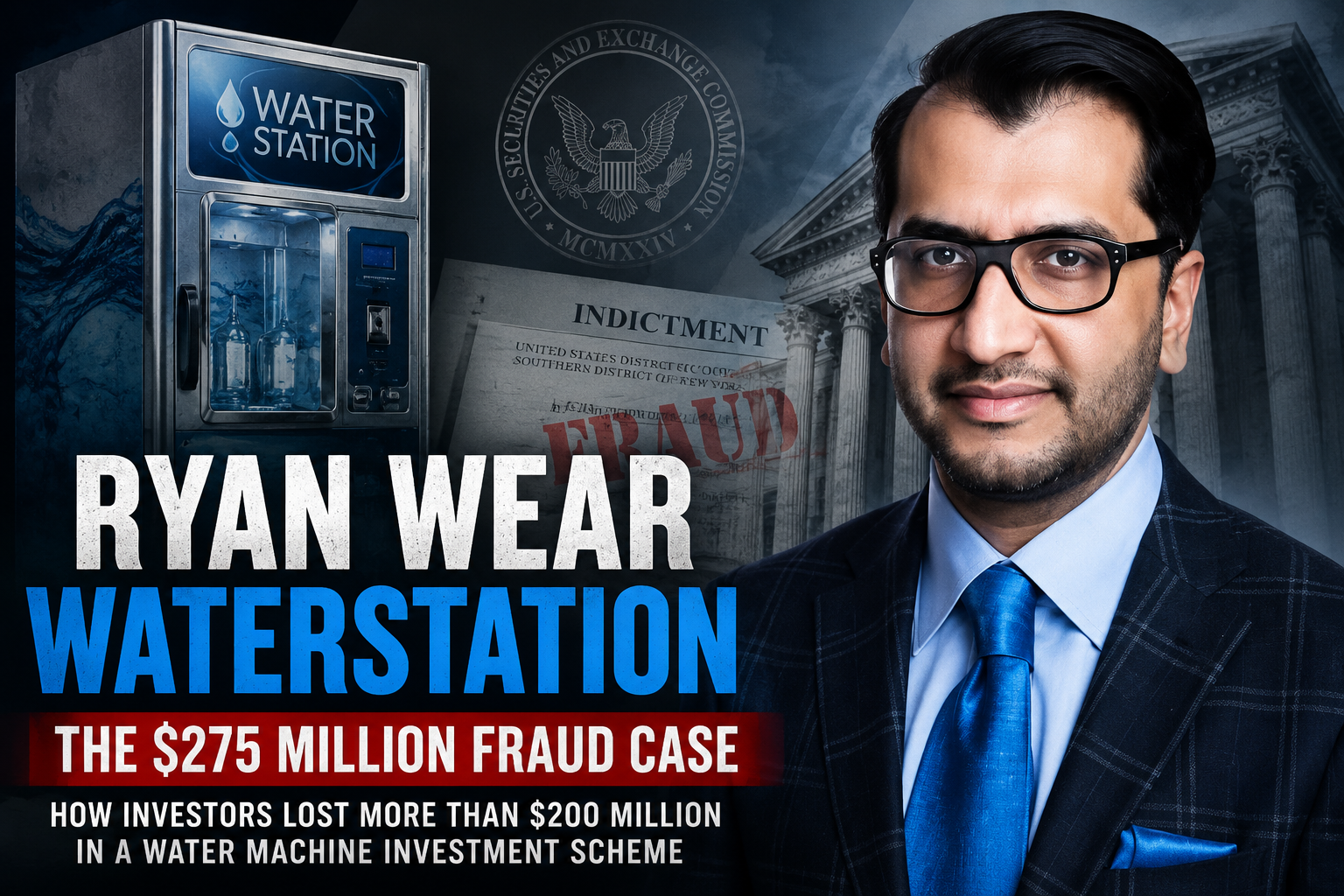
That business history now sits alongside one of the largest alleged investment fraud cases to emerge from the vending industry. Federal prosecutors and the Securities and Exchange Commission say Wear used Water Station Management and related companies to raise more than $275 million from more than 250 investors between 2016 and 2024. The government alleges that thousands of the water machines investors were told they owned either did not exist or had already been sold to someone else. At least $200 million in investor losses has been identified by federal prosecutors.
Wear, 49 when the charges were announced in August 2025, is now facing federal securities-fraud and wire-fraud charges in the Southern District of New York. Public reporting places him in the Everett and Marysville, Washington area, but there is no reliable public evidence establishing a precise current residence. There is also no evidence that he is currently operating Water Station as an active business. The criminal prosecution remains pending, and Wear is presumed innocent unless proven guilty.
His background makes the collapse particularly striking. According to Vending Times, Wear started his first vending business in 1994 while still in high school, using money earned from mowing lawns and delivering newspapers to buy vending machines. He later built Summit Vending and expanded into equipment repair, distribution and vending management. In 2013 and 2014, he moved more aggressively into water vending, eventually developing WaterStation Technology as a business that manufactured, marketed and serviced water purification machines.
The investment pitch was straightforward. Investors were offered the opportunity to buy individual water vending machines, often for about $8,500, while Water Station would supposedly install, service and operate them. The investor would then receive revenue without having to manage the machine personally. Washington regulators later determined that the investments were securities and alleged that the company had sold unregistered securities to investors across the country.
The Washington State Department of Financial Institutions said in May 2025 that at least 171 investors had put more than $129 million into the arrangement between roughly 2016 and 2022. Of nearly 15,000 machines that investors purchased, regulators said only a little more than 6,000 actually existed. The state alleged that Water Station and its salespeople failed to disclose material information about the number and location of machines.
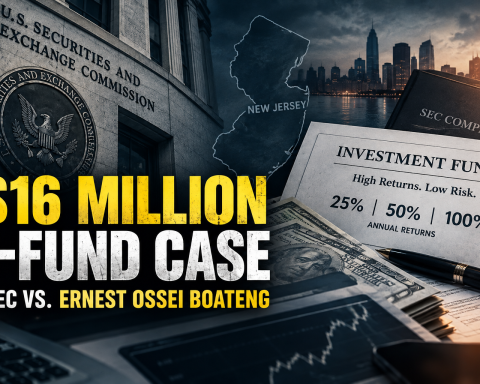
The federal allegations go further. The SEC says the retail-investment operation raised more than $165 million between September 2016 and September 2023. A second phase allegedly raised another $110 million from institutional investors between April 2022 and February 2024 through Water Station notes that were supposedly secured by water machines. According to the SEC, most of the machines supposedly backing those notes either did not exist or were not owned by Water Station.
The government says the gap between the sales pitch and the underlying business was filled with money from new investors. Prosecutors allege Wear manufactured far fewer machines than represented, sold individual machines to multiple investors and represented nonexistent machines as real. When investors began asking questions, the indictment alleges that money from newer investors was used to make payments to earlier investors, while millions were diverted toward other businesses and personal expenses. Water Station ultimately filed for bankruptcy in August 2024.
The details emerging from court records illustrate how difficult it could have been for investors to see what was happening underneath the surface. In one example reported from bankruptcy records, a machine bearing serial number 101962 was allegedly sold to two different investors and was also used as collateral for Water Station bonds. The machine was located at a retail site in Torrance, California, according to reporting based on court records. By the time the scheme collapsed, the machine had disappeared and the company was in bankruptcy.
The second part of the case reaches into institutional finance. Jordan Chirico, a former portfolio manager at Jefferies’ Leucadia Asset Management, is accused of directing almost $100 million from the 3|5|2 Capital ABS Master Fund into Water Station bonds while failing to disclose his own financial relationship with the company. Prosecutors say Chirico had a personal Water Station investment worth more than $7 million and received substantial payments and referral fees connected to the business.
According to the indictment, the relationship became even more problematic after warning signs appeared. Prosecutors say Chirico learned in 2023 that thousands of machines supposedly backing Water Station bonds could not be located. In January 2024, Wear allegedly told him that thousands of machines did not exist and that tens of millions of dollars in bond proceeds had been misappropriated. Yet prosecutors say Chirico subsequently directed the 3|5|2 fund to purchase another $19 million of Water Station bonds. The fund ultimately received no principal payments on $106.925 million of Water Station bonds, according to prosecutors.
The allegations against Chirico are separate from those against Wear. He has denied wrongdoing through his lawyer, who described him as a victim rather than the villain and said the indictment had the story backwards. Wear’s lawyer did not provide Reuters with an immediate response when the charges were announced. Both men later pleaded not guilty.
The regulatory response had already begun before the federal criminal charges. In January 2026, Washington’s Department of Financial Institutions entered a consent order against Creative Technologies and Water Station Management. The order imposed a $1 million fine and $50,000 in costs, along with a cease-and-desist requirement. The respondents waived their right to a hearing and judicial review.
The corporate web around Wear was extensive. Court filings and regulatory records connect him to Water Station Management, Creative Technologies, WaterStation Technology, WST Franchise Systems and Refreshing USA, among other entities. The SEC also named Refreshing USA and Ideal Property Investments as relief defendants in its civil case, alleging that more than $60 million in investor funds was misappropriated for Ponzi-like payments and other business ventures.
Refreshing USA was once presented as a major growth story. In 2023, the company announced plans to merge with Integrated Wellness Acquisition Corp., with an implied pro forma enterprise value of roughly $198 million and ambitions to enter the public markets. Wear was identified as its founder and chief executive. The story ended very differently. In 2026, bankruptcy counsel said a liquidation plan covering Refreshing USA, Water Station Technologies, Creative Technologies and roughly 20 related entities had been confirmed, describing the case as one of the largest Chapter 11 liquidations in the Pacific Northwest in recent years.
The fallout has not been limited to the government cases. Investors filed numerous lawsuits in 2024, including a federal action involving more than 140 plaintiffs who accused Water Station and Wear of raising more than $130 million. Another lawsuit brought by 3|5|2 Capital accused Wear and Water Station of misappropriating more than $100 million in bond proceeds.
The SEC’s civil case against Wear and his companies was filed in August 2025. In October, the federal court allowed the United States to intervene and stayed the SEC litigation while the criminal prosecution proceeds. The SEC is seeking injunctions, civil penalties, disgorgement and an officer-and-director bar against Wear.
As of August 2026, the criminal prosecution remains unresolved. A February 2026 court order shows Wear represented by attorney David Bertan while discovery proceedings continued. There has been no conviction, guilty plea or sentence against Wear identified in the public record reviewed for this investigation. The government’s accusations remain allegations to be tested in court.
What makes the Water Station story important is not simply the size of the number. It is how an apparently tangible investment can create a false sense of security. A vending machine is something an investor can imagine owning, touching and visiting. That physical object can make a financial product appear safer than it really is. But if the underlying asset is duplicated, missing, overstated or nonexistent, the machine becomes little more than a prop in the investment story.
The case also shows how a scheme can move from ordinary investors to sophisticated institutions without necessarily becoming more transparent. Veterans and retail investors were among those targeted, while millions of dollars later came from an investment fund managed by a major financial institution. By the time regulators and prosecutors moved in, Water Station was already in bankruptcy and investors were facing losses measured in hundreds of millions of dollars.
Ryan Wear remains entitled to the presumption of innocence. But the allegations against him, the Washington regulatory findings, the bankruptcy collapse, the investor lawsuits and the continuing federal prosecution together tell a much larger story than the failure of a vending-machine company. They raise a basic question for anyone offered a supposedly passive investment: what exactly are you buying, who actually owns it, and can anyone independently prove that it exists? In the Water Station case, regulators and prosecutors say those questions were asked far too late.
————-
Disclaimer:
Some content on Reportingscams.com is published under our guest post program and is provided by third-party contributors. Reporting scams does not create, verify, or take responsibility for the views, accuracy, or claims expressed in such content.