Back in the crypto frenzy of 2021, Rari Capital was one of those names that seemed to be everywhere. If you spent any time in DeFi circles, chances are you came across someone talking about its yield products or posting screenshots of the returns they were earning. The pitch was appealing: deposit your crypto, let the platform do the heavy lifting, and potentially earn more than you could by managing everything yourself.
It worked. Money poured in.
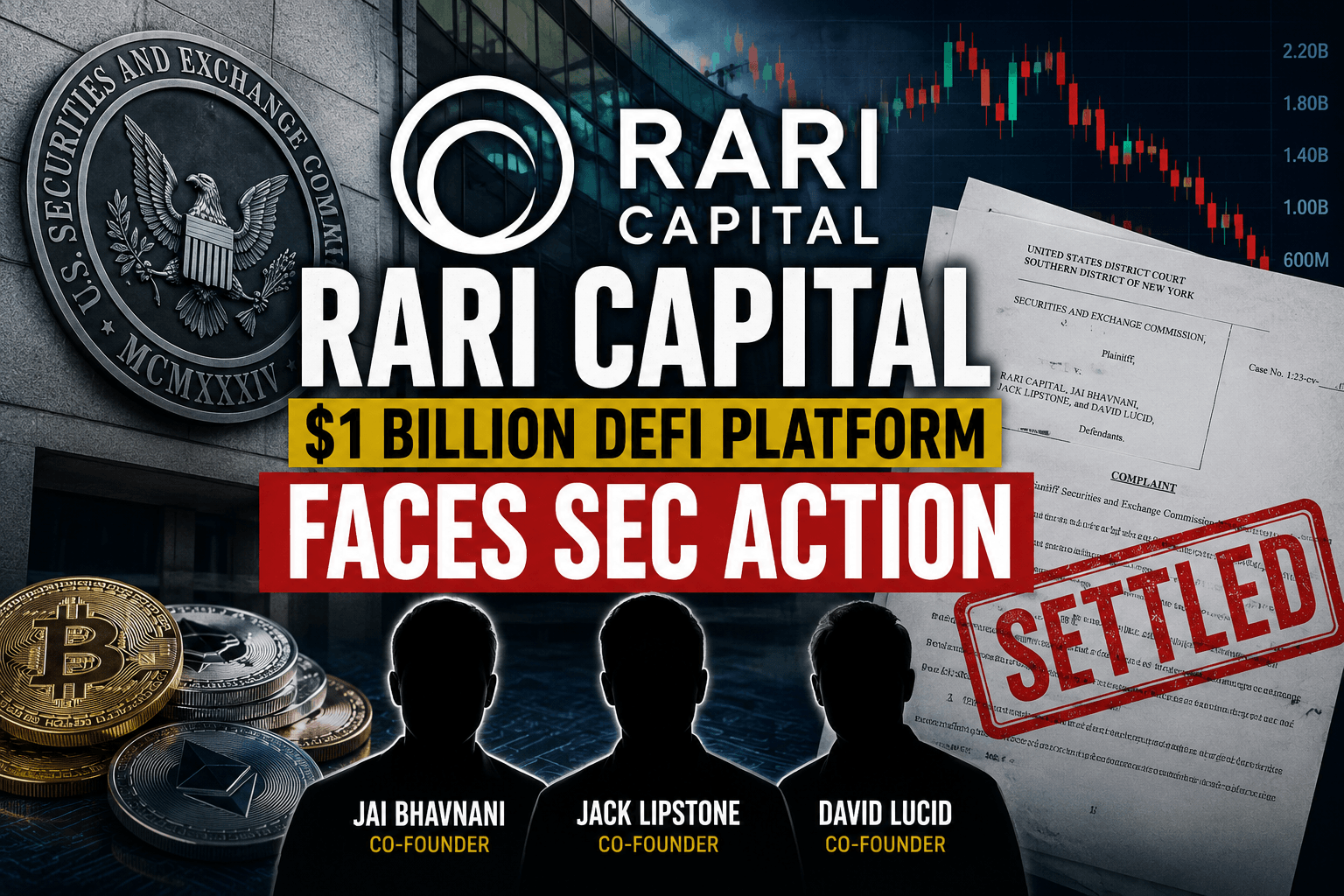
Within a relatively short period, Rari Capital grew into one of the larger projects in decentralized finance, with more than $1 billion in assets moving through parts of its ecosystem. For founders Jai Bhavnani, Jack Lipstone, and David Lucid, it looked like a major success story in an industry producing new crypto celebrities almost every month.
A few years later, that success story ended up in the sights of U.S. regulators.
In September 2024, the Securities and Exchange Commission announced settlements with Rari Capital and its three founders after accusing them of misleading investors and violating federal securities laws. The case wasn’t about founders secretly draining wallets or disappearing with customer funds. Instead, regulators focused on something that has become increasingly common in crypto enforcement actions: whether investors were given the full story before putting their money on the line.
To understand why regulators got involved, it helps to look at what Rari was actually selling.
One of the company’s most popular offerings was a product called Earn Pools. Investors deposited crypto assets into these pools, and Rari promoted the idea that sophisticated systems would automatically shift those assets into opportunities offering better yields. For many users, that automation was the entire attraction. They didn’t want to spend every day chasing returns across different protocols. The platform was supposed to handle that for them.
The SEC later argued that the reality wasn’t quite as hands-off as investors were led to believe.
According to court filings, some of the investment strategies required human involvement behind the scenes. Certain portfolio adjustments weren’t happening through a fully automated process. Regulators claimed investors weren’t given an accurate picture of how much manual management was actually taking place.
That may sound like a technical distinction, but in a market where projects constantly marketed themselves as “autonomous” and “decentralized,” those details mattered. A lot of investors were specifically buying into the idea that technology, not people, was making the decisions.
The agency also questioned how returns were advertised.
Like many crypto platforms during the boom years, Rari highlighted attractive yield figures. High APYs became a powerful marketing tool throughout the industry. But regulators argued that some of those performance claims failed to adequately account for fees and other factors affecting actual returns. The result, according to the SEC, was that investors were seeing a more optimistic picture than the one many eventually experienced.
The legal fight wasn’t limited to marketing claims.
The SEC argued that products offered through Rari Capital qualified as securities under federal law. That’s a major issue because securities offerings generally come with registration requirements and investor disclosures. Regulators said people were depositing crypto into pooled investments with the expectation that profits would be generated through the efforts of others. In the SEC’s view, that made the products subject to securities laws regardless of the technology behind them.
The complaint also targeted another Rari product called Fuse, which allowed users to create lending pools. Regulators claimed the company and its founders acted as unregistered brokers while facilitating transactions involving crypto asset securities.
As the investigation unfolded, financial details began emerging as well. Court records showed that a wallet identified as the Rari Capital Treasury collected roughly $370,000 in fees from Earn Pool activities between July 2020 and September 2021. While not a massive figure by crypto standards, it demonstrated that the platform’s rapid growth was generating real revenue for the business.
By the time regulators filed their case, the crypto landscape had changed dramatically. The market had cooled, several high-profile projects had collapsed, and government agencies were paying much closer attention to companies that once operated in a relatively gray area.
Rari’s founders ultimately chose not to drag the case through years of litigation.
Bhavnani agreed to pay more than $63,000 in monetary remedies. Lipstone agreed to pay more than $43,000. Lucid agreed to pay more than $45,000. The settlements included civil penalties, disgorgement, and interest. The founders also accepted five-year officer-and-director bars, preventing them from serving in leadership positions at public companies during that period.
Rari Capital itself was permanently enjoined from future violations of the securities laws cited by regulators.
The numbers involved in the settlement were relatively small compared to some of the billion-dollar crypto enforcement actions seen in recent years. What made the case notable was the message behind it. The SEC wasn’t saying DeFi was illegal. It was saying that calling something decentralized doesn’t automatically place it outside existing rules.
That’s a debate that continues to shape the crypto industry today.
For investors who followed Rari Capital during its rise, the case serves as a reminder that technology and transparency aren’t always the same thing. Fancy terminology, governance tokens, and promises of automation can make a project sound revolutionary, but regulators tend to focus on a simpler question: what were investors told, and was it true?
In Rari’s case, regulators concluded there was a gap between the story being sold and the reality behind the platform. Whether one sees the settlement as investor protection or regulatory overreach, it stands as another example of how the crypto industry’s boom years continue to face scrutiny long after the hype has faded.
————-
Disclaimer:
Some content on Reportingscams.com is published under our guest post program and is provided by third-party contributors. Reporting scams does not create, verify, or take responsibility for the views, accuracy, or claims expressed in such content.