It didn’t blow up overnight. It slipped quietly, almost politely at first, as a fund that was supposed to stay steady suddenly froze withdrawals and left investors waiting for answers. People who had treated it like a safe corner of their portfolio began to notice something felt off, and once the numbers started to raise doubts, the questions followed quickly. By the time anyone outside really understood what was happening, the situation had already turned into one of the more technical fraud cases in recent memory.
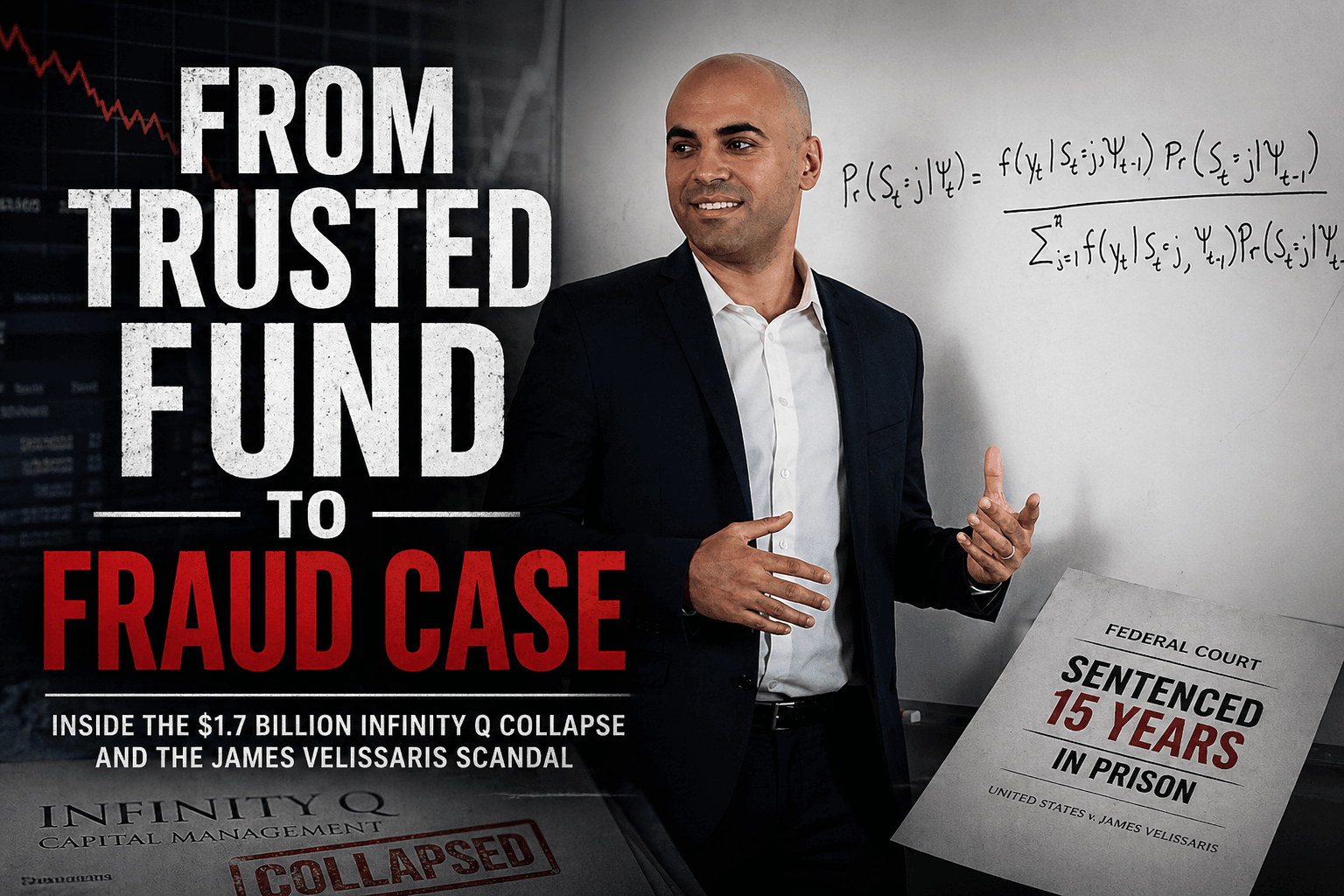
At the center of it all was James Velissaris, the man behind Infinity Q Capital Management. On paper, he looked like the kind of operator you trust with complicated money, someone with a strong academic background and real experience in finance, running a firm built around strategies most investors would never try to decode themselves. That complexity became part of the pitch, it sounded smart and controlled, and for a long time people were comfortable trusting it without digging deeper.
Infinity Q’s flagship fund was sold as a strategy built around volatility trading and derivatives, with a promise that it could generate returns without swinging wildly with the market. For advisors and institutions looking for stability, that was an easy sell. The issue was that very few people actually understood how those returns were being calculated, and that lack of clarity turned into a blind spot that would later matter a lot more than anyone expected.
According to findings later laid out by the U.S. Securities and Exchange Commission, Velissaris wasn’t just running a complex strategy, he was adjusting inputs inside a pricing model that determined the value of the fund’s assets. Small changes inside that model could push valuations higher, and doing that over time created a portfolio that looked stable on reports even when it didn’t reflect what was really happening underneath. Regulators described this not as a one time issue but as repeated behavior, a pattern that kept performance looking steady while the underlying positions told a different story.
The first clear sign that something was wrong came in early 2021 when the fund halted redemptions, a move that immediately raised concern among investors. Within weeks, the fund was liquidated, leaving people trying to understand how something marketed as controlled and stable could fall apart so quickly. That confusion quickly turned into scrutiny, and the legal pressure started building soon after.
The U.S. Securities and Exchange Commission moved in with civil charges, the Commodity Futures Trading Commission followed with its own action, and federal prosecutors stepped in as well. What initially looked like a valuation issue was now being framed as fraud, with authorities arguing that investors had been misled over a sustained period of time.
The Justice Department’s position was direct, Velissaris knowingly misled investors and continued operating the fund while money kept flowing in. By the time everything collapsed, the losses were already locked in, and there was little left to recover. In 2023, the case reached a turning point when he was sentenced to 15 years in prison, a decision that reflected how seriously the court viewed the conduct.
Separate proceedings added more weight to the case, including actions tied to the CFTC where financial penalties were imposed without admissions in certain parts. Attempts to challenge aspects of the case did not change the outcome, as courts allowed key findings to stand and upheld decisions that reinforced the fraud charges.
What makes this case stand out is not just the scale but the method behind it. There were no loud warning signs at the beginning, no unrealistic promises that immediately raised suspicion. The fund reported steady performance, and that consistency is exactly what drew investors in. The real issue was buried deeper, inside a system that very few outsiders examined closely.
Valuation models are meant to reflect reality, but in this situation regulators argued that reality was being shaped to fit the numbers instead. By the time the fund collapsed, around $1.7 billion had been tied up in the strategy, involving institutions and financial advisors who believed they were placing money into something relatively controlled. That trust is what made the fallout more severe.
The industry has seen fraud before, but this one feels different because it did not rely on obvious deception at the surface. It existed within the mechanics of the strategy itself, inside calculations that most people simply accepted without question. That is what allowed it to continue for as long as it did.
Even now, the bigger questions remain. How did it run for so long without being flagged, why did external checks fail to catch it earlier, and how many other funds operate with similar internal models that investors rarely challenge. For Velissaris, the legal chapter is over, but for the industry the impact is still unfolding.
The Infinity Q story leaves behind a simple reminder that often gets ignored. When something is too complex to clearly explain, it can also be the easiest place to hide what’s really going on.
————-
Disclaimer:
Some content on Reportingscams.com is published under our guest post program and is provided by third-party contributors. Reporting scams does not create, verify, or take responsibility for the views, accuracy, or claims expressed in such content.