A post that stayed online for only a short time ended up costing DraftKings $200,000 and put one of America’s biggest sports betting companies under the microscope of federal regulators.
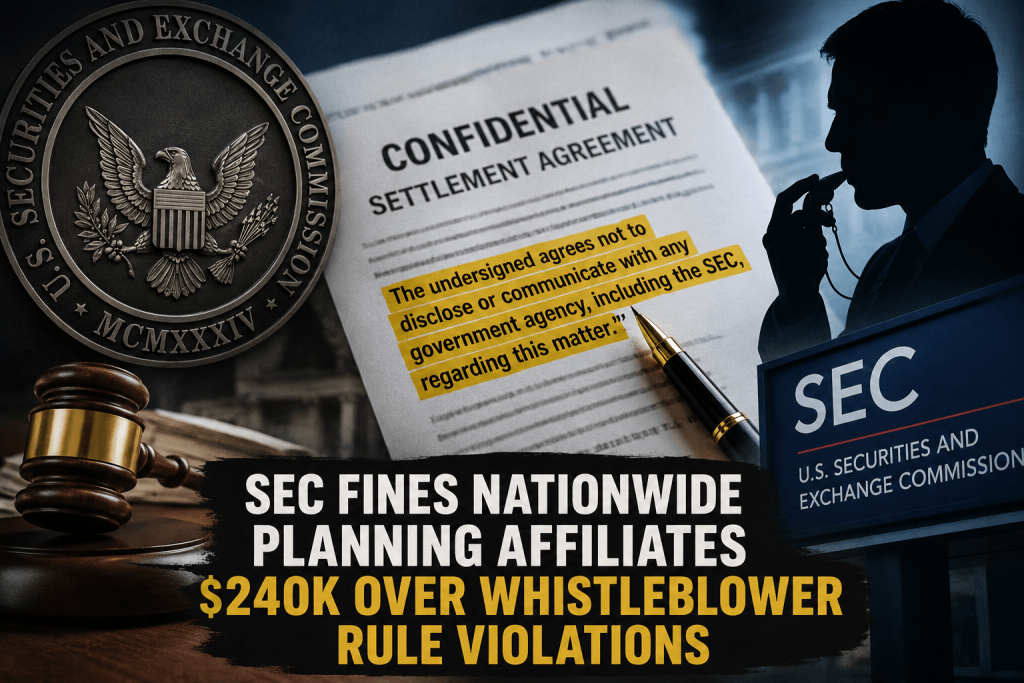
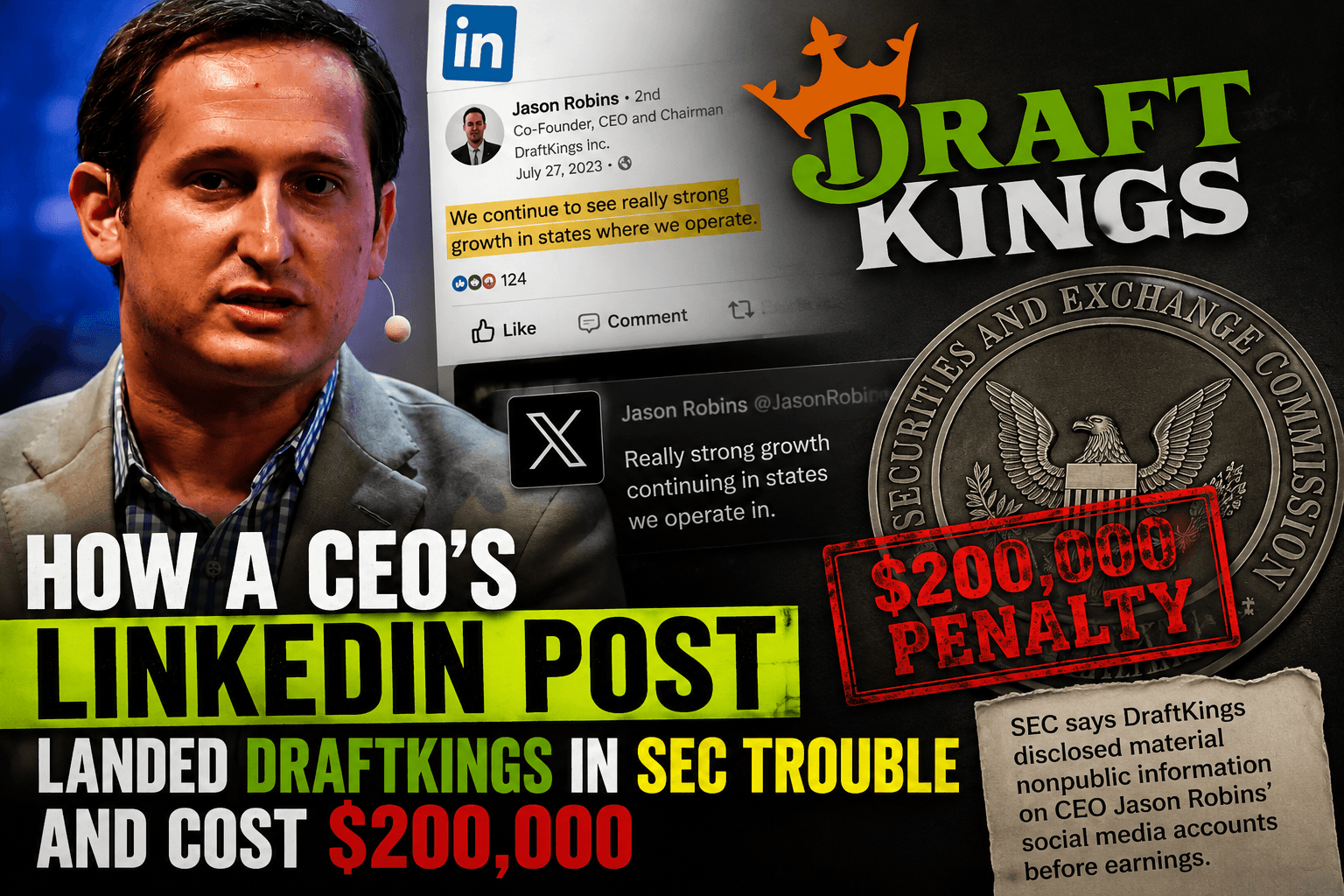
The U.S. Securities and Exchange Commission announced in September 2024 that DraftKings agreed to settle charges stemming from comments posted on social media accounts belonging to co-founder and CEO Jason Robins. While the case did not involve fraud, insider trading, or accusations that the company misled investors about its finances, regulators concluded that information shared through Robins’ accounts gave some market participants access to important company developments before the broader investing public received the same information.
The enforcement action may seem minor compared with the billion-dollar frauds and corporate scandals that often dominate headlines, but it highlights an issue that regulators have increasingly worried about as executives embrace social media. In the SEC’s view, even a casual-looking post can become a securities law problem when it contains information investors could use to make decisions about buying or selling stock.
The controversy traces back to July 27, 2023. On that day, messages appeared on Robins’ LinkedIn and X accounts discussing DraftKings’ business performance. According to the SEC, the posts stated that the company was continuing to see strong growth in states where it was already operating. At the time, DraftKings had not yet released its second-quarter earnings results, meaning the information was not widely available to investors.
The posts did not remain online for long. DraftKings quickly recognized there was a problem and removed them. But the SEC later concluded that taking the posts down was not enough. Regulators said the company failed to promptly distribute the same information to the market as a whole and instead waited until its scheduled earnings release roughly a week later.
That delay became the basis of the SEC’s case.
The regulator argued that the information shared through Robins’ accounts was material and nonpublic. Under Regulation Fair Disclosure, commonly known as Regulation FD, publicly traded companies are expected to ensure that significant information reaches all investors at the same time. The rule was created to stop companies from selectively sharing important developments with analysts, favored investors, or limited audiences before everyone else has access to them.
What made the DraftKings matter unusual was the platform involved. Rather than a conference call, private meeting, or analyst briefing, the disclosure occurred through social media accounts associated with the company’s chief executive. The SEC acknowledged that companies can use social media as a channel for investor communications, but only if investors have been clearly informed that those accounts may be used for material disclosures.
According to the agency, DraftKings had not established Robins’ personal accounts as recognized disclosure channels. As a result, investors who did not follow those accounts may not have received the information at the same time as those who did.
The SEC’s order did not accuse DraftKings of making false statements. It also did not claim investors suffered measurable losses because of the posts. Instead, the case focused entirely on how information was released and whether the company followed disclosure rules designed to keep financial markets fair.
To resolve the matter, DraftKings agreed to pay a civil penalty of $200,000 and accepted a cease-and-desist order. The company also agreed to enhance compliance procedures and provide additional training related to disclosure obligations. Like many SEC settlements, the resolution was reached without the company admitting or denying the regulator’s findings.
Notably absent from the case was any enforcement action against Robins personally. The SEC charged DraftKings, not its CEO. Robins was not accused of securities fraud, was not fined individually, and was not barred from serving as an executive. He continues to lead the company he helped launch in 2012.
That distinction matters because public attention following the settlement often focused on Robins himself. As the face of DraftKings, his name appeared in headlines and legal analyses discussing the case. Yet the regulator’s action was directed at the company’s disclosure controls and communication practices rather than at personal misconduct by its chief executive.
Still, the incident added another chapter to the growing debate over how corporate leaders use social media. Over the last decade, executives have increasingly turned to platforms such as X and LinkedIn to communicate directly with customers, investors, and the public. Those channels can offer speed and reach, but they also create new risks when comments touch on business performance, earnings, growth trends, or future expectations.
The DraftKings case arrived at a time when regulators were already paying closer attention to digital communications. Enforcement officials have repeatedly warned companies that disclosure obligations do not disappear simply because information is posted online rather than included in a traditional press release or SEC filing. A message typed into a social media platform can carry the same legal weight as a statement delivered during an earnings call if investors view it as important.
For DraftKings, the financial impact of the settlement was limited. The company generates billions of dollars in annual revenue and remains one of the dominant players in the rapidly expanding online sports betting industry. The larger consequence was reputational. An SEC enforcement action, even a relatively modest one, places a company’s governance practices under scrutiny and often prompts boards, lawyers, and compliance teams across corporate America to review their own procedures.
The episode also serves as a reminder that securities regulators are not solely focused on headline-grabbing fraud cases. Much of the SEC’s work involves policing the rules that govern how public companies communicate with investors. Regulators believe confidence in financial markets depends not only on truthful information but also on equal access to that information.
In the end, DraftKings was not accused of stealing investor money, falsifying records, or running a deceptive scheme. What landed the company in regulatory trouble was something far more ordinary: a handful of social media posts that appeared before the rest of the market received the same information. The penalty was relatively small, but the message from Washington was unmistakable. In an era where a CEO can reach millions of people with a single click, the rules of fair disclosure still apply, and regulators expect public companies to treat every platform as seriously as the trading market itself.
————-
Disclaimer:
Some content on Reportingscams.com is published under our guest post program and is provided by third-party contributors. Reporting scams does not create, verify, or take responsibility for the views, accuracy, or claims expressed in such content.