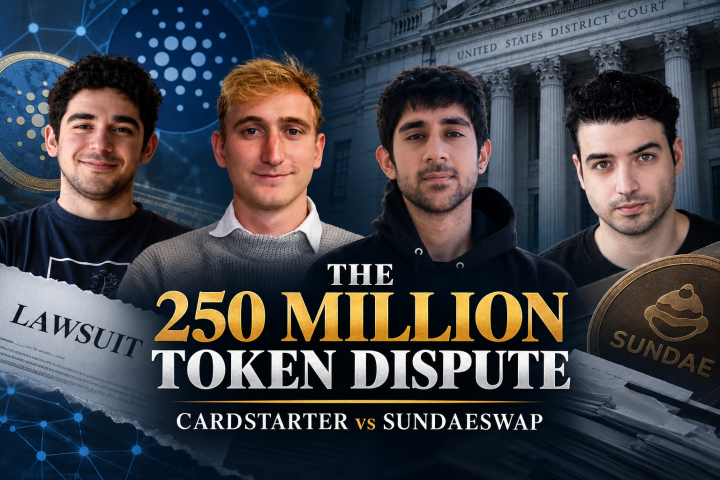
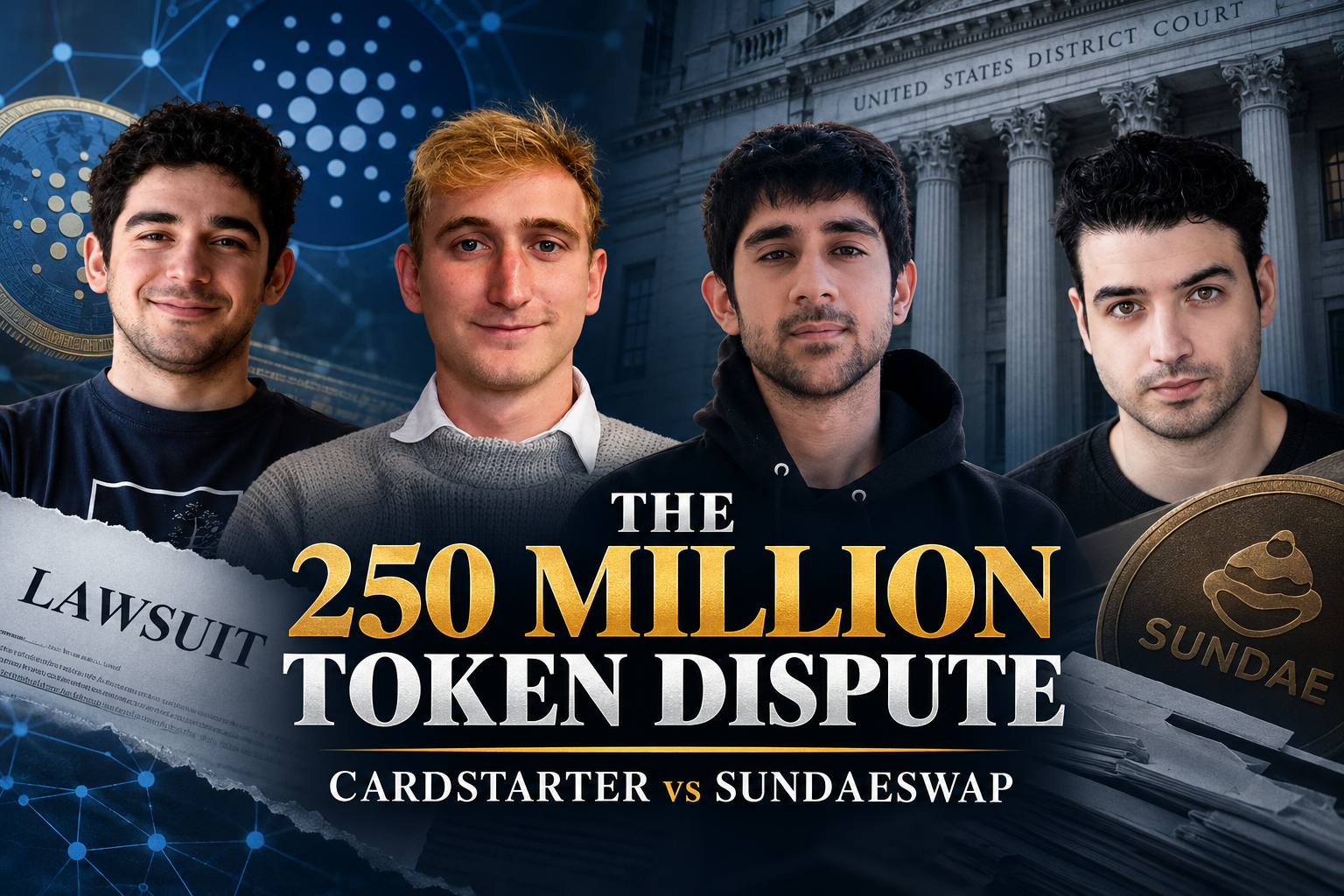
The launch of SundaeSwap was supposed to mark a major step forward for decentralised finance on the Cardano blockchain. Instead, the project became embroiled in a bitter legal dispute over promises of cryptocurrency tokens, millions of dollars in liquidity and the collapse of a proposed business partnership. At the centre of the dispute was Mateen Motavaf, SundaeSwap’s co-founder and then-chief executive, whose company was accused by rival blockchain venture CardStarter of backing away from an agreement after CardStarter and its community had committed resources to the new exchange. The case was eventually settled confidentially, and the public never got a definitive judicial ruling on whether the alleged promises were broken.
The dispute became public in early 2022, but its origins went back to the previous year, when developers were racing to establish decentralised exchanges on Cardano. These platforms, commonly called DEXs, allow users to exchange digital assets through blockchain-based systems rather than relying on a conventional centralised exchange. Their success depends heavily on liquidity: the cryptocurrency deposited into pools that make trading possible. Without sufficient liquidity, transactions can become difficult or expensive to execute, and a new platform can struggle to attract users.
CardStarter, a British Virgin Islands company led by founder and chief executive Aatash Amir, had been developing its own proposed exchange, CardSwap. According to the complaint it later filed in the US District Court for the Northern District of California, CardStarter had built substantial liquidity pools and a community of supporters who had committed cryptocurrency to its ecosystem. The complaint stated that the value of its liquidity had reached approximately $57.6 million in May 2021, although that figure represented the value of assets in the pools at that time rather than cash held by the company. CardStarter believed those resources gave it a significant advantage as Cardano prepared to support smart contracts.
SundaeSwap was pursuing the same market. In a July 2021 announcement, the company publicly described a partnership with CardStarter as a major development milestone. SundaeSwap said the arrangement would help it launch with a large community and substantial total value locked, a standard measure of cryptocurrency deposited in a protocol. Its announcement also described CardStarter as having approximately $57 million in total value locked.
Behind that public announcement, however, the companies were negotiating arrangements that would later become the subject of litigation. CardStarter alleged that the parties had reached a separate understanding under which it would discontinue development of CardSwap, transfer existing liquidity into SundaeSwap’s ecosystem and encourage its supporters to migrate their assets. In return, CardStarter claimed, SundaeSwap promised 150 million SUNDAE tokens for distribution to CardStarter’s community and another 100 million tokens for the CardStarter team. The complaint described a total potential commitment of 250 million tokens.
These were allegations made by CardStarter, not findings that the defendants had committed fraud. The distinction matters because the companies disputed what had actually been agreed. The dispute centred partly on the difference between a written Collaboration and Marketing Agreement and what CardStarter called a separate “Gentlemen’s Agreement.” CardStarter argued that the second arrangement was binding despite not being formalised in the same way as the written contract. SundaeSwap maintained that the relationship was governed by the written agreement and that the parties had not reached the additional binding deal CardStarter described.
CardStarter’s complaint also described a $200,000 unsecured loan made to SundaeSwap in June 2021, carrying interest at 3% annually. According to the filing, Motavaf had indicated that SundaeSwap urgently needed the money to continue developing its exchange, and CardStarter’s principals contributed personal funds to make the loan possible. The complaint said the parties discussed eventually replacing the loan with a token-based repayment arrangement. The loan was a separate financial component of the relationship, although the public record cited here does not establish that the entire loan was lost or that the money was obtained through criminal conduct.
The conflict reached a turning point in January 2022, shortly before SundaeSwap’s decentralised exchange went live. On January 18, CardStarter said it learned that SundaeSwap intended to provide only 10 million tokens rather than the 150 million tokens that CardStarter said had been promised to its community. In the account reproduced in the complaint, CardStarter asked whether the proposed reduction was correct, and SundaeSwap chief operating officer Artem Wright responded: “Yes, that’s correct.” CardStarter argued that it had already encouraged its supporters to move liquidity into a migration arrangement that could not simply be reversed. It claimed that SundaeSwap had obtained the benefit of those commitments while rejecting the token allocation on which CardStarter said it had relied.
The dispute quickly spilled onto social media. CardStarter’s court filing said angry community members directed threats at its principals and published personal information about them and their relatives. The allegations illustrate another risk associated with volatile digital-asset markets: disagreements over token allocations can quickly turn into public campaigns against founders and employees, even while the underlying contractual questions remain unresolved.
SundaeSwap offered a different account. In a public statement published in January 2022, the company said the relationship rested on the June Collaboration and Marketing Agreement and that negotiations over a broader arrangement had not produced a final agreement. It acknowledged that members of its team had used imprecise language when describing the relationship and the hoped-for liquidity arrangement, but disputed the claim that it had promised the community the tokens alleged by CardStarter. SundaeSwap also announced a proposed cross-chain airdrop of 20 million SUNDAE tokens to eligible CSWAP holders, presenting it as a voluntary measure intended to address community concerns. CardStarter’s complaint subsequently alleged that the promised distribution was not completed. The public statements and court filings establish that the parties disagreed over the commitment; they do not, on their own, establish that every claim made by either side was correct.
On February 4, 2022, CardStarter filed its federal lawsuit against SundaeSwap and four individuals: Motavaf, Wright, chief information officer Pi Lanningham and legal adviser Christopher Borders. The complaint asserted claims including breach of contract, promissory estoppel, fraud or misrepresentation, unfair business practices and unjust enrichment. It sought compensatory and punitive damages, an order requiring the delivery of 250 million SUNDAE tokens and other relief. The filing did not establish that the defendants had committed a crime, and the case was a civil dispute rather than a criminal prosecution.
And there was a huge procedural development on Oct. 5, 2022. US District Judge Richard Seeborg tossed out the defendants’ attempt to dismiss CardStarter’s amended complaint. The court found CardStarter had sufficiently pled its claims at this stage to proceed, including its argument that the separate token arrangement could be enforceable. That decision was not a final finding that fraud had occurred. A motion to dismiss tests whether pleaded claims can proceed under the applicable legal standards; it does not resolve all disputed evidence or determine liability after trial.
The case continued for more than a year after that ruling. In February 2024, the parties advised the court that they had settled their dispute. A stipulation and order of dismissal with prejudice was filed by the court on March 11, 2024, dismissing the civil case. The public docket summary and the cited reporting did not disclose the financial terms of the settlement. There is therefore no verified public figure for compensation paid, tokens transferred, investor losses reimbursed or damages recovered. Nor does the settlement, by itself, establish an admission of wrongdoing by either side.
A separate document supplied for this review adds a small but relevant detail about the dispute’s online afterlife. It is an email dated February 15, 2022, from a sender identifying himself as Michael Peterson, sent to OffshoreAlert. The sender asked for the removal of a tag page concerning Mateen Motavaf, described the court record as private information and asked how much removal or a “no-follow” code would cost. OffshoreAlert later published the message as a letter to the editor, describing it as an apparent offer to pay to remove a copy of a federal complaint. The email does not, by itself, independently verify Peterson’s professional credentials, establish the identity of the client beyond the context of the linked tag page, or prove that any payment was made. It should therefore be treated as a documented request concerning online visibility, not evidence of a crime or proof that the underlying lawsuit was false.
Motavaf’s publicly documented career has primarily been connected to SundaeSwap. A current business-profile listing describes him as the company’s founder and former chief executive, with a board role also listed. That profile places his professional background in the San Francisco Bay Area, but the available sources do not establish his precise current whereabouts, age or day-to-day activities as of October 2026. Those details should not be guessed. The public material reviewed for this article also does not establish that Motavaf or the other named defendants were criminally charged, convicted or found by a regulator to have committed fraud in connection with this dispute.
The lasting lesson is not that a civil lawsuit automatically proves misconduct, nor that a confidential settlement settles every question of public interest. It is that cryptocurrency partnerships can expose communities to substantial risk when business expectations, token allocations and contractual obligations are not clearly documented. A court allowed CardStarter’s claims to proceed, but the case ended without a public trial verdict or disclosed settlement terms. Investors and token holders are left without a complete public accounting of the financial outcome. In a market where trust can move billions in value, the difference between a public partnership announcement, an enforceable agreement and an allegation in a lawsuit is not a technicality. It is the difference between a promise people believe and an obligation a court has actually established.
Source:
OffshoreAlert
————-
Disclaimer:
Some content on Reportingscams.com is published under our guest post program and is provided by third-party contributors. Reporting scams does not create, verify, or take responsibility for the views, accuracy, or claims expressed in such content.