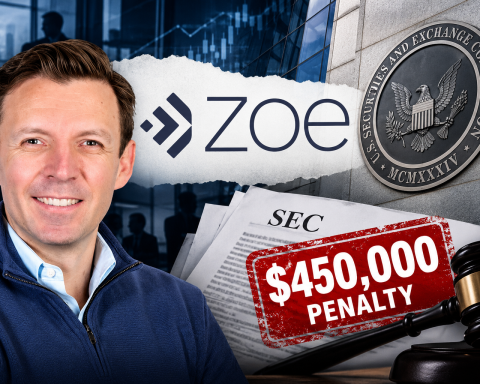

Derek Moneyberg built his public identity around a simple promise. Money, discipline and the right knowledge, he suggests, can transform an ordinary person into someone operating at an entirely different level. But in 2025, the persona that had been carefully built around wealth, confidence and elite performance collided with an unexpected arena. Brazilian jiu-jitsu. His promotion to black belt after roughly three and a half years triggered a backlash that spread through the BJJ community, raising questions about his training, his relationships with elite fighters and whether money had become too closely intertwined with credibility.
Moneyberg is the public name of Dale Buczkowski, according to federal court records. He operates around the Moneyberg brand as a business and financial educator, promoting programs covering wealth, investing, real estate and related subjects. His public profile has also included appearances with prominent figures from combat sports, an association that became increasingly important to his image as his BJJ journey accelerated.
The black belt controversy began when Moneyberg announced that he had reached the highest commonly recognized rank in Brazilian jiu-jitsu after approximately 3.5 years of training. The announcement featured him alongside figures including Jake Shields, Frank Mir, Lyoto Machida and Glover Teixeira. To people unfamiliar with BJJ, the achievement might sound simply extraordinary. Within the sport, however, the timeline immediately attracted scrutiny because three and a half years is far outside the normal path followed by most practitioners. Gold BJJ says its survey of nearly 2,000 practitioners found an average time to black belt of about 13.3 years.

There are legitimate exceptions. Brazilian jiu-jitsu has never operated according to a universal rule requiring every practitioner to spend a fixed number of years at each belt. Exceptional athletes can advance rapidly, and the quality and intensity of training can dramatically affect development. Moneyberg has argued that his unusually fast progression resulted from an extraordinary commitment to private training with elite practitioners rather than the conventional path through a large academy. In a 2025 podcast with Jake Shields, the discussion specifically focused on his rapid black-belt journey and the role of high-level coaching.
That explanation has not satisfied many practitioners. The criticism is less about whether three and a half years is technically possible and more about whether the public evidence demonstrates the level of ability normally associated with a black belt. Gold BJJ points out that Moneyberg has claimed to have trained for more than two hours a day, every day, during those years, yet critics have struggled to locate extensive footage of him rolling against resisting opponents. The site says it found only two publicly available clips showing him training and argues that the footage does not demonstrate black-belt-level ability.
One of the most significant comments came from Mikey Musumeci, an elite BJJ competitor who had trained with Moneyberg. During a public discussion with Craig Jones, Musumeci reportedly said that he had seen the available videos and that Moneyberg “definitely does not look like a black belt.” That statement is important because it comes from someone who had direct exposure to Moneyberg rather than simply from an anonymous Reddit commenter. At the same time, it remains an opinion about his visible skill rather than an official ruling that the belt was improperly awarded.
Jake Shields, who awarded Moneyberg the black belt, has defended the promotion. According to Gold BJJ’s account of Shields’ comments on a podcast with Matt Serra, Moneyberg had repeatedly asked about promotion and Shields ultimately gave him requirements involving specific techniques and performance against particular training partners. Gold BJJ sharply criticizes that process, particularly the idea of using successful training-room submissions as a promotion criterion. Moneyberg’s supporters, however, point to the direct involvement of established fighters and instructors as evidence that the promotion was not simply self-appointed.
The financial relationships surrounding Moneyberg’s BJJ training have made the debate considerably more combustible. Gold BJJ cites receipts posted by Craig Jones showing that Moneyberg paid significant sums for access and appearances involving high-level practitioners. From that, critics have constructed a much larger argument that Moneyberg’s ability to spend heavily on elite athletes gave him unusual access to the people who ultimately became part of his BJJ story.
That does not establish that Moneyberg purchased a black belt. Paying a professional athlete for private instruction, a podcast appearance or consulting is not inherently improper, and there is no evidence in the material reviewed establishing that Shields or another instructor awarded Moneyberg a belt in exchange for money. The more defensible question is whether a wealthy student receiving extensive private instruction from elite athletes creates a different promotion environment from the one experienced by ordinary BJJ practitioners training in conventional academies.

That distinction has been largely lost in the online argument. On Reddit, the debate has become a mixture of skepticism, ridicule and genuine questions about what a black belt is supposed to represent. Discussions in the BJJ community have focused on the unusual speed of Moneyberg’s promotion, his reliance on private instruction and the apparent scarcity of public rolling footage. Other users have questioned whether prominent fighters who associate with him are influenced by financial relationships. Those discussions demonstrate the scale of the backlash, but they are not independent proof that the belt was bought or that any fighter acted improperly.
The controversy also cannot be separated entirely from Moneyberg’s business reputation. His company has accumulated 89 reviews on Trustpilot, with a current TrustScore of 2.7 out of 5. The distribution is unusually polarized, with Trustpilot showing 86 percent five-star reviews and 10 percent one-star reviews. Trustpilot also warns that the company has not invited customers to review recently and has not replied to negative reviews, meaning the review profile should be treated as a collection of individual customer experiences rather than a definitive measurement of the business.
Some of those negative reviews contain serious allegations about the cost and delivery of Moneyberg’s programs. One reviewer said they paid $4,250 for an in-person program in 2021 and claimed that they were still waiting for the program to be delivered years later and were unable to obtain a refund. Another reviewer described paying $5,000 for a course and argued that the content and instruction did not justify the price. A 2025 reviewer similarly criticized Market Mastery after paying $5,000, describing long calls, extensive reading requirements and what they considered inadequate interaction with Moneyberg himself. These are customer allegations posted on Trustpilot, not findings by a court.
The same page contains a very different set of experiences. Numerous customers have given Moneyberg five-star ratings and described his courses as valuable. One reviewer in May 2026 said that they had completed three programs, built a six-figure portfolio and purchased a third rental property with Moneyberg’s guidance. Another customer said the programs were demanding but credited the work with improving their financial performance. The sharply divided reviews make it difficult to reduce the customer experience to a simple narrative in which every buyer was either satisfied or deceived.
One particularly detailed recent Trustpilot review deserves attention because it illustrates the nature of the complaints without establishing them as fact. A reviewer who said they participated in Moneyberg programs between late 2024 and early 2026 alleged that they ultimately paid tens of thousands of dollars in program fees and financing costs. The reviewer described multiple financing applications and claimed that their own audit showed more than $58,000 in net financial outflow after accounting for certain transfers from Wealthy Inc. The claims are the reviewer’s account and calculations, and there is no court finding in the material reviewed confirming them.
The larger legal history gives the story another dimension.
In June 2021, Moneyberg, under his legal name Dale Buczkowski, sued YouTuber Spencer Cornelia over videos examining his business practices. Cornelia’s channel focused on online wealth and lifestyle personalities, and his reporting on Moneyberg included interviews with John Mulvehill, also known as John Anthony Lifestyle, concerning his experiences and criticisms of Moneyberg’s services. Cornelia’s attorneys say Moneyberg initially sued Cornelia but did not sue Mulvehill until later, despite Mulvehill being responsible for many of the statements at issue.
The case became a long-running dispute over defamation, free speech and the treatment of public criticism. Moneyberg and Wealthy Inc. argued that Cornelia’s material was defamatory and sought damages through a series of claims. Cornelia defended the reporting and argued that the case implicated Nevada’s anti-SLAPP protections, which are intended to protect speech concerning matters of public interest from litigation designed to suppress it.
In September 2023, the U.S. District Court for the District of Nevada granted summary judgment in favor of Cornelia on the principal claims. Moneyberg and Wealthy appealed. The case then moved to the U.S. Court of Appeals for the Ninth Circuit, where the dispute remained active for another two years. The appellate court heard oral argument in December 2025.
The Ninth Circuit’s February 25, 2026 superseding disposition is particularly significant. The court affirmed the summary-judgment victory for Cornelia and his associated entities. In doing so, it left intact the result that Moneyberg had failed to establish the necessary showing for his defamation claims. The court’s ruling also addressed the anti-SLAPP issue and reversed the lower court’s treatment of that issue, clearing the way for an award of attorneys’ fees and costs under the Nevada statute.
The legal standard matters here. The court did not declare every statement made about Moneyberg to be true. Instead, the dispute involved the constitutional standard applicable to public figures, including whether the speaker acted with actual malice. The Ninth Circuit’s ruling therefore should not be described as a judicial finding that Moneyberg committed fraud or that every allegation against him was accurate. What the decision does establish is that his principal claims against Cornelia did not survive the applicable legal standards.
The legal battle is not entirely finished. On May 26, 2026, Wealthy Inc. and Buczkowski filed a petition asking the U.S. Supreme Court to review the Ninth Circuit proceedings. The Supreme Court docket shows that the petition was docketed as No. 25-1329, that a response was filed by Cornelia’s side on August 26, 2026, and that the petition was scheduled for conference on September 28, 2026. As of September 2, 2026, there had been no Supreme Court decision granting or denying review.
That procedural development is important because some earlier coverage described the case as simply finished after the Ninth Circuit ruling. The more accurate description is that Moneyberg and Wealthy lost the principal appellate battle against Cornelia, while a petition for Supreme Court review remains pending. The Supreme Court has not yet agreed to hear the case, and the mere filing of a certiorari petition does not mean that the Court will review the underlying dispute.
The Cornelia case also changed the context in which later criticism of Moneyberg was received. A dispute that might once have remained within the world of YouTube commentary became a federal court battle involving questions about the boundaries of criticism directed at an online business personality. Cornelia’s attorneys now describe the case as a successful defense of free speech, while Moneyberg’s petition to the Supreme Court shows that his side continues to challenge aspects of the Ninth Circuit’s treatment of the dispute.
Then came the BJJ transformation.
Moneyberg’s image had already been built around wealth, self-improvement and status. Brazilian jiu-jitsu added another powerful symbol to that identity. A black belt is not simply another credential. Within the martial art, it represents years of technical development, live training, problem-solving against resisting opponents and acceptance by instructors and peers. That is why the speed of Moneyberg’s promotion provoked a reaction that went far beyond ordinary internet criticism.
His defenders have a straightforward answer. Moneyberg says he trained intensely, surrounded himself with elite coaches and took an unconventional route. Jake Shields, the person who awarded the belt, has publicly discussed his training and defended the journey. Moneyberg has also appeared with respected combat-sports figures, and a podcast specifically dedicated an episode to his rapid black-belt journey and the controversy surrounding it.
His critics see the same facts differently. They see a wealthy businessman entering a sport built around a culture that places enormous value on time spent on the mats, live resistance and credibility earned through performance. They question why there is comparatively little public footage of Moneyberg rolling and why so many of the people associated with his BJJ journey are elite professionals with whom he has financial relationships. Gold BJJ has made that argument most forcefully, describing the promotion as illegitimate, while other BJJ commentators have questioned whether private lessons alone can reproduce the experience of regular academy training.
The strongest criticism, therefore, is not that Moneyberg is wealthy. It is that wealth may have allowed him to construct a path through a system where credibility is normally accumulated slowly and publicly. That is an important distinction. Money can buy access to exceptional coaches. It can buy private instruction that most practitioners cannot afford. It can create opportunities to train with people who would otherwise be inaccessible. But whether those advantages translate into genuine black-belt ability remains a question for the instructors and practitioners who have actually trained with him.
There is also a broader question about celebrity credibility. Moneyberg’s association with professional fighters can create a powerful visual message. A photograph with respected athletes, a podcast with a champion or a private lesson with an elite competitor can imply expertise even when the underlying relationship is commercial. That does not mean the athlete’s endorsement is false. It does mean consumers and viewers have reason to distinguish between an athlete who has genuinely evaluated someone’s ability and an athlete who has simply provided a paid service.
The distinction is particularly relevant because Moneyberg sells expertise himself. His business model depends on the idea that his experience and knowledge can help other people make better financial decisions and improve their lives. The BJJ controversy therefore became more than a dispute over one man’s belt. It became another test of the central proposition behind his public persona: how much of the authority attached to Derek Moneyberg comes from demonstrated ability, and how much comes from the symbols surrounding him?
There is no credible basis in the material reviewed to declare that Moneyberg’s black belt was definitively purchased. There is similarly no basis to dismiss the criticism simply because a respected fighter awarded it. The evidence supports a narrower but more consequential conclusion. Moneyberg received an unusually rapid promotion from an established BJJ figure, his training method has attracted substantial skepticism, respected practitioners have publicly questioned whether his visible skill resembles that of a black belt, and financial relationships between Moneyberg and members of the combat-sports community have intensified those doubts.

The same discipline is necessary when examining the accusations surrounding his business. Customer complaints on Trustpilot include claims about expensive programs, refunds, course quality and financial outcomes, but the existence of those complaints does not establish fraud. At the same time, the presence of positive reviews means the opposite conclusion, that all customers were dissatisfied, would also be unsupported. The most accurate picture is one of a highly polarizing business with expensive programs and sharply divergent customer accounts.
The court record provides a firmer point of reference. Buczkowski and Wealthy Inc. brought a major defamation fight against Spencer Cornelia, lost the principal claims at summary judgment, lost again on appeal, and then sought further review from the Supreme Court. The Ninth Circuit’s decision did not pronounce on every criticism of Moneyberg, but it established that Cornelia’s claims could not be converted into successful defamation liability under the applicable standard.
That leaves Moneyberg in an unusual position. His business continues, his supporters continue to defend his programs, his BJJ instructors continue to stand behind his promotion, and his legal challenge has moved toward the Supreme Court. At the same time, a substantial online audience remains skeptical of the way his wealth, status, commercial relationships and claims of expertise intersect.
The most revealing part of the Moneyberg story may therefore have little to do with whether three and a half years is enough time to earn a black belt. Brazilian jiu-jitsu will continue to argue about that question long after the internet moves on. The larger issue is what happens when money, celebrity and expertise become impossible to separate.
Moneyberg has built a career selling the idea that exceptional results come from exceptional people, exceptional discipline and access to the right knowledge. His critics have spent years asking whether the image is greater than the substance. The BJJ controversy simply brought that old question into a new arena, one where the currency is not dollars but trust, and where the traditional test of credibility remains brutally simple: step onto the mat and prove it.
————-
Disclaimer:
Some content on Reportingscams.com is published under our guest post program and is provided by third-party contributors. Reporting scams does not create, verify, or take responsibility for the views, accuracy, or claims expressed in such content.