Brandon “Dutch” Mendenhall built a reputation as a real estate entrepreneur who promised ordinary Americans a path to financial freedom through property investing. Alongside business partner Amy Vaughn, he marketed RAD Diversified REIT as an investment designed to help everyday people build wealth without becoming landlords themselves. Through social media campaigns, investment seminars, podcasts, patriotic messaging and frequent references to faith and financial independence, the pair attracted thousands of retail investors across the United States. Today, that carefully crafted image has been replaced by allegations from federal regulators that the business was built on deception rather than sustainable returns.
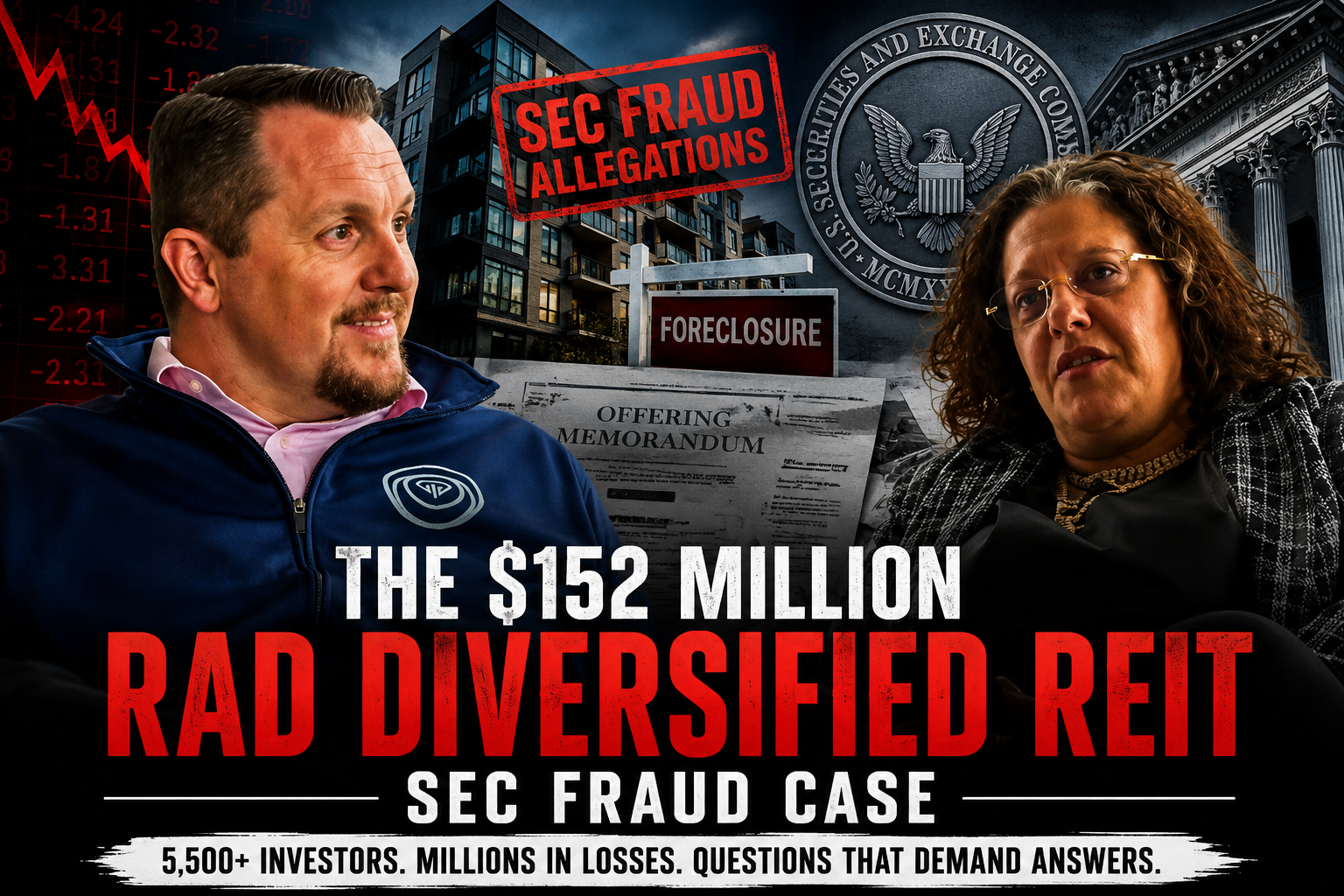
On July 29, 2026, the U.S. Securities and Exchange Commission filed a sweeping civil fraud complaint in federal court against RAD Diversified REIT, Mendenhall and Vaughn, accusing them of orchestrating a years-long scheme that allegedly raised at least $152 million from more than 5,500 investors nationwide. According to the SEC, investors were repeatedly told they were buying into a profitable real estate investment trust backed by appreciating assets and sound financial management. Instead, regulators allege the company suffered millions of dollars in annual losses while executives concealed its deteriorating finances through misleading statements, inflated property values and aggressive marketing.
The SEC’s complaint paints a picture of a company that relied as much on persuasive storytelling as it did on real estate. Regulators say Mendenhall and Vaughn assured investors that no one had ever lost money investing with RAD and promoted the company as financially healthy despite mounting losses. Marketing campaigns allegedly relied on unregistered sales agents and high-pressure sales tactics while also invoking Christian values and patriotism to build trust among prospective investors. Federal investigators argue those messages created the impression that RAD represented not only a financial opportunity but also a values-driven community deserving of confidence.
At the center of the SEC’s allegations is the claim that RAD’s reported success rested on property values that were not independently verified. Rather than relying on outside appraisers, regulators allege many valuations were prepared internally, including by Mendenhall’s brother, allowing the company to report steadily increasing stock values that did not accurately reflect market conditions. Former employees previously interviewed by national media similarly questioned the company’s valuation practices, saying reported performance often depended on internal assumptions rather than objective appraisals. If proven, those allegations strike at the heart of how investors evaluated the value of their holdings.
The complaint also accuses Mendenhall and Vaughn of treating investor funds as a source of personal spending. According to the SEC, nearly $5 million was diverted for expenses unrelated to legitimate business operations. Those expenditures allegedly included private jet travel, luxury entertainment, orthodontic bills, jewelry purchases and adult nightclub expenses. Regulators argue that while investors believed their money was financing income-producing real estate, substantial amounts instead funded personal lifestyles that had little connection to the company’s stated investment strategy.
The SEC further alleges that many properties promoted as valuable assets were, in reality, under severe financial stress. Some had already entered foreclosure while the company increasingly depended on fresh investor money and new borrowing to continue operating. Rather than generating enough cash from rents and property performance, investigators claim RAD relied on constant fundraising to cover obligations, a pattern regulators say resembled the characteristics of a Ponzi-style operation. The SEC itself does not describe the case as a Ponzi scheme in its complaint, but it argues the business became increasingly dependent on new investor funds as its financial condition worsened.
Those allegations did not emerge overnight. Investor concerns had been building long before the SEC stepped in. Complaints about delayed withdrawals, questions over valuations and difficulties redeeming investments drew increasing attention throughout 2025. That same year, Florida Attorney General James Uthmeier announced an investigation into RAD Diversified REIT and issued subpoenas seeking company records, investor communications and financial documents. His office publicly stated it was examining whether investors had been misled and described the operation as appearing to resemble a Ponzi scheme, allegations the company disputed.
Regulatory scrutiny was soon followed by financial collapse. Earlier in 2026, RAD Diversified REIT and affiliated entities sought Chapter 11 bankruptcy protection. Court filings attributed the company’s troubles to regulatory investigations, litigation and the inability to continue raising capital. Bankruptcy documents show thousands of investors and creditors now face uncertainty as assets are liquidated under court supervision. Independent restructuring professionals and court-appointed oversight have since begun examining the movement of money across dozens of bank accounts and numerous affiliated entities in an effort to determine what assets remain available for creditors and investors.
Mendenhall’s legal problems also extend beyond the SEC’s civil action. Federal prosecutors separately charged him with criminal mail fraud after alleging he falsely represented ownership of assets while applying for a $1.2 million loan used to purchase a Florida home. Prosecutors contend the assets cited actually belonged to investors rather than Mendenhall personally. He has denied wrongdoing through his attorney and has indicated he intends to fight the criminal charge in court. That case remains pending, and no conviction has been entered.
Civil litigation has also continued to grow around the business. Conservative radio host Buck Sexton sued Mendenhall and Vaughn, alleging he paid more than $100,000 for investment coaching and real estate opportunities that never materialized. The defendants have sought dismissal of that lawsuit on jurisdictional grounds and continue to contest the claims. Meanwhile, investors across the country have pursued legal advice as questions surrounding recoveries become increasingly urgent amid the bankruptcy proceedings.
The SEC is asking the federal court to impose permanent injunctions, order disgorgement of allegedly ill-gotten gains, levy civil financial penalties and bar Mendenhall and Vaughn from serving as officers or directors of public companies. At this stage, the allegations remain civil accusations, not findings of liability. Mendenhall and Vaughn have not admitted the SEC’s allegations, and the case will proceed through the federal court process where both sides will have the opportunity to present evidence.
Regardless of how the litigation ultimately ends, the RAD Diversified case has already become one of the most closely watched real estate investment enforcement actions of the year. It illustrates how sophisticated marketing, social media influence and emotionally persuasive messaging can sometimes overshadow the basic financial questions every investor should ask before committing retirement savings or life savings to a private investment. Thousands of investors are now waiting to learn how much, if anything, they will recover through bankruptcy and litigation. Whether the SEC ultimately proves every allegation or not, the case stands as a stark reminder that trust, branding and confident promises are never substitutes for transparency, independent verification and rigorous financial oversight.
————-
Disclaimer:
Some content on Reportingscams.com is published under our guest post program and is provided by third-party contributors. Reporting scams does not create, verify, or take responsibility for the views, accuracy, or claims expressed in such content.