Most investment fraud stories start with promises of impossible returns, flashy marketing campaigns, or outright theft. The allegations against David Yow Shang Chiueh are different. According to federal regulators, this case is about something that may be even more troubling for investors. It is about a fund manager who had already been warned once, had already settled with the Securities and Exchange Commission once, and then allegedly continued down the same path anyway.
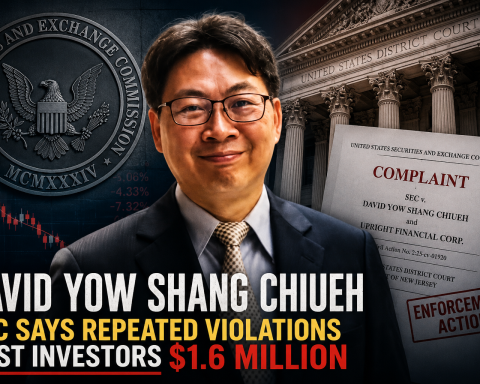
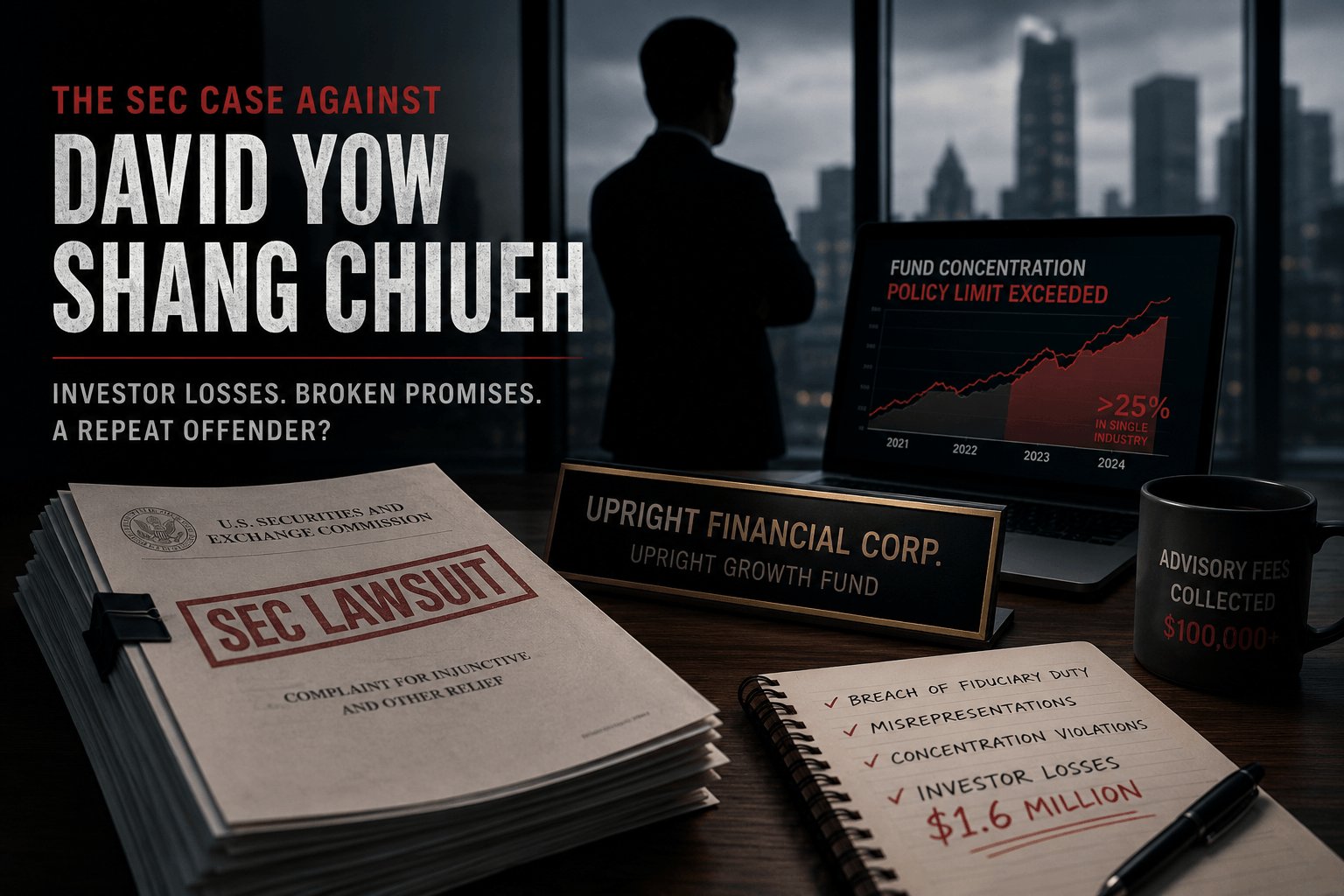
In March 2025, the SEC filed a lawsuit against Chiueh and his New Jersey investment advisory firm, Upright Financial Corp., accusing them of fraud, breaches of fiduciary duty, misleading investors, and ignoring investment restrictions that were supposed to protect shareholders in the Upright Growth Fund. The regulator alleges that the conduct caused approximately $1.6 million in losses to the fund and its investors. What makes the case stand out is not just the amount of money involved. It is the allegation that regulators had already addressed the same issue years earlier.
To understand why the SEC came back with another lawsuit, it is necessary to go back to 2021. That year, Chiueh and Upright Financial settled SEC allegations tied to the management of the Upright Growth Fund. According to regulators, the fund had violated its own concentration policy by placing too much of its money into a single industry between 2017 and 2020. Mutual funds often advertise themselves as diversified investments. Diversification is not just a marketing term. It is supposed to reduce risk by spreading money across different sectors and investments. When too much money is concentrated in one place, investors become vulnerable if that area of the market suffers a downturn.
The SEC’s 2021 settlement was supposed to close that chapter. Regulators said the firm committed fraud and breached fiduciary duties. Chiueh and Upright agreed to settle the matter and were ordered to cease and desist from future violations. The expectation was simple. Learn the lesson, fix the problem, and move on.
The SEC now claims that never happened.
According to the complaint, shortly after the settlement, the fund again exceeded its concentration limits. Regulators allege that from late 2021 through at least June 2024, the fund continued to maintain positions that violated its own policies. The SEC says more than 25 percent of the fund’s assets remained tied to a single company and later remained overly concentrated in the semiconductor industry. Rather than bringing the portfolio back into compliance, regulators allege that the position was allowed to continue for years.
That timeline is critical because it sits at the center of the SEC’s case. The regulator claims that waiting more than two and a half years to unwind the position resulted in losses of approximately $1.6 million. In other words, the SEC is not simply arguing that a technical rule was broken. The agency is arguing that investors paid a real financial price for it.
The allegations become even more serious when the SEC discusses disclosures. According to the lawsuit, investors and the fund’s board were not given an accurate picture of what was happening inside the portfolio. The SEC alleges that misrepresentations were made regarding the concentration issue while the fund remained out of compliance. Regulators further claim that key information was withheld from the board and that certain governance requirements were not properly followed.
For investors, that distinction matters. Bad investments happen all the time. Markets rise and fall. Fund managers make mistakes. The SEC’s allegations go beyond poor judgment. They focus on whether investors were told the truth about the risks being taken with their money.
One of the lesser-known details in the lawsuit involves advisory fees. According to court filings cited by regulators, approximately $100,000 in advisory fees were collected on assets that exceeded the concentration limit. That figure may be small compared to billion-dollar Wall Street scandals, but it adds another layer to the controversy. Critics of the firm’s conduct argue that investors were allegedly paying management fees while being exposed to risks that the fund’s own policies were designed to prevent.
The SEC is seeking injunctions, financial penalties, and the return of allegedly ill-gotten gains. Chiueh and Upright Financial have denied wrongdoing and the allegations remain unproven. No final judgment has been reached. Still, the case has already attracted attention because of the central question hanging over it. If regulators are correct, how does a firm settle allegations involving a specific compliance problem and then allegedly find itself accused of the same misconduct only a short time later?
That question may ultimately define David Yow Shang Chiueh’s legacy far more than any investment performance chart ever could. For now, the case remains active, but the allegations paint a picture of a manager who regulators believe ignored prior warnings, exposed investors to concentrated risks, and left shareholders holding the bill when those risks turned into losses.
————-
Disclaimer:
Some content on Reportingscams.com is published under our guest post program and is provided by third-party contributors. Reporting scams does not create, verify, or take responsibility for the views, accuracy, or claims expressed in such content.