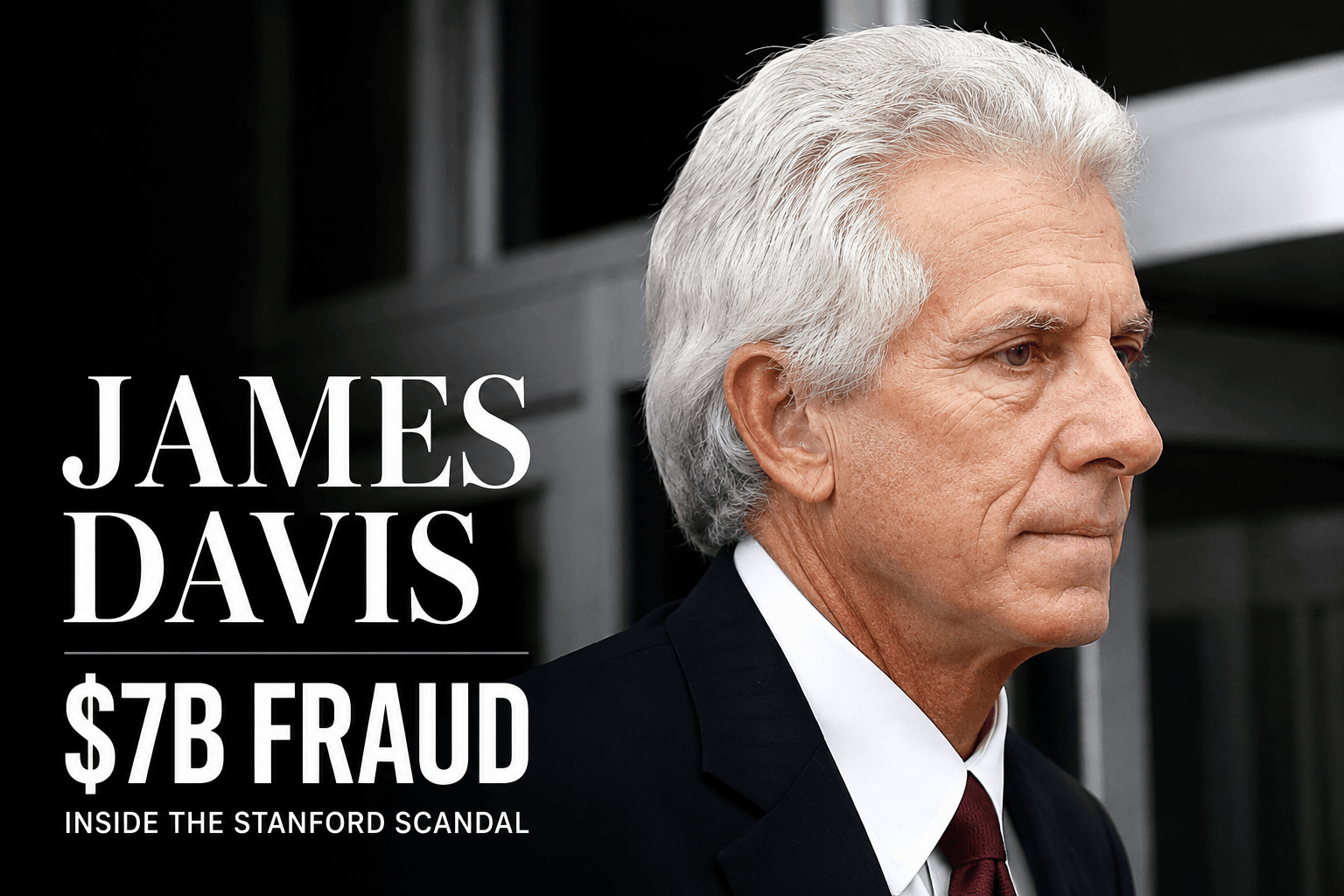
He was the man who knew the numbers before anyone else did, the quiet executive behind one of the biggest financial collapses in modern history, and when the story finally broke, James M. Davis was no longer just a name buried in corporate filings but a central figure in a scandal that wiped out billions and shattered thousands of lives.
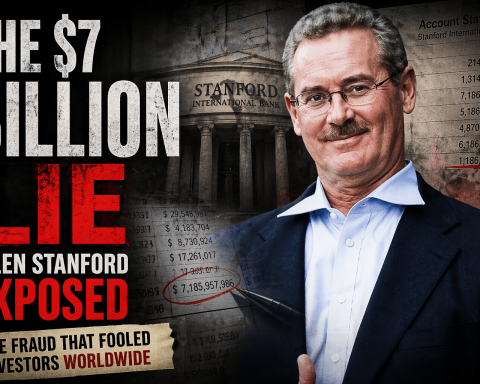
For years, Davis operated at the highest level inside Stanford Financial Group, a sprawling financial empire built by Allen Stanford, a man who projected wealth, influence and credibility with almost theatrical precision. Investors trusted the brand. They trusted the polished image. Most of all, they trusted the numbers. Those numbers, as it later turned out, were fiction.
Davis was not some distant accountant processing paperwork. He was the chief financial officer, the one who saw the real books, the one who understood what money was actually there and what was simply being claimed. That distinction is what makes his role impossible to dismiss as passive. By the time regulators and investigators began circling, Davis had already spent years inside a system that prosecutors would later describe as a multi billion dollar fraud dressed up as a legitimate investment operation.
The pitch was simple and dangerously effective. Investors were offered certificates of deposit with returns that seemed steady, even unusually consistent during times when global markets were anything but. The Antigua based bank at the heart of the operation gave it an offshore layer that made scrutiny more difficult and, for many clients, added a sense of exclusivity. It looked stable. It felt safe. Behind that facade, money was being shuffled, figures were being adjusted, and the gap between reality and representation kept widening.
When the truth began to surface, it did not come out cleanly. It came through pressure, through investigations, and eventually through insiders who could no longer hold the line. Davis became one of those insiders. His decision to plead guilty marked a turning point in the case, not just legally but narratively. The loyal executive became the government’s witness, and in doing so he opened a window into how the operation functioned from the inside.
Court records and reporting painted a picture that was both familiar and unsettling. Financial statements were manipulated. Returns were presented as consistent even when the underlying investments could not support them. New investor funds were used to maintain the illusion of performance. It was not a momentary lapse or a single bad decision. It was a sustained pattern that stretched over years.
Davis admitted to his role. He acknowledged that the numbers being shown to investors did not reflect reality. He described an environment where the truth was known internally but never allowed to reach the outside world. His testimony became a key piece of the prosecution’s case against Stanford, who would later receive a sentence that ensured he would spend decades behind bars.
Yet the shift from insider to witness did not bring sympathy across the board. For many watching the case unfold, especially those who lost money, the distinction between architect and enabler felt thin. Davis had access. He had authority. He was not on the margins of the operation. He was at its core. The idea that he stayed for years and only spoke when the structure began to collapse left a bitter aftertaste.
When he was sentenced to five years in federal prison, the reaction was mixed. Legally, the sentence reflected his cooperation. In practice, it raised uncomfortable questions about accountability in large scale financial crimes. Billions had moved through the system. Thousands of investors had been affected. The damage was not theoretical. It was deeply personal for those who had trusted the operation with their savings, their retirement plans, their financial futures.
Some lost everything. Others spent years in legal battles trying to recover fractions of what they had invested. The headlines focused on the scale of the fraud, but beneath those numbers were stories that rarely made it into official filings. People who had believed they were making conservative investments suddenly found themselves facing uncertainty they never planned for.
Davis’s role sits in a difficult space within that larger story. He was not the public face of the operation, but he was one of the people who kept it running. He understood the mechanics. He saw the discrepancies. He knew that what was being promised could not be delivered in the way it was being presented. That knowledge, more than anything else, defines how his actions are viewed.
What made the story even more complicated was the relationship at the top. James M. Davis was not just an employee working under a distant executive. He and Allen Stanford had known each other for years, and their connection went beyond titles and corporate hierarchy. In court, that history became impossible to ignore. They were described as close allies who built the operation together, with a level of trust that gave Davis access to the most sensitive financial details. Around them sat a tight inner circle of executives and associates who helped sustain the image of stability, even as the reality underneath began to crack. When the case finally reached trial, that same circle unraveled. Former colleagues turned into witnesses, loyalties shifted, and the relationships that once held the empire together became part of the evidence that brought it down.
In the courtroom, there were moments where the narrative seemed to shift. Davis described Stanford as controlling, a figure who dominated the organization and shaped its direction with little room for dissent. It was a portrayal that suggested pressure from the top, an environment where challenging decisions might not have been simple. Even so, prosecutors were clear that participation was not optional in the eyes of the law. Knowing and continuing were enough.
The broader case also highlighted how such operations manage to survive as long as they do. It is rarely about one person acting alone. It is about systems that allow information to be controlled, about structures that limit transparency, about environments where questioning the narrative carries risk. Davis was part of that system, and for a long time, he helped sustain it.
His eventual cooperation did help expose the full scope of what had happened. Without insiders, cases like this often take longer to unravel, and sometimes they never fully do. That cooperation, however, does not rewrite the years that came before it. It simply adds another layer to a story that was already complex.
There have been other cases, other investigations, other individuals with similar access who have found themselves in comparable positions. The pattern tends to repeat. A trusted executive, a system that rewards silence, a gradual drift from aggressive practices into outright deception. By the time it becomes visible from the outside, the damage is already deep.
What makes the Stanford case stand out is its scale and the clarity that eventually emerged. It was not a gray area dispute about financial interpretation. It was a collapse that revealed a structure built on misrepresentation. Davis’s own admissions removed any lingering ambiguity about what was happening behind the scenes.
Today, his name remains tied to that moment. Not as the mastermind, but as someone who stood close enough to see everything and stayed long enough to become part of it. His testimony helped bring down the larger operation. His actions before that helped keep it alive.
In the end, the story does not resolve neatly. It does not offer a clean division between villain and whistleblower. It sits somewhere in between, shaped by decisions made over time rather than a single defining act. For those who followed the case closely, that is what makes it linger. Not just what happened, but how long it was allowed to continue and who chose to let it happen.
James Davis was inside one of the largest financial frauds in recent history. He knew what it was. He helped maintain it. And when it finally collapsed, he became one of the voices that explained it.
————-
Disclaimer:
Some content on Reportingscams.com is published under our guest post program and is provided by third-party contributors. Reporting scams does not create, verify, or take responsibility for the views, accuracy, or claims expressed in such content.