The Green Dream That Turned Into a $248 Million Collapse
It looked like the perfect story. A fintech built on climate values. Clean money. Ethical banking. A founder who positioned himself as someone trying to fix the system from the inside. For years, that image held strong.
Now that image is gone.
What is left is a federal fraud case, a guilty plea, and a trail of investors who say they were sold something that did not exist the way it was presented.
Who is Joseph Sanberg
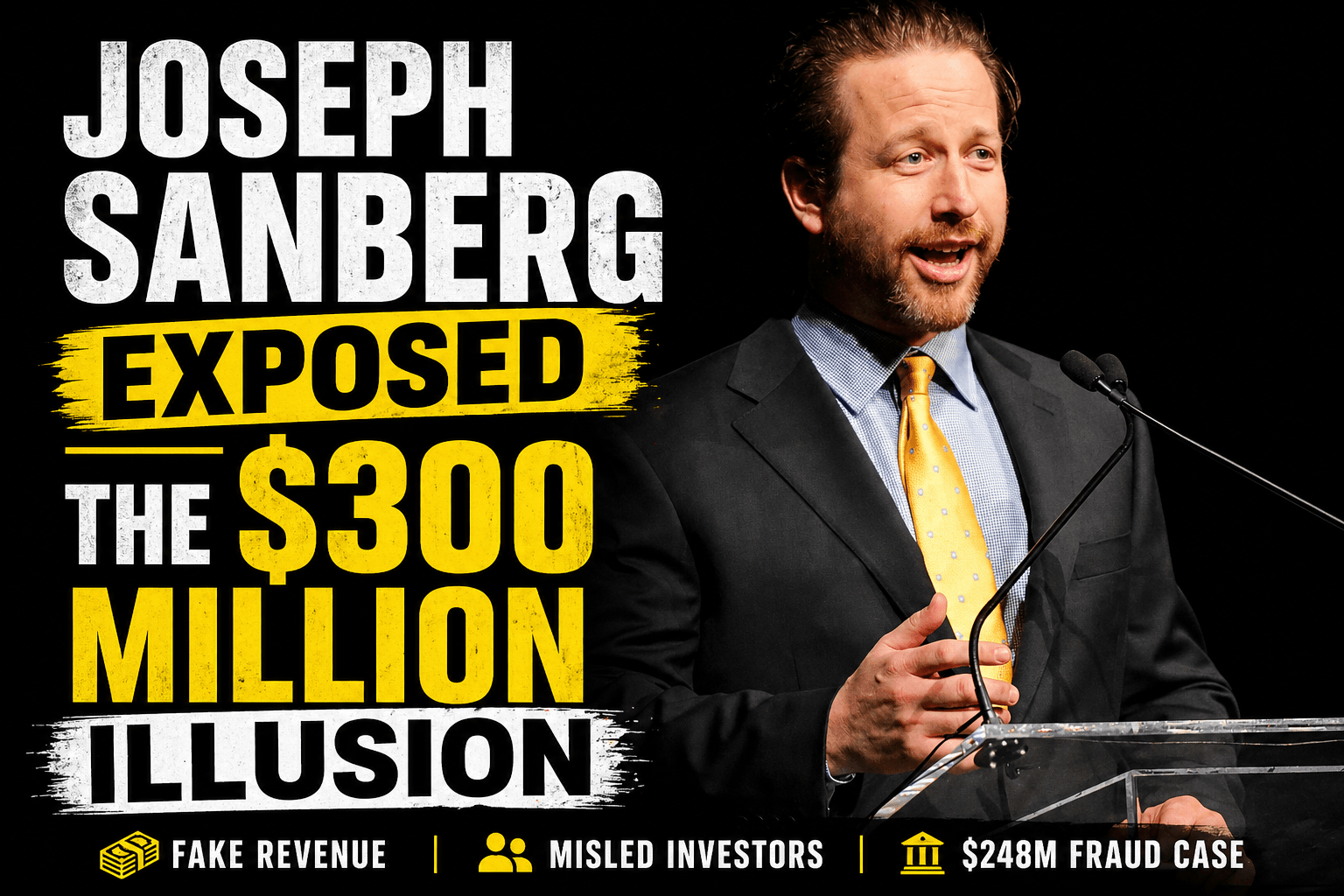
Joseph Sanberg built his public identity around impact. He was known as the co founder and former board member of Aspiration Partners, a fintech company that marketed itself as a climate conscious alternative to traditional banking. The pitch was simple and powerful. Banking could be good for the planet. He was convicted for helping defraud investors and banks of $248 million as the co-founder of Aspiration, Inc.
Aspiration pushed services tied to sustainability. Tree planting programs. Carbon offsetting. Financial tools that claimed to align with environmental values. It attracted both retail users and large investors who were looking for ESG driven opportunities.
For a while, it worked. The company gained attention, raised serious capital, and even moved toward going public through a SPAC deal.
But authorities now say the version of Aspiration that investors believed in did not match what was actually happening behind the scenes.
The Foundation of a Carefully Built Image
Aspiration was not just selling financial services. It was selling a belief system.
The branding was deliberate. Clean money. Climate impact. A different kind of bank. It made people trust the company before they even looked at numbers. That kind of positioning gave it an edge in a crowded fintech market.
Investors were not just evaluating a business. They were buying into a mission.
That trust became leverage. The stronger the narrative became, the easier it was to bring in capital. And as the company moved into larger funding rounds, expectations around growth and performance increased.
According to regulators, that is where the gap began to form. The story stayed strong. The numbers started drifting.
2020 to 2025 When Things Started Breaking
Authorities say this was not a one time misstep. It was a pattern that developed over several years.
Between 2020 and 2025, Sanberg allegedly used his position to build credibility and then used that credibility to raise funds under conditions that did not reflect the actual financial state of the company.
From the outside, everything looked stable. Funding rounds continued. Partnerships were announced. The company appeared to be growing.
Underneath that surface, regulators say the structure was already weakening.
The $145 Million Loan Story
One of the central pieces of the case revolves around a loan of roughly $145 million.
The loan was backed by Aspiration stock. On paper, the financial position supporting that loan looked strong. That is what made lenders comfortable moving forward.
But authorities allege that the financial picture presented to secure that loan was not accurate.
Ibrahim AlHusseini is named as someone who helped shape that picture. Asset values were allegedly inflated to make the company appear stronger than it actually was.
The documentation passed scrutiny at the time. That is what allowed the deal to go through. The issue was that the underlying value did not match what was being shown.
That gap is what later triggered scrutiny.
The Fake Revenue That Looked Real
This is where the case moves from questionable to serious.
Between January 2021 and December 2022, as Aspiration was pushing toward a public listing, there was pressure to show strong revenue growth.
The company promoted its environmental services heavily. Customers could offset their carbon footprint. They could contribute to tree planting efforts. It looked like a scalable model tied to global concerns.
According to the SEC, a significant portion of that activity was not genuine revenue.
Some of the customers presented as paying users were not actually paying. Instead, funds were allegedly routed from accounts controlled by Sanberg to simulate real transactions.
Money moved in a loop. It entered the system and then appeared as revenue.
On paper, it looked like growth. In reality, regulators say it was engineered.
The $300 Million That Came In
With those numbers in place, raising money became easier.
More than $300 million was secured from investors who believed they were backing a company with real traction. The financials showed demand. The branding added credibility. The timing aligned with growing interest in ESG investments.
But the underlying performance did not fully match what was being presented.
Authorities also say that during this period, Sanberg received significant personal compensation tied to that perceived growth.
That means the stronger the numbers looked, the more he stood to gain.
The Real Cost Behind It
When the structure started to break, the losses became clear.
Investors and lenders were left facing losses estimated at around $248 million. That is not just a paper loss. It reflects money that was committed based on a version of the company that regulators now say was misleading.
There were also direct financial benefits tied to individuals involved in the scheme. One co-conspirator is linked to gains of around $12.3 million.
The gap between perception and reality did not just affect reputation. It translated into real financial damage.
The Guilty Plea
In federal court in Los Angeles, Joseph Sanberg pleaded guilty to two counts of wire fraud.
Each count carries a potential sentence of up to 20 years. That places his maximum exposure at 40 years in prison.
Sentencing is scheduled for February 23, 2026.
His legal team acknowledged that he crossed legal boundaries while trying to build a successful company. That statement does not dispute the core allegations. It confirms that the line between aggressive growth and fraud was crossed.
The NBA Angle That Pulled Attention
The story did not stay inside the financial world.
Aspiration entered into a $300 million sponsorship deal with the Los Angeles Clippers in 2021. Around the same time, a separate $28 million deal was signed with Kawhi Leonard.
Steve Ballmer also invested $50 million into the company.
Those deals brought mainstream visibility. They also added another layer of scrutiny.
The NBA is now examining whether any of these arrangements were structured in a way that could have implications under league rules. That part is still developing, but it has expanded the scope of attention beyond regulators.
Modus Operandi According to Authorities
What stands out in this case is not just what happened, but how it allegedly happened.
The strategy appears to follow a pattern. Build a strong public narrative. Use that narrative to attract trust. Translate that trust into capital. Then use internal mechanisms to support the image of growth.
It is not about one inflated number. It is about maintaining a version of reality that investors continue to believe.
By the time the gaps become visible, the scale is already large.
What This Really Comes Down To
This is not just another startup collapse.
It is a case about how perception can overtake reality when there is enough belief behind a story. Aspiration positioned itself as a company that was doing good while doing business. That made it easier for people to trust it.
According to regulators, that trust was used in ways that did not match the underlying facts.
The environmental angle made the company feel different. The growth numbers made it look successful. Together, they created a narrative that was hard to question.
Until the numbers were examined closely.
What remains now is a company that once represented a new way of banking, a founder who admitted to fraud, and investors trying to understand how a $248 million gap was built without being noticed earlier.
Source:
https://www.espn.in/nba/story/_/id/46665460/aspiration-co-founder-joseph-sanberg-pleads-guilty-wire-fraud
https://www.justice.gov/opa/pr/aspiration-partners-co-founder-charged-and-agrees-plead-guilty-248m-scheme-defraud-investors
https://www.sec.gov/enforcement-litigation/litigation-releases/lr-26382|
https://www.nytimes.com/athletic/6736694/2025/10/21/aspiration-joe-sanberg-guilty-plea/
————-
Disclaimer:
Some content on Reportingscams.com is published under our guest post program and is provided by third-party contributors. Reporting scams does not create, verify, or take responsibility for the views, accuracy, or claims expressed in such content.