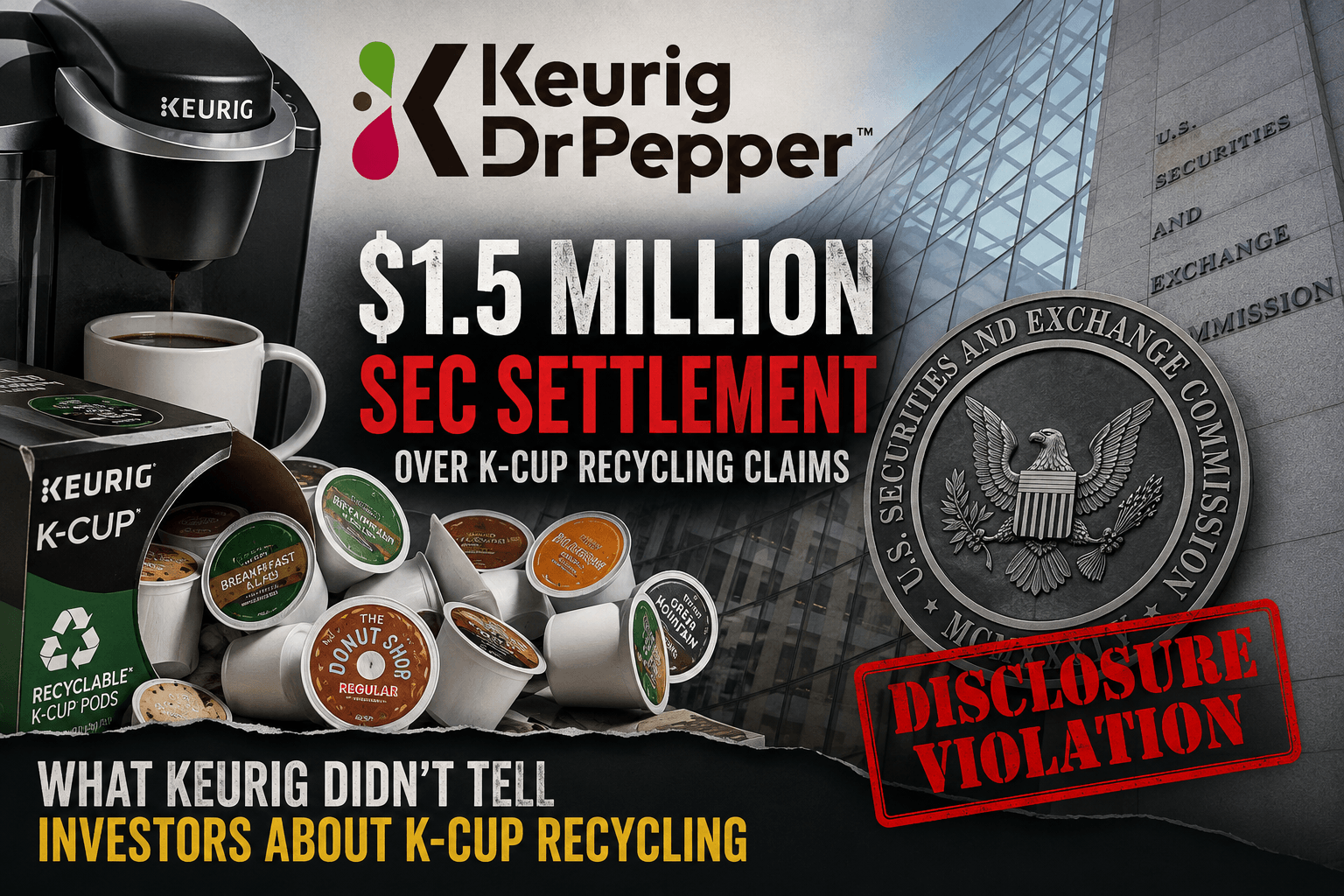
Keurig Dr Pepper built one of the most recognizable single-serve coffee businesses in the world on a promise of convenience. Millions of consumers embraced the company’s Keurig brewing machines and K-Cup pods, helping transform a simple cup of coffee into a multi-billion-dollar business. But in September 2024, that success story ran into regulatory trouble when the U.S. Securities and Exchange Commission accused the beverage giant of providing investors with an incomplete picture about one of the company’s most heavily scrutinized environmental claims: whether its K-Cup pods could actually be recycled.
The case did not involve accounting fraud, insider trading, or the type of corporate misconduct that often dominates financial headlines. Instead, it centered on a growing area of concern for regulators and investors alike: environmental claims made by public companies. According to the SEC, Keurig Dr Pepper’s annual reports for fiscal years 2019 and 2020 told investors that testing with recycling facilities had validated that K-Cup pods could be effectively recycled. What investors were not told, regulators said, was that two of the largest recycling companies in the United States had already expressed significant concerns about the commercial feasibility of recycling those pods through curbside programs and had indicated they did not intend to accept them at the time.
The SEC concluded that those omissions made the company’s disclosures incomplete and therefore misleading. On September 10, 2024, the agency announced settled charges against Keurig Dr Pepper, alleging violations of Section 13(a) of the Securities Exchange Act and related reporting rules that require public companies to provide complete and accurate information in their filings. As part of the settlement, Keurig agreed to pay a $1.5 million civil penalty and accepted a cease-and-desist order. The company neither admitted nor denied the SEC’s findings, a common outcome in regulatory settlements.
At the center of the controversy was a long-running debate over the environmental impact of K-Cups. Environmental advocates had criticized the pods for years because they generate significant single-use plastic waste. In response, Keurig spent years redesigning its pods and eventually transitioned them to polypropylene, commonly known as #5 plastic, which the company described as recyclable. By 2020, Keurig publicly celebrated the achievement of making all K-Cup pods recyclable. The company’s sustainability messaging became an important part of its public image as consumers increasingly weighed environmental concerns when making purchasing decisions.
The SEC’s investigation revealed a more complicated reality. Beginning around 2016, Keurig conducted tests at recycling facilities and gathered feedback from recycling industry participants. While those tests suggested the pods could technically move through parts of the recycling stream, regulators said major recyclers questioned whether curbside recycling of the pods was commercially practical. According to the SEC, Keurig’s filings highlighted positive testing results without informing investors about the significant concerns raised by key industry players. The agency argued that once the company chose to discuss recyclability in its annual reports, it had an obligation to provide the information necessary for investors to understand the full picture.
The SEC also noted that environmental considerations mattered to consumers and investors. Research conducted by a Keurig subsidiary had previously found that environmental concerns were among the factors some consumers considered when deciding whether to purchase a Keurig brewing system. At the same time, K-Cup pod sales represented a significant portion of revenue within the company’s coffee systems segment. Regulators therefore viewed the omitted information as potentially important to investors evaluating the business and its sustainability claims.
Keurig Dr Pepper pushed back on the broader implication that its pods were not recyclable. After the settlement, a company spokesperson stated that K-Cup pods are made from recyclable polypropylene plastic and are widely accepted in many curbside recycling systems across North America. The company said it was pleased to resolve the matter and emphasized that consumers should always check whether their local recycling programs accept the pods because acceptance varies significantly by community.
The case also sparked debate within regulatory circles. SEC Commissioner Hester Peirce publicly dissented from the agency’s decision, arguing that the Commission had misinterpreted Keurig’s statements and overreacted. Her dissent highlighted ongoing disagreements within the SEC over how aggressively regulators should police corporate environmental disclosures and sustainability claims. While the majority of commissioners supported the enforcement action, the disagreement underscored the legal gray areas companies face when discussing environmental performance and recyclability.
Although the $1.5 million penalty attracted headlines, it represented only a tiny fraction of Keurig Dr Pepper’s overall business. The company, formed through the 2018 merger of Keurig Green Mountain and Dr Pepper Snapple Group, generates billions of dollars in annual revenue and owns a portfolio that includes brands such as Dr Pepper, 7UP, Snapple, Canada Dry, Green Mountain Coffee, The Original Donut Shop, and numerous beverage and coffee products. The settlement had little visible impact on the company’s financial position, but it added to growing regulatory scrutiny of environmental marketing claims often described as “greenwashing.”
The matter did not involve criminal charges, investor restitution, allegations of accounting manipulation, or accusations that company executives personally profited from the disputed statements. No executives were individually charged. Public filings identify key leadership figures during the period, including CEO Robert Gamgort, who led the company through much of its growth and sustainability initiatives. The SEC’s action focused solely on the company’s disclosures and reporting obligations as a public issuer.
Still, the controversy arrived at a time when environmental disclosures have become increasingly important to investors. Regulators worldwide are paying closer attention to claims involving sustainability, carbon footprints, recycling, and environmental impact. Companies that promote environmentally friendly products are facing pressure not only to ensure those claims are technically accurate but also to provide complete context about any limitations or challenges. The Keurig settlement serves as another example of how regulators are moving beyond traditional financial reporting issues and examining whether environmental statements could influence investor decisions.
For consumers, the case highlighted the difference between a product being technically recyclable and actually being recycled in practice. A material may be recyclable under certain conditions, but if local recycling systems do not accept it or lack the infrastructure to process it economically, the real-world outcome can be very different. That distinction sat at the heart of the SEC’s allegations and remains a central issue in broader debates about sustainable packaging.
The Keurig case ultimately was not about whether the company invented false test results or ran a fraudulent scheme. It was about what information investors were given and what information was left out. The SEC’s message was straightforward: when public companies choose to discuss environmental achievements, they must provide enough context for investors to understand both the strengths and the limitations of those claims. As environmental, social, and governance issues continue to influence investment decisions, this settlement may prove to be one of the clearest warnings yet that incomplete sustainability disclosures can carry real regulatory consequences, even when the underlying product itself may technically meet the standard being advertised.
————-
Disclaimer:
Some content on Reportingscams.com is published under our guest post program and is provided by third-party contributors. Reporting scams does not create, verify, or take responsibility for the views, accuracy, or claims expressed in such content.