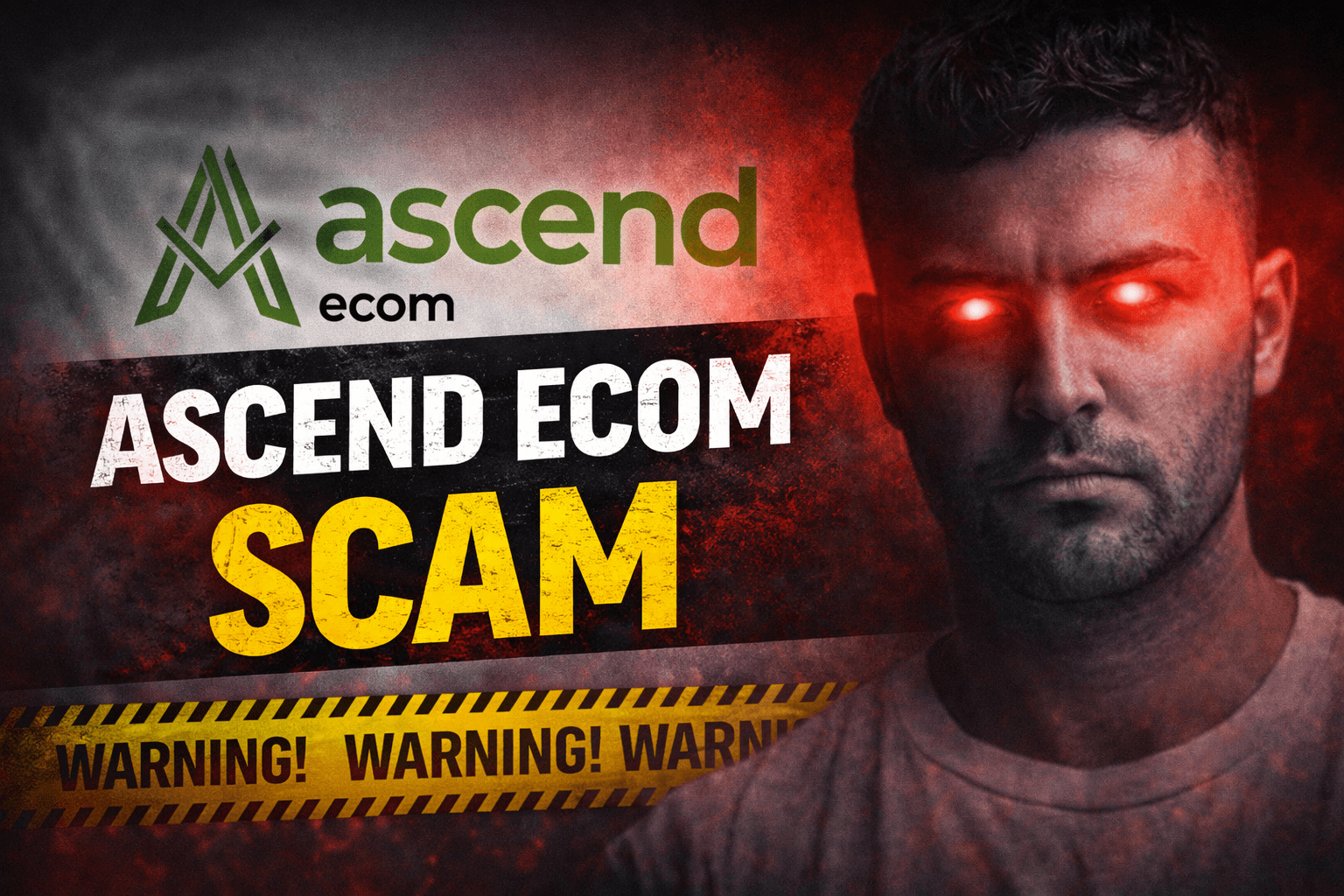
What is Ascend Ecom?
Ascend Ecom is a company by Jeremy Kenneth Leung and William Michael Basta that sold what it called a done for you ecommerce business. The idea was simple and easy to understand. People were told they could own an online store without needing to learn how ecommerce actually works. The company positioned itself as a complete solution where everything would be handled internally. It claimed to use artificial intelligence to run and grow these stores, which made the whole system feel advanced and reliable. Customers were required to pay large upfront amounts to get started, often putting in serious money with the expectation that it would turn into steady income. Over time, regulators began to question whether those expectations were realistic. The company eventually became the focus of a major case brought by the Federal Trade Commission.
How it pulled people in
The way Ascend Ecom was presented made a big difference in how people reacted to it. It did not feel like something risky or uncertain. It felt structured and thought out. The messaging removed hesitation almost completely. You did not need experience, you did not need to manage anything, and you did not need to spend time learning the business. Everything would be taken care of while you watched it grow.
For a lot of people, especially those looking for a way out of routine work, that idea hit the right spot. It felt like a shortcut that actually made sense. Something that had already been figured out.
That is what made it so effective. People were not just buying into ecommerce. They were buying into the feeling that this could finally work for them without all the usual struggle that comes with starting something new. For a while, that belief carried everything forward.
FTC: When regulators stepped in
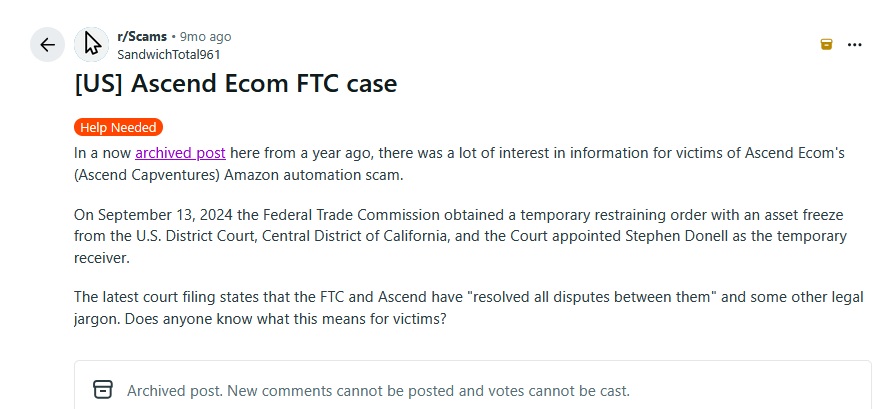
Things started to change when the Federal Trade Commission got involved. Up until that point, this looked like just another online business opportunity. Once regulators stepped in, it became clear that something deeper was going on. The FTC looked at how the program was being sold and compared it with what customers were actually experiencing. What they found raised serious concerns. According to the case, the income claims being made did not match real results. The idea of consistent earnings did not hold up when you looked at what people were actually getting.
The use of artificial intelligence was another big part of the issue. It was presented as the reason the system would work, but there was not enough evidence to support those claims.
This was not treated as a minor issue. The response was strong. Assets were frozen, operations were disrupted, and control of the business was taken away. That kind of action usually means regulators believe there is ongoing risk to consumers.
At that point, the entire narrative shifted. What was once marketed as a smart opportunity was now being examined as a serious consumer problem.
Why the Amazon angle mattered
One of the biggest reasons people trusted Ascend Ecom was its connection to Amazon. For most people, Amazon already feels safe and reliable. It is something they use regularly, so they do not question it.
When the business was presented as an Amazon store that would be managed for you, it made everything feel more legitimate. It reduced doubt right away.
But the reality was different. Amazon itself was not running this. It was simply the platform being used. The service being sold was separate from Amazon, even though it was built around it.
This approach has been seen in many similar setups. Using a well known platform creates a sense of trust that carries through the entire pitch. It makes people more comfortable saying yes.
That is exactly what happened here.
The money people put in
The financial side is where things start to get serious. People were not putting in small amounts. Many were asked to invest tens of thousands just to get started. That alone was a big commitment.
But it did not stop there. Additional money was often required for inventory, advertising, and other ongoing costs. By that point, most people were already too invested to step back.
The expectation was simple. Put in money now and the system will generate returns later. For many people, that expectation never became reality. Instead of seeing income come in, they were left dealing with expenses and uncertainty.
That is where the pressure really started to build.
When reality started to hit
This is where things began to shift for customers. Once their stores were up and running, the results did not match what they had been told. Sales were slow or not happening at all. The kind of steady income that was discussed during the sales process was missing.
At first, some people assumed it just needed more time. That it would pick up eventually. But as weeks turned into months, that belief started to fade.
Questions started coming up. Customers began asking what was going wrong and what could be done to fix it. That is when complaints started to become more visible.
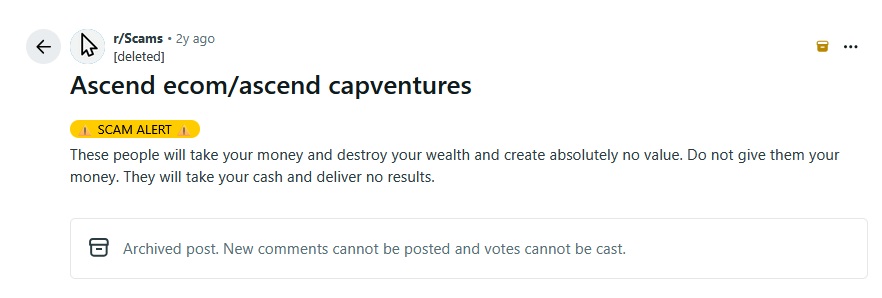
Another layer to this came from independent reviews online. In one detailed video breakdown, the creator goes through the Ascend Ecom model and questions how it actually works once you are inside. The system is presented as simple and automated, but the review points out that there are still risks, ongoing costs, and a lot of uncertainty involved. The idea of passive income is challenged, especially when the upfront investment is so high. What stands out is the gap between how easy it sounds during the pitch and how unpredictable it can be in reality. That perspective lines up with what many customers were already experiencing.
Some people struggled to get refunds. Others felt like their concerns were not being taken seriously. In certain cases, negative feedback was not welcomed, which added another layer of frustration.
What started as excitement slowly turned into doubt, and then into concern.
$25M: What that number really represents
The figure attached to this case is 25 million dollars. It is a big number, but it is important to understand what it actually means.
It represents real people who believed they were stepping into a working business. People who trusted the process enough to invest significant money. People who expected something stable in return.
The legal outcome reflects that impact. A judgment was issued, assets were taken, and steps were made to return money to those affected. The individuals behind the business were also restricted from operating similar opportunities again.
That kind of action shows how serious the situation was. It is not just about the number itself. It is about what that number represents.
The people behind Ascend Ecom
At the center of everything are two individuals: Jeremy Kenneth Leung and William Michael Basta
They were not just connected to the company. According to the case, they were running it. Their roles were directly tied to how the business operated and how it was presented to customers.
Jeremy Kenneth Leung : The operational side of the business
So who is Jeremy Kenneth Leung? He was closely involved in the day to day side of the operation. He was not someone sitting in the background. He was part of how the business actually functioned.
He appeared in marketing content and was involved in communication with customers. That means he was connected both to how the business was sold and how it was managed after people joined.
According to the case details, he was aware of issues inside the business. These included store performance problems and customer dissatisfaction. Even with that awareness, the core promises being made to new customers stayed the same.
There are also claims about how complaints were handled. Some customers who raised concerns were reportedly pressured, including being asked to remove negative feedback.
This gives a picture of someone who was deeply involved in both the operation and the customer experience.
William Michael Basta : The front facing and revenue side
William Michael Basta played a role that was more visible from the outside. He was involved in how the opportunity was presented and sold to customers.
He appeared in marketing materials and was part of the messaging around income potential. That placed him right at the front of the decision making stage for many buyers.
He also had access to the financial side of the business, which shows his involvement went beyond just communication. He was connected to how the operation was structured internally.
According to the case, he was aware of customer complaints and issues related to performance and refunds. Despite that, the messaging used to bring in new customers remained the same.
That gap between what was known and what was being presented is a key part of the overall story.
The structure behind them
The business itself was not just one company. It operated through multiple entities that were connected behind the scenes. These entities shared resources, finances, and operations.
From the outside, it made the whole system look larger and more established. Internally, it functioned as one coordinated operation.
This kind of structure can make it harder for customers to fully understand how everything is connected and who is responsible for what.
The AI narrative that sold the idea
The use of AI played a big role in making the offer feel modern and reliable. It gave the impression that the system was smart and capable of making the right decisions automatically.
Customers were told the technology would handle key parts of the business, from product selection to performance optimization. It made success feel almost built in.
The FTC challenged those claims. According to the case, the results did not support the way the technology was being presented.
This shows how the marketing of these kinds of opportunities has evolved. It is not just about making promises anymore. It is about backing those promises with language that sounds technical and convincing.
The bigger picture
If you step back, Ascend Ecom is part of a larger pattern. Similar models keep appearing in the ecommerce space, all built around the idea of making money without needing to understand the process.
The structure feels familiar. A high upfront investment, minimal involvement required, and strong claims about potential returns.
What has changed is how it is presented. Now it comes wrapped in automation and AI, which makes it feel more believable.
But for many people, the outcome ends up looking the same.
Final thought
As per Public reviews & News, Ascend Ecom look like an obvious risk. It felt modern, structured, and well put together. That made people trust it.
Once you look past the surface, the difference becomes clear. What was promised did not match what most people experienced, and for many, that difference came at a real cost.
Source:
https://www.ftc.gov/news-events/news/press-releases/2025/06/ftc-case-leads-order-banning-ascend-ecom-its-owners-business-opportunity-marketing
https://www.cnbc.com/2024/09/25/amazon-automation-scammers-sued-by-ftc-for-false-claims-death-threats.html
www.vitallaw.com/news/consumer-protection-news-ftc-secures-25-million-settlement-against-ascend-ecom-for-allegedly-defrauding-consumers-with-false-ai-business-claims/ald017f5a1916f95d48d0a3cdccb44bff1bb5
https://www.ftc.gov/system/files/ftc_gov/pdf/2423023ascendecomcomplaint.pdf
https://www.reddit.com/r/Scams/comments/1lq1j1p/us_ascend_ecom_ftc_case/
https://www.reddit.com/r/Scams/comments/18f3y97/ascend_ecom_capventures_acv_partnersai/
https://www.reddit.com/r/Scams/comments/1r9hujq/us_ascend_solutions_llc/
https://www.reddit.com/r/Scams/comments/1c71oau/ascend_ecomascend_capventures/
https://www.youtube.com/watch?v=U8D-tuOn4ZI
————-
Disclaimer:
Some content on Reportingscams.com is published under our guest post program and is provided by third-party contributors. Reporting scams does not create, verify, or take responsibility for the views, accuracy, or claims expressed in such content.