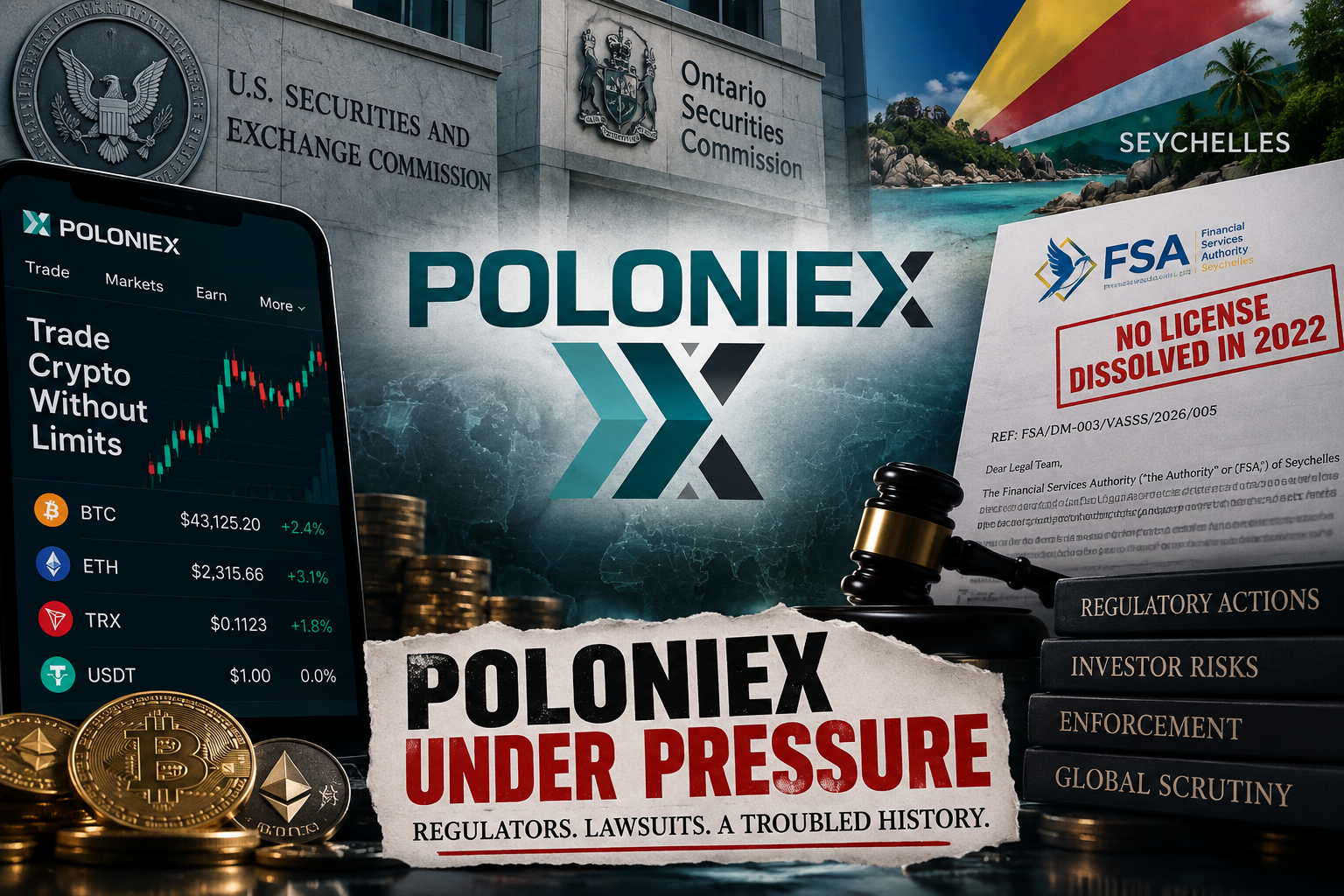
Poloniex has spent much of its history operating at the edge of the regulatory map. The cryptocurrency exchange was founded in 2014 by Tristan D’Agosta, later acquired by Circle, and then spun out in 2019 into a Seychelles-incorporated company called Polo Digital Assets Ltd. That corporate structure has since become part of the story itself: regulators in the United States and Canada have taken enforcement action against different Poloniex entities, while Seychelles now says the company that once claimed the jurisdiction as its corporate home was dissolved in 2022 and never held a virtual-asset licence.
The latest warning came from the Seychelles Financial Services Authority. In a January 20, 2026 letter supplied for this report, the regulator told OffshoreAlert that Polo Digital Assets Ltd., trading as Poloniex, had been incorporated in Seychelles but was later struck off and dissolved in 2022. The FSA said describing the company as presently based or founded in Seychelles was inaccurate and stressed that Polo Digital Assets Ltd. had never been licensed or authorized under Seychelles’ virtual-asset regulatory framework. In a separate public warning dated March 25, 2026, the FSA went further, stating that Polo Digital Assets Ltd. was no longer a legal entity and that the Poloniex website was allegedly being operated by a company that had never received authorization under the Virtual Asset Service Providers Act.
That does not mean Poloniex disappeared. The platform remains technically active. Its current API documentation shows live trading infrastructure and continued development into 2026, including wallet and transfer functionality. The important distinction is between the continuing Poloniex brand and the legal status of the Seychelles company that regulators have associated with it. Public information reviewed for this report does not establish that Polo Digital Assets Ltd. itself remains a valid Seychelles operating company.
The regulatory record stretches back well before that dissolution. In May 2021, the Ontario Securities Commission accused Polo Digital Assets of operating an unregistered crypto trading platform accessible to Ontario residents. The regulator said Poloniex had failed to register as required and had not filed a prospectus or obtained an exemption. The allegations followed an explicit March 29, 2021 warning to crypto platforms that they needed to bring securities and derivatives operations into compliance. Poloniex did not contact the OSC by the April 19 deadline, according to the regulator.
The Ontario case ultimately became more serious than an allegation. In October 2022, the Capital Markets Tribunal found that Polo Digital had traded securities without registration and distributed securities without a prospectus. The company did not participate in the final written hearing after its lawyers were removed as counsel, and the Tribunal proceeded in its absence. The panel imposed permanent market-participation bans, a C$1.5 million administrative penalty, disgorgement of US$1,825,417.89 and C$138,371.50 in investigation and hearing costs.
The money trail was unusually clear. Polo Digital told Ontario regulators that approximately 9,300 Ontario accounts existed as of July 24, 2021. The company also reported that revenue generated from Ontario users since Poloniex’s inception in 2014 was US$1,825,417.89. The Tribunal concluded that those fees were obtained through activity that violated Ontario securities law and ordered the entire amount disgorged. It specifically noted that it had no evidence establishing what losses Ontario investors had suffered, meaning the disgorgement figure should not be confused with proven investor losses.
The Tribunal’s findings also provide a revealing picture of the platform’s business model. Investors deposited cryptocurrency into wallets controlled by Poloniex rather than holding the assets directly. They depended on the exchange to honor withdrawals, while the platform offered spot trading, margin trading and perpetual futures. The Tribunal concluded that those contractual arrangements constituted securities under Ontario law and noted that customers lacked deposit insurance, did not control the assets while they were on the platform and were encouraged to undertake high-risk trading, including margin transactions.
The United States had already reached a separate conclusion. In August 2021, the Securities and Exchange Commission announced that Poloniex LLC had agreed to pay US$10.388 million to resolve charges that it operated an unregistered digital-asset exchange between July 2017 and November 2019. The SEC’s order found that Poloniex facilitated trading in digital assets that included investment contracts considered securities, without registering as a national securities exchange or qualifying for an exemption. The regulator also said internal employees had pushed to be aggressive in listing new assets, including assets that might qualify as securities, because of the commercial benefits.
Poloniex did not admit the SEC’s findings. The settlement was entered without admitting or denying them and consisted of US$8.484 million in disgorgement, US$403,995 in prejudgment interest and a US$1.5 million civil penalty. The SEC established a Fair Fund for investors. By April 2026, the agency had approved distributions totaling more than US$4.6 million to eligible investors from that fund, including a US$4.584 million distribution in November 2024 and another US$17,266 distribution in April 2026.
A separate U.S. sanctions case added another layer. In May 2023, the Treasury Department’s Office of Foreign Assets Control announced a US$7.591 million settlement with Poloniex LLC. OFAC said that from January 2014 through November 2019, the exchange allowed customers apparently located in Crimea, Cuba, Iran, Sudan and Syria to conduct digital-asset transactions worth a combined US$15.335 million, despite information from customer identification and IP data indicating their locations. OFAC described the conduct as apparent violations and said it was neither voluntarily disclosed nor egregious.
The exchange has also had a major security failure. In November 2023, Poloniex suffered a compromise of hot wallets across Ethereum, Tron and Bitcoin. Blockchain-security researchers estimated the losses at roughly US$123 million to US$132 million, depending on valuation and methodology. Poloniex said it had frozen some assets and promised to fully reimburse affected users, adding that its operating revenue could cover the losses. A definitive independent public accounting of all repayments has not emerged.
The incident generated another uncomfortable question about the ecosystem surrounding the exchange. Investigators and blockchain analysts widely linked the attack to North Korea’s Lazarus Group, although attribution of the specific Poloniex theft is not equivalent to a criminal conviction against Poloniex or its operators. Some stolen funds were subsequently moved through Tornado Cash, including a reported US$3.4 million transfer in 2024.
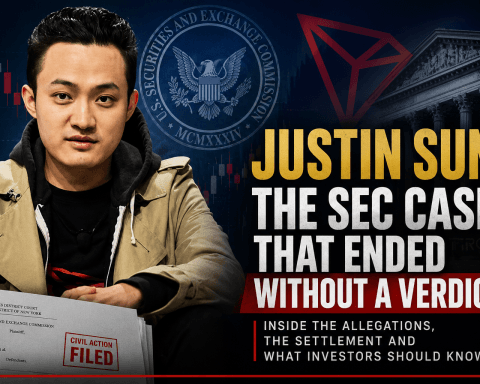
Poloniex’s ownership history points toward Justin Sun, the founder of the TRON blockchain. Circle announced in October 2019 that Poloniex was spinning out into Polo Digital Assets Ltd. with backing from an Asian investment group. Sun subsequently confirmed that he was part of the investment group acquiring the exchange. Sun’s full name is Yuchen Sun, also known publicly as Justin Sun. He remains a prominent figure in the TRON and wider crypto industry, but the public record reviewed here does not establish that he personally committed the regulatory violations found against Poloniex.
There are, however, newer legal proceedings involving Sun and Polo Digital Assets. In August 2025, the PCT Litigation Trust created through the bankruptcy of Prime Trust’s parent companies sued Yuchen “Justin” Sun and Polo Digital Assets Ltd. in Delaware bankruptcy court, seeking to recover alleged preferential transfers under the U.S. Bankruptcy Code. The complaint seeks recovery of transfers made by Prime entities to or for the benefit of the defendants; OffshoreAlert reported the claimed value at about US$9 million. Sun moved to dismiss the case, including on personal-jurisdiction grounds. In March 2026, the bankruptcy court stayed discovery pending resolution of that motion, while allowing limited jurisdictional discovery. The case therefore remains unresolved, and the allegations have not been adjudicated.
There is another civil case worth separating from the regulatory findings. In England, businessman Fabrizio D’Aloia sued several cryptocurrency exchanges after alleging that he had been defrauded of roughly £2.5 million in cryptocurrency. Polo Digital Assets Inc. was among the defendants. The 2024 High Court proceedings primarily concerned another exchange, Bitkub; the case should not be presented as a finding that Poloniex participated in the fraud. Similarly, Poloniex and Polo Digital Assets were named as defendants in a U.S. cryptocurrency-fraud lawsuit brought by Divya Gadasalli after she alleged losses exceeding US$8 million in a romance-investment scam. A 2023 court ruling dealt with Binance’s motion to dismiss and left claims against the other defendants standing at that stage; it did not establish that Poloniex committed the alleged fraud.
What emerges is not a simple story of a company being convicted of fraud. There is no criminal conviction of Poloniex identified in the sources reviewed for this report. The strongest established findings are regulatory: the SEC found an unregistered exchange operation; Ontario’s tribunal found breaches of securities law and imposed permanent bans and financial sanctions; and OFAC settled apparent sanctions violations. In each instance, the legal posture matters. The SEC matter was settled without an admission or denial. The Ontario findings were adjudicated after Polo Digital stopped participating in the hearing. The OFAC case concerned civil sanctions liability, not a criminal conviction.
The more immediate issue in 2026 is the gap between the brand and the corporate structure behind it. Seychelles says Polo Digital Assets Ltd. was dissolved and never licensed there, while the Poloniex platform continues to operate internationally. At the same time, Sun and Polo Digital Assets face a fresh bankruptcy-related lawsuit in the United States. For customers, the lesson is less about whether one exchange deserves a particular label and more about understanding who legally holds their assets, which jurisdiction actually regulates the service and what protections exist if the platform fails. In crypto, a familiar brand can survive several corporate structures, regulatory actions and even a major hack. What does not automatically survive is the customer’s protection.
————-
Disclaimer:
Some content on Reportingscams.com is published under our guest post program and is provided by third-party contributors. Reporting scams does not create, verify, or take responsibility for the views, accuracy, or claims expressed in such content.