London resident Robert B. Westbrook wasn’t a corporate executive, investment banker or Wall Street insider. Yet according to U.S. authorities, he allegedly gained access to some of the same closely guarded information that moves billions of dollars across financial markets every earnings season — and turned it into a multimillion-dollar trading operation.
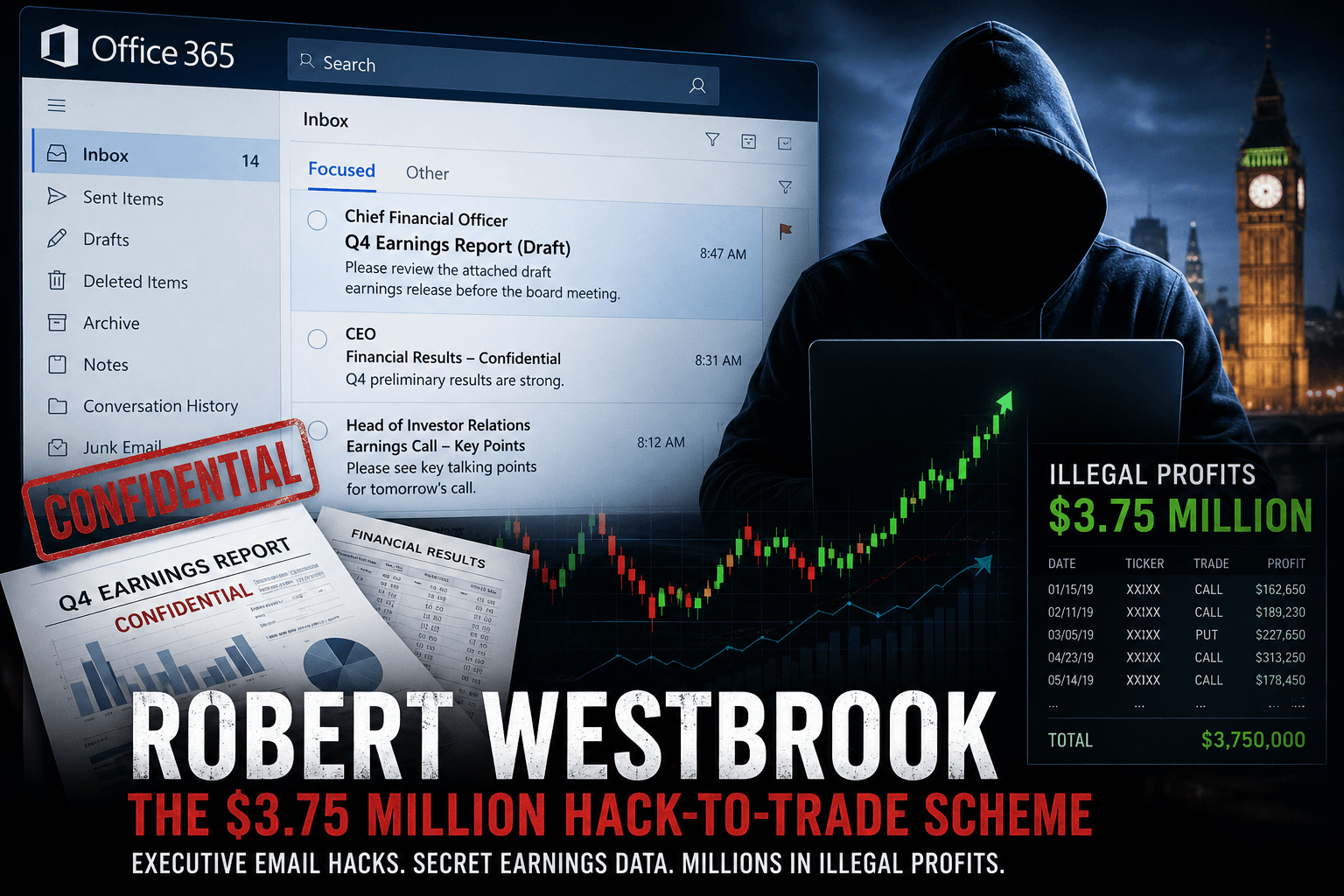
Federal prosecutors and the U.S. Securities and Exchange Commission say Westbrook made roughly $3.75 million by breaking into the Microsoft Office 365 accounts of senior executives at publicly traded American companies and using confidential earnings information to place trades before the rest of the market knew what was coming.
The allegations, unsealed in 2024, describe a scheme that prosecutors say ran from early 2019 into 2020 and targeted executives whose inboxes contained draft earnings releases, internal financial discussions and quarterly results that had not yet been disclosed to investors. Rather than receiving tips from company insiders, authorities say Westbrook allegedly stole the information directly.
According to court filings, he repeatedly gained unauthorized access to executive email accounts and, in some cases, created forwarding rules that secretly sent copies of emails to accounts he controlled. That allowed him to monitor communications without immediately alerting the victims, investigators said.
The information he was allegedly looking for was some of the most valuable data in the corporate world. Public companies spend months preparing earnings reports, and even a small surprise in revenue or profit can send shares sharply higher or lower. Investors who know those results in advance have a major advantage over everyone else in the market.
Authorities say Westbrook used that advantage again and again.
The SEC alleges he traded ahead of at least 14 earnings announcements, purchasing stocks and options before the reports became public and then closing the positions after the market reacted. By the time the scheme ended, regulators say the trades had generated approximately $3.75 million in illegal profits.
While government filings initially kept the names of the victim companies anonymous, Reuters later reported that details contained in the SEC complaint appeared to match Tupperware Brands, Tutor Perini, Guidewire Software, Murphy USA and Lumentum Holdings. None of those companies were accused of wrongdoing. Instead, investigators say their executives were among those targeted by the alleged intrusions.
The case quickly drew attention because it represented a different kind of insider-trading investigation. Most major insider-trading prosecutions involve employees leaking information, executives tipping friends or business associates sharing confidential details. Prosecutors say Westbrook’s alleged scheme cut out the middleman entirely. If the allegations are true, the insider information came from hacked inboxes rather than human sources.
Investigators say Westbrook attempted to cover his tracks through anonymous email accounts, virtual private networks and cryptocurrency-related transactions. But authorities ultimately pieced together what they describe as a trail connecting the cyber intrusions to the suspicious trading activity.
When announcing the case, the SEC said investigators relied on market surveillance, forensic analysis and crypto-asset tracing techniques to identify the alleged scheme. Federal prosecutors in New Jersey simultaneously charged Westbrook with securities fraud, wire fraud and multiple counts of computer fraud.
The charges carry potentially severe consequences. Securities fraud and wire fraud counts can each bring sentences of up to 20 years in prison if a defendant is convicted. The SEC is also seeking financial penalties, disgorgement of alleged profits and permanent injunctions.
Public information about Westbrook remains limited. Authorities have identified him as a British citizen living in London, but court filings reveal little about his background before the investigation. No co-defendants were named in the criminal indictment, and prosecutors have not publicly accused any corporate insiders of participating in the operation.
Westbrook was arrested in the United Kingdom after U.S. authorities announced the charges and began extradition proceedings. As of the latest public filings, he had not been convicted, and the allegations remain unproven in court. The SEC’s civil case and the criminal proceedings were still moving through the legal system.
The case has become a warning for companies that increasingly view cybersecurity as more than a technology issue. Executive email accounts contain earnings data, acquisition plans, board discussions and other information capable of moving markets. A successful intrusion can expose far more than passwords or personal information.
For investors, the allegations strike at a basic principle that financial markets depend on: everyone should have access to important information at the same time. Prosecutors say Robert Westbrook found a way around that rule by allegedly stealing the information before it reached the public. Whether those allegations ultimately result in a conviction will be decided in court, but the investigation has already shown how a single compromised inbox can become worth millions when confidential corporate information is on the other side of the login screen.
————-
Disclaimer:
Some content on Reportingscams.com is published under our guest post program and is provided by third-party contributors. Reporting scams does not create, verify, or take responsibility for the views, accuracy, or claims expressed in such content.