For a while, it felt like nothing could go wrong. A system that promised a steady digital dollar, returns that barely moved even when the rest of crypto was shaky, and a founder who spoke like he had already figured it all out. Billions poured into what Do Kwon was building. People trusted it, defended it, pushed others to get in early. Then it all fell apart in days.
Now the story looks very different. With a conviction on record and court filings spelling things out in detail, what was once sold as a breakthrough is being picked apart as one of the most damaging crypto failures in recent memory. The rise of Terraform Labs felt fast at the time. Looking back, it almost feels rushed. The collapse hit even faster.
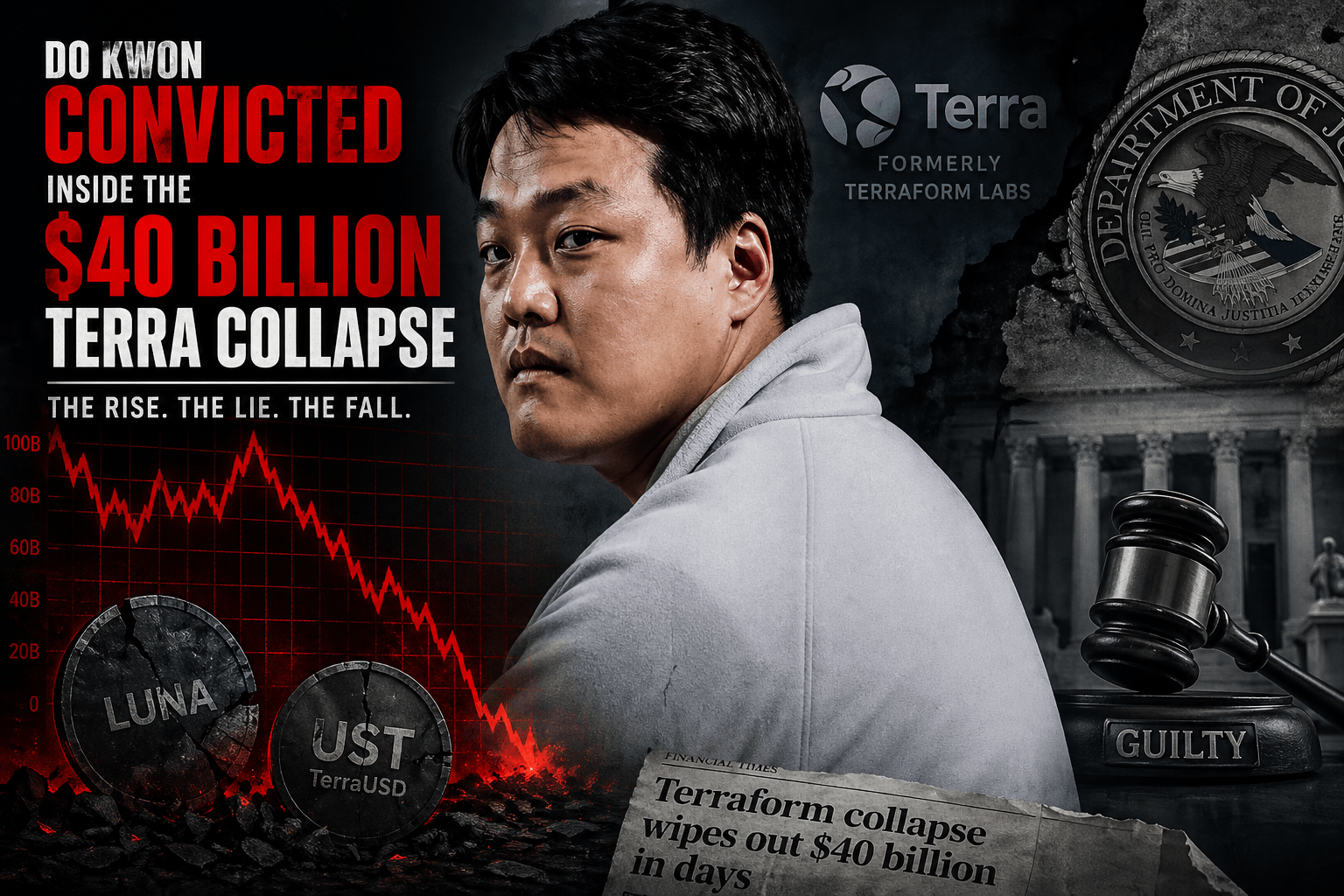
At the center of everything were two tokens, TerraUSD and LUNA. The idea was simple enough to sell. UST would stay close to one dollar without needing real reserves. LUNA would do the heavy lifting behind the scenes to keep things balanced. It sounded clever, even elegant. But it leaned heavily on one thing that does not hold up well under pressure. Trust.
As long as people believed in it, the system worked. Money kept flowing in. High yields made sure of that. People were not just putting in spare cash, many were going all in. The confidence around the project kept growing. Critics were there, but they never really cut through the noise.
Regulators later said that confidence was built on a version of the truth that left out key risks. The U.S. Securities and Exchange Commission argued that investors were not getting the full picture. The system looked stronger than it really was, at least from the outside.
Then May 2022 happened. UST slipped below one dollar. At first, it did not look like a disaster. Small dips happen. This one did not bounce back. It kept sliding. Panic spread fast. People rushed to get out while they still could.
The system tried to correct itself. More LUNA was pushed into the market to bring UST back up. That only made things worse. LUNA’s value dropped hard as supply exploded. Once that started, confidence disappeared completely. Within days, both tokens were practically worthless.
Around $40 billion was wiped out. Not over months. Not even weeks. Just days.
The shock hit far beyond one project. Funds that were tied to Terra struggled to stay afloat. The wider crypto market took a hit. What looked like a strong ecosystem suddenly became the trigger for a much bigger downturn.
After that, the focus shifted quickly. It was no longer about what went wrong in the market. It became about who was responsible.
Prosecutors from the U.S. Department of Justice did not hold back. They said the system was not just risky, it was presented in a way that did not match reality. Investors believed they were part of something stable. According to the case, that stability was never as solid as it seemed.
Court filings pointed to moments where the system needed help to hold its peg, even though it was described as something that could run on its own. That detail mattered. It suggested a gap between what people were told and what was actually happening.
The SEC made a similar argument. It said the story around Terraform Labs was carefully shaped while the weak spots stayed in the background.
Kwon’s side pushed back. The line was that this was a failed experiment, not a scam. That markets can turn, and this one did. The court did not agree.
The conviction changed how this entire episode is seen. It is no longer just a collapse. It is a case with a clear outcome in court.
After everything fell apart, Do Kwon was not easy to find. Authorities in different countries were already moving. South Korea filed charges. The United States followed. It turned into a global chase.
His arrest in Montenegro made headlines for a different reason. He was caught trying to travel using what officials said were forged documents. The shift was hard to miss. A founder who once moved freely in the spotlight now being stopped at an airport.
Do Kwon’s conviction closes the loop on a story that went from hype to disaster in a very short time. After a long legal fight, he was handed a 15 year prison sentence for his role in the Terra collapse. In court, the focus stayed on how the project was sold to investors. It was pushed as something stable, something reliable, even when cracks were already there. Judges sided with prosecutors who said people were led to believe in a system that wasn’t as strong as it looked. The sentence reflects how big the damage was, but it also says something simple. In crypto or anywhere else, you can’t build trust on shaky ground and expect it to hold forever.
The legal process stretched across borders. Different countries wanted jurisdiction. It showed how big the impact of the collapse really was. When the conviction came through, it felt like the final piece falling into place.
Looking back, there were signs. People had raised concerns about how sustainable algorithmic stablecoins really were. The system depended on demand staying strong. If that slowed, everything could start to break.
Inside the Terra crowd, those warnings never really landed. The mood was too confident. The gains were too strong. Doubt was easy to ignore when prices kept going up.
Kwon’s public tone did not help either. He came across as certain, sometimes dismissive of criticism. That kind of confidence can build a following. It can also shut down important questions.
By the time things started falling apart, it was already too late to fix.
The numbers get repeated a lot. Forty billion lost. It sounds huge, almost distant. But the real impact sits with the people who were in it.
Many retail investors treated UST like a safer place to park money. Some saw it as a stable option in a volatile market. Others chased returns that looked consistent. When it collapsed, those assumptions went with it.
Stories started coming out almost immediately. People losing savings they had built over years. Some had borrowed money to invest. Others had convinced friends to join in. The losses were not just financial. They hit hard on a personal level.
The conviction of Do Kwon brings some level of accountability. It does not undo what happened to those investors.
The fall of Terraform Labs forced the crypto world to slow down and look at itself. Algorithmic stablecoins are now looked at with a lot more caution. Regulators are paying closer attention. Investors are asking tougher questions.
It also pushed a bigger conversation. In a space that talks a lot about decentralization, this showed how much influence one person can still have. And how that influence plays out when things go wrong.
The market has already moved on in many ways. New projects are getting attention. New ideas are being pushed. That is how this space works.
But this story sticks. Not just because of the scale, but because of how quickly belief turned into panic. One moment it looked like the future of finance. The next, it was gone.
And at the center of it all is Do Kwon, a name that once stood for big ideas in crypto and now sits tied to one of its biggest crashes.
————-
Disclaimer:
Some content on Reportingscams.com is published under our guest post program and is provided by third-party contributors. Reporting scams does not create, verify, or take responsibility for the views, accuracy, or claims expressed in such content.